P J Antony: A centenary tribute to the irreplaceable master of performance
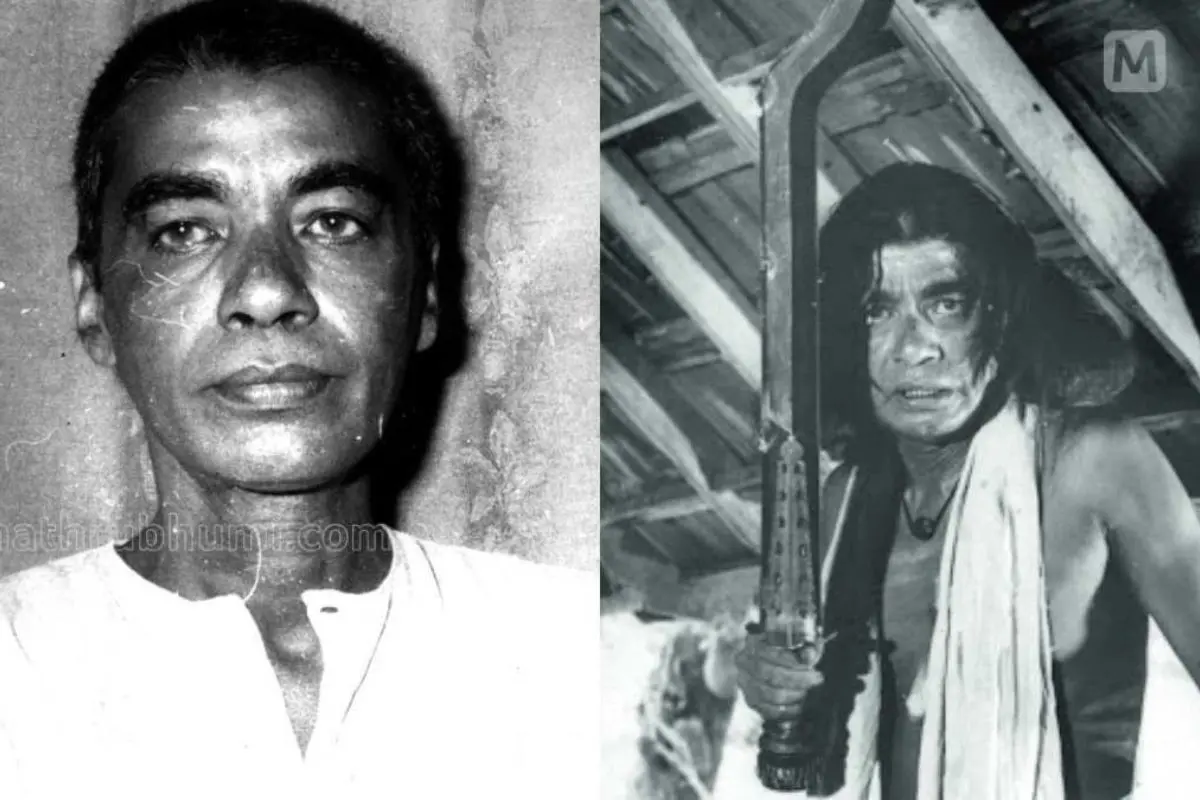
The question posed by the character of Velichappadu (oracle) in Nirmalyam—“Are you the one who bore my four children, Narayani?”—and the anguish on his face, pierce the heart like a blade. It is a moment of overwhelming emotional gravity, a scene that only a master like P J Antony could elevate to such haunting completeness. That question entered the hearts of viewers like a sharp weapon, leaving a wound that never quite healed. Velichappadu became an immortal figure in the minds of Malayalam cinephiles. The scene, which no one should ever have to witness in real life, brought forth words of trembling pain from Velichappadu, and Narayani’s (Kaviyoor Ponnamma) reply brought his despair to a devastating conclusion.
Nirmalyam was the first film directed by M T Vasudevan Nair, based on his own short story Pallivalum Kalchilambum. It earned both state and national honours, and brought P J Antony the National Film Award for Best Actor — the first Malayalam actor to receive this honour. As we mark his birth centenary, it's time to revisit the towering legacy of a man who was not just an actor, but a complete artiste.
P J Antony was the embodiment of versatility — playwright, director, stage and screen actor, screenwriter and lyricist. His return to the screen through Nirmalyam was a resurrection of sorts. His name deserves to be spoken alongside theatre legends like N N Pillai, S L Puram Sadanandan, Kalamandalam Krishnan Nair and Thoppil Bhasi. A giant of the stage, he brought with him to cinema an unmatched intensity, carving his own niche purely on merit.
Interestingly, the role of Velichappadu was not originally written for him. MT first considered Shankaradi, who instead suggested Antony. That endorsement, along with MT’s friendship with Antony, brought the actor into the project. Some roles chase actors — Velichappadu found Antony. MT sent a letter asking if he would play the part. Antony’s reply was simple: “When should I come?” Already familiar with Pallivalum Kalchilambum, Antony had internalised the spirit of Velichappadu even before stepping onto the set.
Antony arrived at the location days before filming to begin his transformation. He realised that embodying Velichappadu’s posture and demeanour was less challenging than mastering the frenzied temple dance (thullal). He even trained under a real Velichappadu to ensure authenticity. At the time, temple oracles lived in poverty, surviving on occasional rituals. The film was made in an era when temples had not yet become the centres of wealth they are today. That socio-cultural backdrop added depth to the film, especially in the wrenching scene where the Velichappadu tries to prevent his son from selling the sacred ornaments. Sukumaran and Sumithra portrayed the children with great sensitivity.
Shot in a real temple, the film recreated a pooram (temple festival) that resonates with raw authenticity. The poetry of Edassery was used in place of songs, enhancing the film's mood. The physicality demanded of Antony in this role — running barefoot across the temple grounds, slashing his forehead — was intense. So much so that when filming wrapped, he confided to MT about the back ache he endured. The two later travelled to Delhi together to receive the National Award — a rare and poignant moment in Malayalam film history.
Antony’s acting career is also remembered for his unforgettable villain role in Bhargavi Nilayam. With his chilling stare and wicked smile, he played a ruthless murderer who poisons a singer (Prem Nazir). The final scene, where writer Madhu realises the killer's identity, and Antony delivers the line, “So, you've found it all out, haven’t you?” is another masterclass in understated menace. Bhargavi Nilayam remains one of the most iconic horror films in Malayalam cinema.
Though deeply rooted in theatre, Antony ventured into cinema only for roles he believed in. From films like Randitangazhi to Mooladhanam, his choices reflected his artistic commitment. He was never typecast. As an actor, he had an uncompromising voice. As a writer, too, he made his mark — with screenplays like Nadhi, where he also acted. The story, centred on two families living on houseboats on the banks of the Periyar, was directed by Vincent and featured Prem Nazir, Sharada and Madhu. Antony's brilliance shone both on the page and on screen.
Antony was also an exceptional lyricist. His songs — like "Manoharee marannu nilkkuvatenthe?" (Yesudas), "Bindu othungi nilpu ninnilorulkkada shokathin sindhu" (Jayachandran), and "Aakasha Ganga" (Janaki) — remain evergreen classics. His lyrics stood apart for their poetic elegance and layered meaning, perfectly tailored to cinematic moments.
P J Antony has a place among Malayalam cinema’s irreplaceable performers. As Velichappadu in Nirmalyam, the villain in Bhargavi Nilayam, and the head of a family in Nadhi, he gave performances that few could dream of matching. That, ultimately, is the measure of his greatness.
As we celebrate his birth centenary, it is not just a commemoration — it is a call to rediscover, rewatch and reflect on the singular brilliance of P J Antony, an artist who gave his soul to every role he embraced.