MT's 'Nirmalyam': A set-free masterpiece that transformed Keezhekkavu into Dakshina Mookambika
The air crackles with the pounding rhythm of the drums, oracle (Velichappad) dances, his movements erratic, his face twisted in a trance. His hands tremble as he raises his sword, striking his forehead. Blood pours from the wound, dark and relentless, spilling across his face.
The camera then pans to his blood-red eyes and moves away from him while he runs toward the deity he worshiped daily. Upon reaching, he looks at the idol filled with desperation and spits at her, locking his eyes with the statue. Strikes himself to end his life.
This is the climax of Nirmalyam, the debut film directed by M T Vasudevan Nair. It was a moment when Malayalis realised that human emotions and humanity transcend faith and devotion. This movie was materialised from his own short story, 'Pallivalum Kalchilambum', in 1973. However, the journey wasn’t easy.
MT as a filmmaker, was convinced that his story 'Nirmalyam' that shows how poverty can transform a person would be a perfect hit to depict such a stark reality. He believed that in the furnace of abject poverty, a man must, at least momentarily, reject even God. The narrative demanded such a bold depiction. However, would Kerala accept such a storyline? Despite the challenges, MT stood firm in his vision and took the responsibility of telling the story truthfully.
The story revolves around a dilapidated temple surrounded by a village with many people. Finding a location that matched this premise was the primary challenge.
After scouting various places, the search ended at Mookkuthala, a village near Changaramkulam in the Malappuram district. It was a beautiful village with its natural surroundings of groves, ponds and ancient temples just how MT visioned. The innocent villagers there reminded him of Ammini, Unni Namboothiri and oracle from his story.
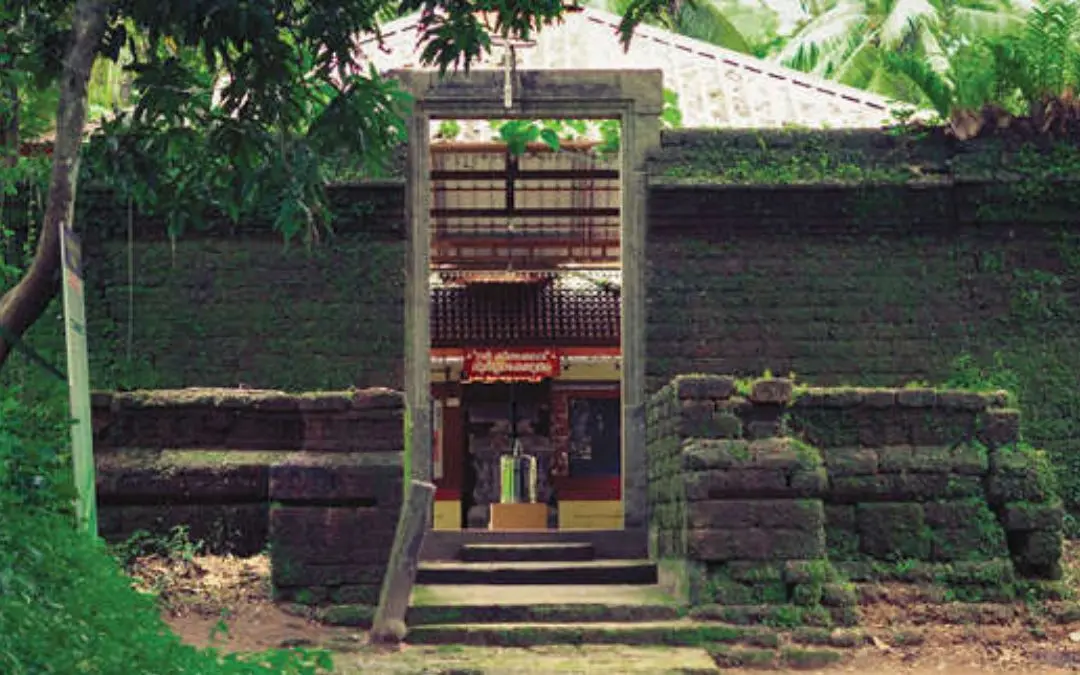
The primary location was the Keezhekkavu temple and its premises in Mookkuthala. When actors like P J Antony, Ravi Menon and Sukumaran arrived for the shoot, it became a celebration for the villagers. The locals were deeply involved in the filmmaking process—some offered their homes for the crew to stay in, while others were casted in minor roles.
Even during these joyous moments, MT had anxiety. He anticipated uproar over the climax scene where PJ Antony, a Christian actor, spits on the idol of a Hindu deity. MT later admitted that he started filming with the expectation of potential backlash. Before shooting the controversial scene, he discreetly gauged the villagers' sentiments. MT was prepared to use a set if there were any negative opinions. Although there were some disagreements, the reaction from the villagers of Mookkuthala was not as emotionally charged as it might have been in the present scenario.
Finally, the entire film was shot on location, without a single set. Even after the movie’s release, there were no protests in Mookkuthala. On the contrary, the villagers grew even fonder of MT, both as a writer and filmmaker. During the 50th anniversary of 'Nirmalyam', MT remarked that such a film could never be made in today’s socio-political condition.
“I merely utilised the favourable circumstances that time offered me. For that, I remain deeply indebted to the village of Mookkuthala and its natives,” MT expressed this multiple times. The Keezhekkavu Temple, which once lay neglected without resources for ven daily rituals, is no longer in that state. Today, Mookkuthala, often referred to as the ‘Dakshina Mookambika', and its temples have seen significant growth and development.