Kantara Daiva worship is sacred, not for mimicry: Hombale Films issues stern appeal to fans
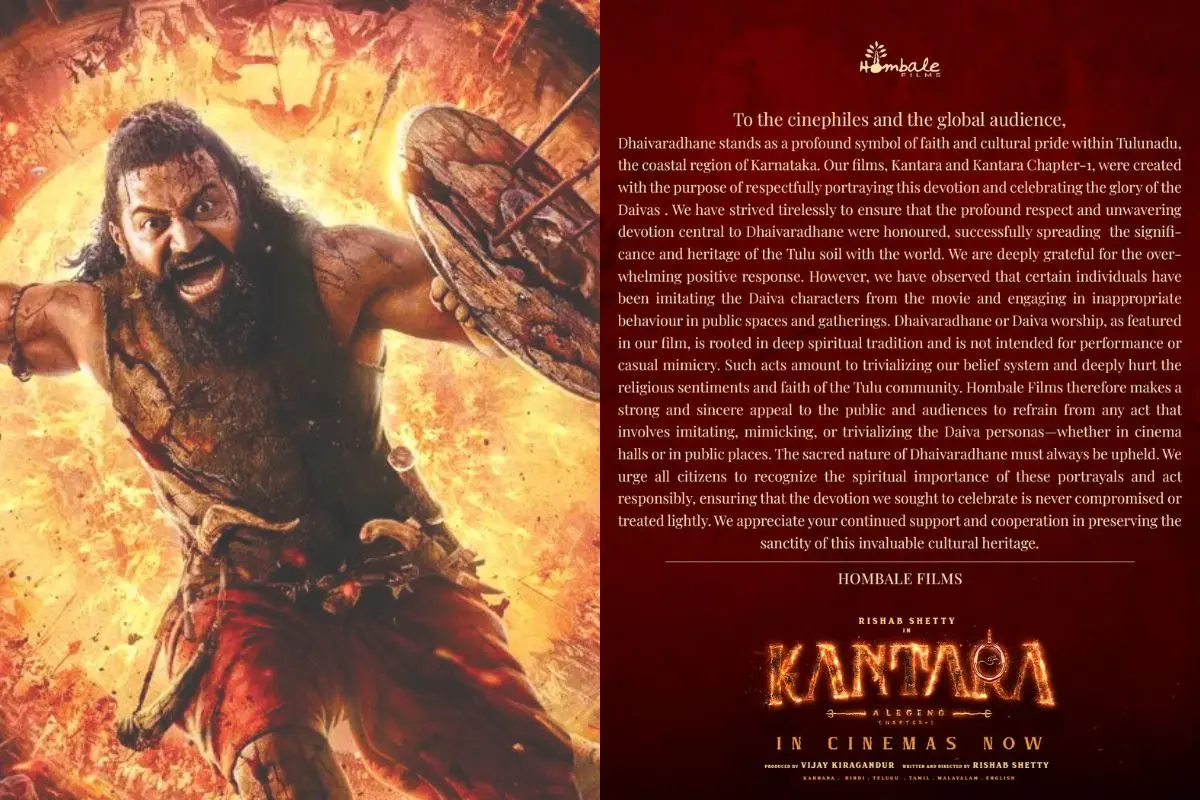
Hombale Films has issued a public appeal urging fans not to imitate or mimic the Daiva characters from Kantara and Kantara Chapter-1, emphasising the sacred nature of Dhaivaradhane in Tulu Nadu. The production house expressed concern that such acts trivialise a deeply spiritual tradition and hurt the religious sentiments of the Tulu community.
Cultural Significance of Dhaivaradhane
Dhaivaradhane, also known as Bhootaradhane or Buta Kola, is a non-Vedic ritual practised in Tulunadu, the coastal region of Karnataka, centred on the worship of guardian spirits and ancestors. It plays a vital role in the region’s spiritual and social life, with over 1,000 Daivas believed to exist, each with unique stories and significance. The tradition is not merely performative but is deeply tied to identity, heritage, and community governance.
Response to Fan Behaviour
Following viral videos of fans dressing as Daivas and reenacting scenes in theatres and public spaces, Hombale Films released a statement stressing that Daiva worship is rooted in a deep spiritual tradition and was never intended for casual mimicry. Actor Rishab Shetty echoed this sentiment, stating that such acts hurt the sentiments of those who belong to and worship these traditions, urging fans to experience the film as cinema while respecting the sacredness of the real-life practice.
Appeal for Respect and Responsibility
Hombale Films has made a sincere appeal to the public to refrain from imitating, mimicking, or trivialising Daiva personas in any setting, including cinema halls and public gatherings. The statement underscores the importance of preserving the sanctity of this cultural heritage and calls on citizens to act responsibly in honouring the devotion portrayed in the films.