‘We don’t chase trends’: Noel Alexander-Shazeb Sheikh on doubt, discipline and dance
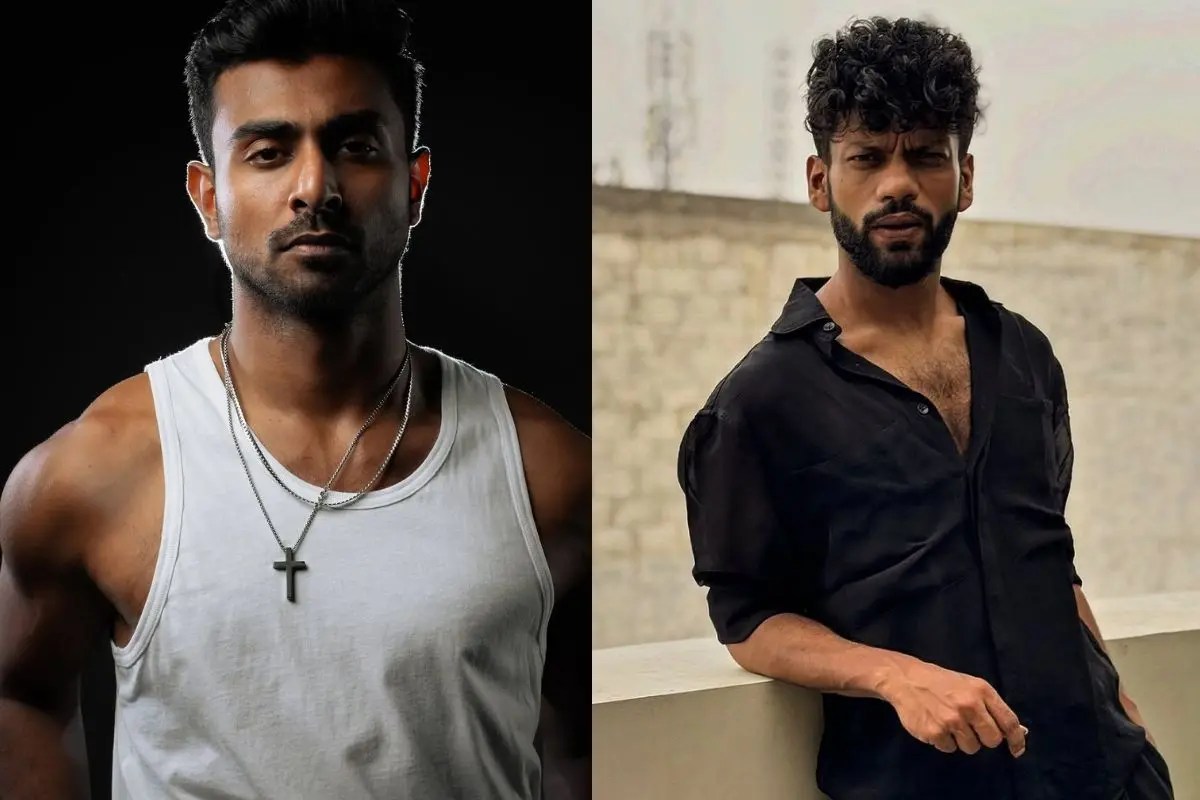
In India’s exploding dance landscape, where trends rise and vanish overnight, choreographers Noel Alexander and Shazeb Sheikh have emerged as artists whose identities are deeply rooted in lived experience.
The choreographies for ‘Kaantha’ – sung by the Masala Coffee band and choreographed by Noel – and ‘Kalyani’, sung by ARJN, KDS, FIFTY4 and RONN and co-choreographed by Noel and Shazeb, have captivated millions online.
Speaking to Mathrubhumi English, the duo opened up about their career journeys, the unexpected virality of ‘Kaantha’ and ‘Kalyani’, and the life as independent choreographers during ‘Kalyani’ workshop organised by Dance Inn Cochin.
For participants, it was a chance to learn viral steps. Many in attendance had already watched and rehearsed the now-familiar sequences online, where snippets of their choreography have been widely shared. Yet, in conversation, both choreographers downplayed the idea that they had ‘cracked’ anything.
From festival processions to film sets
Shazeb’s dance education did not begin in a studio. Growing up in Mumbai, he first stepped into dance at Ganpati festivals and colony functions, joining processions and local celebrations. Without formal training or financial support for professional classes, he joined local processions and community functions, dancing for the sheer joy of it.
“I saw college people dance, colony people dance. I saw festivals, Ganpati and all these festivals in Bombay,” he recalled. “So I just went there and joined them.” Over time, he became a familiar presence. “People would wait for me to come there and start the procession,” he said. “That’s when I realised people like me when I dance.”
Formal training, however, was not always accessible or encouraged. Shazeb said his family did not see dance as a viable career path. He briefly attempted professional training but felt constrained. “I felt like my festival dancing side was going away,” he said.
Instead, he built his craft by observing others. “I haven’t specifically learnt from anybody, but I have learnt a lot from everybody,” he said. He speaks often of learning what resonates and consciously “unlearning” what does not.
Noel’s route was shaped by cinema. As a teenager, he was captivated by performers such as Hrithik Roshan and later inspired by choreographer Dharmesh Yelande. “I was never into dancing,” he said. “I used to just watch.”
During his school holidays, his father enrolled him in a dance class. College competitions followed. But at home, there was resistance. His father hoped he would become an IAS or IPS officer. Noel pursued engineering while continuing to dance. “No matter what happened in my life, somehow dancing became that medium I would always fall back to,” he said. “Eventually, I made a career out of it.”
Influences across geographies
Both choreographers trace their roots to Kerala but have trained and worked across India. Their artistic identities reflect that mobility.
Noel remembers the early YouTube era, when international dance videos flooded screens. He and his peers would attempt to replicate moves seen online, absorbing global influences without formal mentorship. Moving to Mumbai broadened his exposure further. “Bombay also has got a lot of influence on the way you dance and move,” he said.
Shazeb describes influence in simpler terms – constant exposure and choice. “If I like something, I learn it. If I don’t like something, I unlearn it,” he said.
Despite their admiration for classical traditions such as Kathak and Bharatanatyam, neither claims formal classical training. Noel’s ‘Kaantha’ choreography was created with a Bharatanatyam-trained dancer, not to replicate the form but to capture its grace. “I just wanted to move like them – graceful, elegant, poised,” he said. “I had zero motive to make a Bharatanatyam choreography. I just wanted to feel that movement.”
Shazeb, meanwhile, says he is wary of defining himself by a single style. “As soon as I think I’m dancing one style, I get scared,” he said. For him, dance is less about labels and more about losing oneself in movement, a feeling he traces back to festival days. While he deeply respects those who spend years mastering a discipline, he prefers to remain undefined, learning through observation rather than formal enrolment.
Virality as accident, not formula
Both ‘Kaantha’ and ‘Kalyani’ spread rapidly across platforms, with participants from different states and countries, recreating the routines. Yet neither choreographer speaks of strategy.
Noel said ‘Kaantha’ carried deep personal significance for him. After choreographing songs in Gujarati and Telugu, he often received requests from friends and family back home to create something in Malayalam. “With ‘Kaantha’, I just wanted it to be appreciated in Kerala,” he said, admitting he felt a strong personal and cultural pull toward the project. “I didn’t want to disappoint them.”
Shazeb emphasised that what preceded virality mattered more than the viral moment itself. Years of teaching, building trust with students in cities such as Kochi and Bengaluru, and cultivating a consistent body of work all contributed to the response.
Shazeb compares virality to winning a lottery. “Something getting viral is like a lottery,” he said. “We keep working towards it every day. If something works, nothing like it. But we don’t sit and imagine we’re going to win a lottery.”
He cautions against chasing trends. “If you first think about what works, it can spoil your daily life,” he said.
Instead, both emphasise consistency. For them, the workshops are an extension of that ethos. Rather than separating online fame from offline engagement, they travel frequently, sometimes deciding cities spontaneously with fellow choreographers.
“It’s really hard work,” Shazeb said. “But very few times can you be so lucky that what you’re working so hard on feels so good.”
Navigating doubt and criticism
Fame has brought praise, but also scrutiny. “For me, it’s yin and yang. If you have faith, you will have doubt. It comes together,” Shazeb said. He describes self-doubt and confidence as two sides of the same coin, inseparable and necessary.
Noel agrees. “Self-doubt is needed. If you don’t doubt yourself, sometimes you won’t push yourself to be better,” he said. The challenge, he adds, is not being consumed by it.
The pair acknowledge that online visibility invites strong opinions. Some comments question repetition or popularity. Shazeb says they try to treat both applause and criticism as rhythm rather than extremes.
“If as an artist you can learn to shut your own opinion and outside opinion, you will last longer in peace,” he said.
Credit where it is due
Beyond their own careers, both speak about the broader ecosystem of dance. Choreographers, they argue, remain under-recognised within the film industry. Names are sometimes absent from posters or not prominently credited, even when songs become global sensations.
“Everyone does the step,” Noel said, noting how certain film dances become cultural phenomena. “But people don’t know who choreographed it.”
They also point to issues of underpayment, particularly for background dancers. Without fair recognition and compensation, they warn, fewer people may choose dance as a profession.
Dance beyond language
One of the most visible effects of ‘Kaantha’ and ‘Kalyani’ has been the spread of Malayalam lyrics among non-Malayali audiences.
Noel describes the pride of hearing participants sing entire lines phonetically. “They don’t know what it means, but they are singing it,” he said. For him, it signals the reach of Kerala’s culture beyond linguistic boundaries.
“For years, people only knew two or three Malayalam words,” he said. “Now they are singing the entire first line. They don’t know what it means, but they are singing it.”
Shazeb frames it as art functioning as universal communication. “If people love what you do, they adapt to your roots,” he said.
A workshop as celebration
At the Kochi session, their teaching style was informal, punctuated by humour and reminders to focus on feeling rather than appearance.
Shazeb often tells participants to try to “feel beautiful instead of looking beautiful”. Mirrors, he believes, can distort confidence. “If there was no mirror, everybody would go back feeling good,” he said.
They tailor their approach depending on the group. Older participants sometimes share stories of having left dance due to societal pressure or personal setbacks. “Dance should feel like home,” he said. “Not a forced comeback.”
But on the other hand, younger dancers arrive with enthusiasm and fewer inhibitions. “With older people, sometimes it’s a reinstallation of faith,” Shazeb said. “With young kids, you just see a lot of hope.”
For now, neither choreographer is announcing major film projects. Their schedule is filled instead with travel, workshops and collaborations linked to ‘Kalyani’.
For Shazeb, that freedom is itself extraordinary. “We don’t wait for work to get over and then celebrate,” he said. “Our work is a celebration.”
As the Kochi workshop concludes, participants crowd around for photographs. The music fades, but the energy lingers – less about perfect synchronisation and more about shared joy.