‘I don’t sing on command...’ 50 years later: How the film industry stood up to the Emergency
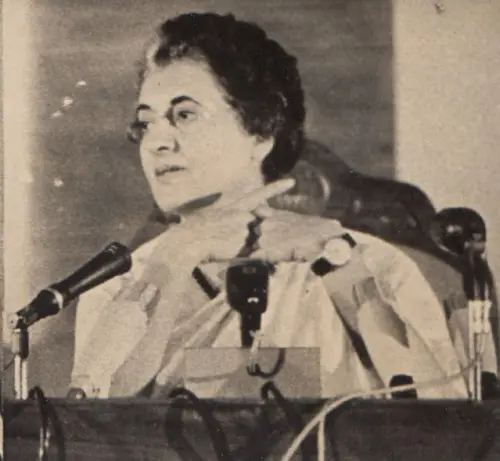
New Delhi: The Emergency was a dark chapter not just in Indian politics but for celluloid as well. Between June 25, 1975, and March 21, 1977, the Hindi film industry reached a creative peak while also facing substantial censorship from the government under the Emergency declared by Indira Gandhi half a decade ago.
While star actors are typically known to stay apolitical, this period saw the likes of legendary actor Dev Anand publicly express their opposition to Indira Gandhi. The conflict escalated to such an extent that Doordarshan stopped screening his films when he did not voice support for Sanjay Gandhi.
In a 2003 interview with Reader’s Digest, Anand recalled how he formed a party to oppose Indira Gandhi: "They pushed us film people to the wall, and I got annoyed. They banned Kishore Kumar songs from All India Radio and Doordarshan because he didn't toe their line. And they called us to New Delhi to sloganeer for Sanjay Gandhi.”
“I met (then) information minister VC Shukla and told him, 'I'll take part only if you admit we're now a police state'. He backed off. Then opposition leaders approached me for support. I spoke at their rallies and even formed the National Party of India (NPI)”, he added. However, Anand dissolved the party after the Emergency was lifted in 1977, citing disillusionment with the Janata coalition.
It was not just the iconic hero in Guide who experienced the arm twisting of the government. In 1975, Gulzar’s Aandhi, starring Sanjeev Kumar and Suchitra Sen was banned post release. Featuring a female lead closely resembling Indira Gandhi, complete with a white streak in her hair, combined with how in the South, the film was publicised through its posters with the tagline, ‘See your prime minister on screen’.
Amrit Nahata’s political satire Kissa Kursi Ka (1978) literally unleashed a storm such that it was banned prior to release. The then Information and Broadcasting minister Shukla was close to Indira Gandhi's younger son Sanjay. He is believed to have seized the prints of Kissa Kursi Ka and destroyed the negatives.
Interestingly, the year the Emergency was declared also saw the release and success of many of Amitabh Bachchan’s mainstream films in his ‘Angry Young Man’ era, such as Sholay, Deewar, and Chupke Chupke. Nishant, Julie, and Jai Santhoshi Maa, all released in 1975, also gained considerable success. Author, historian, and film scholar Amrit Gangar thus opines that it was quite a productive year for Hindi cinema.
Playback singer Kishore Kumar, still considered one of the greatest musicians the country has produced, was prohibited by Doordarshan and All India Radio. He came under fire for his refusal to sing praise of the government’s schemes in the “Geeton Bhari Shaam”, an event intended to wax lyrical about the Twenty Point programme. In a later interview with Pritish Nandy, he said, “No one can make me do what I don't want to do. I don't sing at anyone's will or command.”
The censorship was not limited to Hindi cinema. The Kannada film Chanda Marutha (1975) suffered because of the Emergency. The film, based on the play Kranthi Bantu Kranthi written by P Lankesh, and directed by Pattabhi Rama Reddy starring his wife Snehlata Reddy. She was jailed and passed away shortly after being released on parole.
Author and film historian S. M. M. Ausaja told PTI that the 21-month period was a big blow to the industry: "During the Emergency, the film industry galvanised itself and stood against the government... At least the key people of the film industry had the guts to stand up to the government and say, what are you doing is not right.”
Ausaja said the Emergency should serve as a lesson for today's government: "If you censor art and cinema, which is so potent, it will backfire on you sooner or later because you cannot control art."
As India marks 50 years since the declaration of the Emergency, the defiance shown by the film industry during that time stands as a powerful reminder of cinema’s role in safeguarding free expression.
The period may have tested the limits of artistic freedom, but it also revealed the courage of filmmakers, actors, and musicians who refused to bow to state control. Their resistance continues to inspire generations of artists — and serves as a cautionary tale about the dangers of silencing dissent in any democratic society.