Inside China’s first spy movie endorsed by its secret service: The story behind ‘Scare Out’
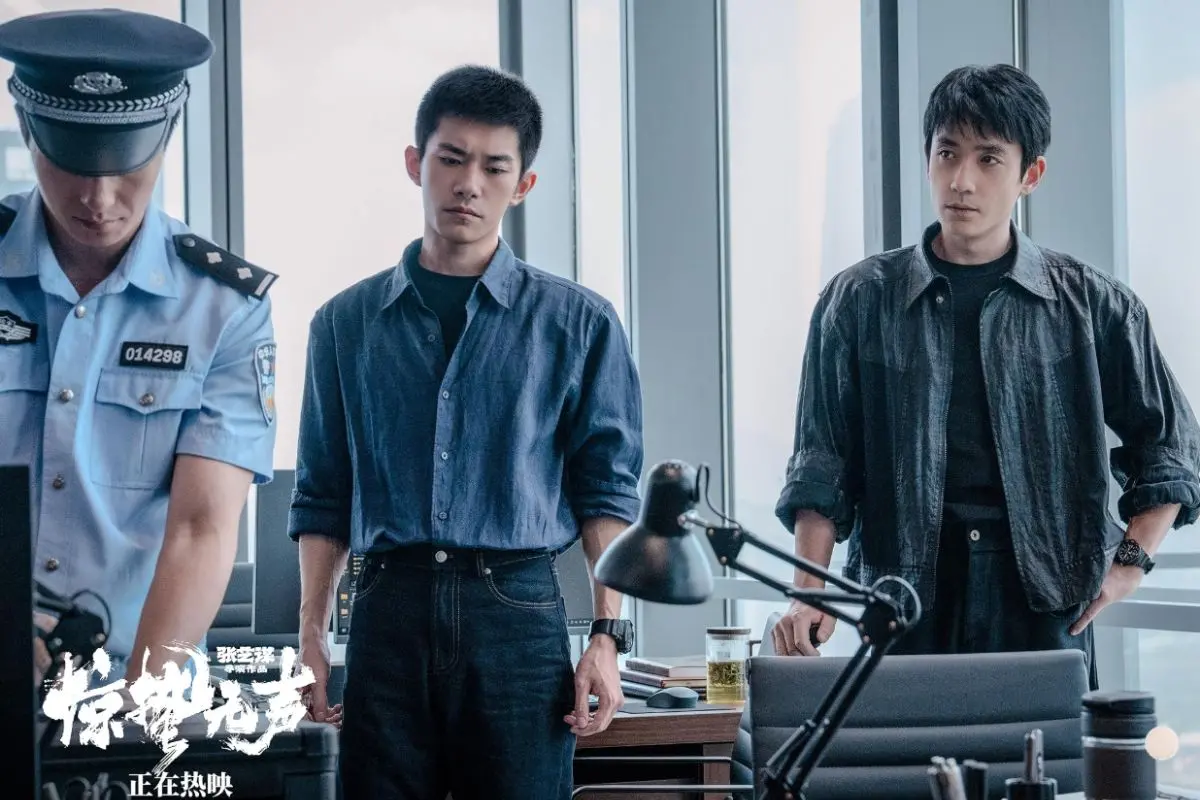
Dodging glass-walled skyscrapers, a drone joins a high-speed chase as a spy attempts to elude agents. In seconds, the unmanned aircraft knocks him down. The thrilling scene, which has been viewed by millions in China and abroad, including in the United States, is from ‘Scare Out’, a recently released Chinese film.
The movie is notable as the first to be officially endorsed by China’s secretive Ministry of State Security (MSS), marking an unusual move for the agency, which has historically kept a tight lid on its operations.
A first for China’s spy cinema
While movies about moles and intelligence agencies are common worldwide, ‘Scare Out’ is groundbreaking in China, where authorities closely regulate what can be shared publicly. Directed by Oscar-nominated Zhang Yimou, the film is described as “led and created” by the MSS, which hopes the story will also educate citizens on defending the nation from threats. The movie opened in theatres on February 17, Chinese New Year’s Day.
MSS promoted the film on social media, saying it aims to “strengthen the people’s defense line” and “echo the needs of the times of national security education.”
MSS opens up to the public
Although this is the first time MSS has supported a film, the agency has gradually made its work more visible. Around two years ago, it posted online on WeChat, China’s largest social media platform, stating: “Counterespionage requires the mobilization of the entire society.”
Since then, the ministry has posted almost daily, including stories of real cases, such as a travel blogger allegedly asking a college student to photograph a military base and a man who bought four books of military secrets for under $1 at a recycling station. MSS has also shared comics, short videos, and mini movies.
Plot and cast
‘Scare Out’, starring Jackson Yee and Zhu Yilong, follows the hunt for a mole within China’s intelligence service leaking classified information about a new fighter jet.
“Spies are just there around you,” Zhang said in a trailer released by the MSS.
Some security experts see the movie as a way for MSS to encourage public vigilance.
“It wants to build public and popular support to encourage people to share information,” said Sheena Greitens, an associate professor at the University of Texas at Austin.
“(It’s) a very sophisticated effort to mobilize Chinese citizens and make national security entertaining and fun to support,” she added.
Zhang, writing in an op-ed for the People’s Daily, said: “State security officers accompanied us throughout the whole filming process to make sure the film is close to reality.” The director is known for ‘Ju Dou’, ‘Raise The Red Lantern’, and ‘Hero’, all of which received Oscar nominations.
Realism, rumours, and reception
Social media rumours claim the film is based on a real case involving a researcher who allegedly leaked information about China’s J-35 fighter abroad.
The movie has since screened in the US, Canada, and Australia, earning 1.1 billion yuan ($160 million) at the box office in two weeks.
Alice Jin, 28, who works in e-commerce in Washington, said she saw the movie hoping “not [to] fall asleep,” adding it was “better than I expected” and that she “had no idea what it (MSS) was before.”
Wang Lehang, 25, a student, said: “I love watching movies, so a movie on patriotism education definitely works better on me.” He added it was “better than a lecture.”
China’s spy cinema in a global context
For decades, other countries have produced spy films. The first ‘James Bond’ movie premiered over six decades ago. The CIA has also been portrayed in movies and TV franchises, including ‘Jason Bourne’, and is known to work with Hollywood to influence how the agency is depicted.
Western spy films often focus on “here’s where the trouble is coming from,” but China also “highlights to people internally that they don’t side with the West,” said Liam McLoughlin, senior lecturer in politics at Edge Hill University in northwest England.
Timing amid global espionage efforts
The release of ‘Scare Out’ coincides with US efforts to recruit potential Chinese spies. The CIA has posted social media videos in Mandarin asking:
“Do you have information about China’s top leaders? Are you a military officer, or do you work with the military? Please contact us. We want to understand the truth.”
China’s Ministry of Foreign Affairs has criticised such attempts, warning it will take all necessary measures to prevent infiltration. (AP)