Chandra rises: Lokah and the cinematic reckoning of women and margins
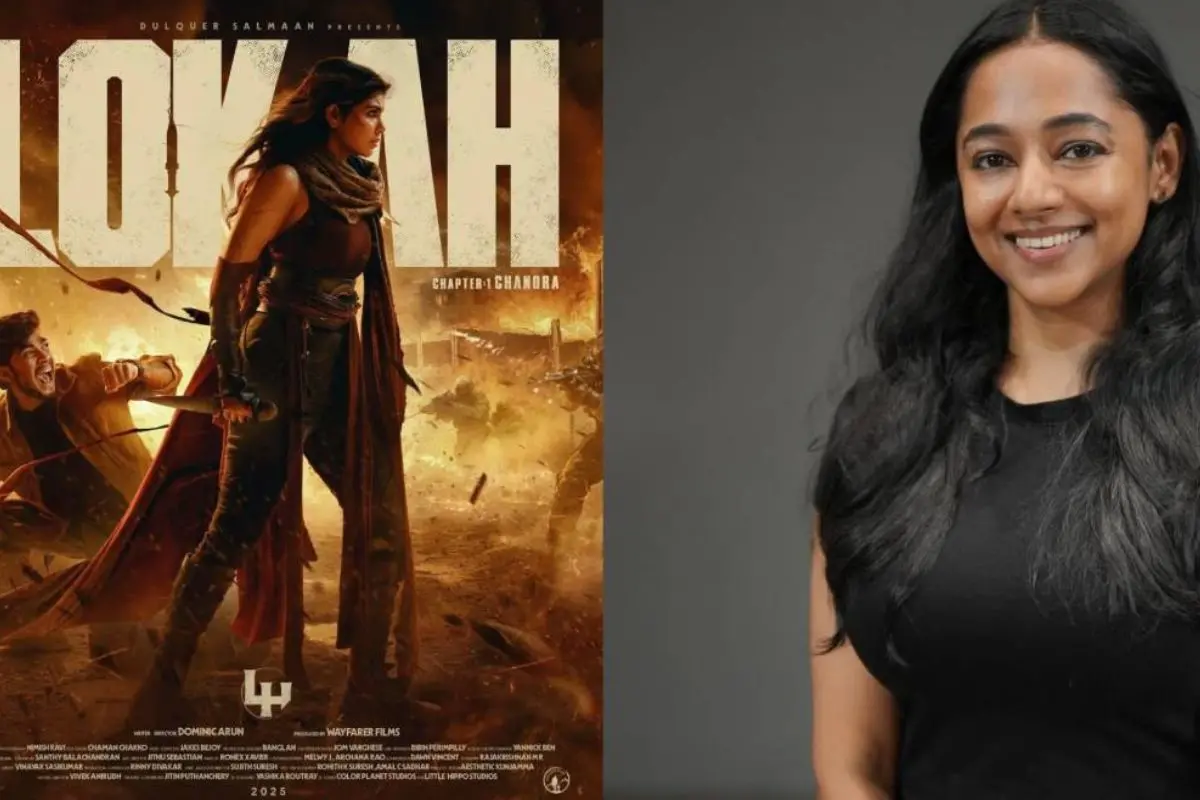
It’s Lokah Chapter 1: Chandra, the film that has sparked conversation from Kerala’s theatre halls to international film circuits — a cinematic spectacle with a soul. It's not an exaggeration to say that the film has transcended regional boundaries, stirring a global wave of discourse around its themes, performances, and politics. And at its fiery, unapologetic core stands Chandra, Malayalam cinema’s first female supergore — a vigilante vampire wrapped in myth and modernity.
The protagonist, brought to life with visceral energy by Kalyani Priyadarshan, has become a symbol of cinematic and cultural resurgence. But what sets Lokah apart isn’t merely its world-building or its paranormal fantasy lens — it is the woman behind the woman. Co-written by director Dominic Arun and Santhy Balachandran, Chandra is not just performed, but conceived and authored, by a woman who made the leap from academic excellence (University of Hyderabad to Oxford) to artistic expression through stage and script.
A character born from resistance
Santhy’s Chandra is no ordinary heroine. Her character is steeped in layered lore — a blend of Yakshi myth, feminist reckoning, and fantastical storytelling. She isn't just smashing patriarchal villains — she’s rewriting the rules. Here is a woman unbothered by tropes, uninterested in being likeable, and unafraid to take justice into her own hands. In the high rises of Bengaluru, she glides — fang-toothed and furious — exacting a retribution long denied to women on screen.
In many ways, Chandra is a cinematic awakening — a product of long-standing dissent against the misrepresentation and commodification of women in Indian cinema. For decades, while icons like Karuna Banerjee’s Sarbajaya (Pather Panchali), Shabana Azmi in Ankur, or Madhubala's tragic queens held the torch, they were often filtered through the male gaze. But today, women like Gauri Shinde (English Vinglish), Meghna Gulzar (Raazi), Geetu Mohandas (Moothon), and now Santhy Balachandran are wielding the pen and camera, narrating their own tales.
The politics of storytelling
In a year following the explosive Hema Committee Report (2024), which unveiled systemic sexual abuse within the Malayalam film industry, Lokah’s timing feels almost poetic. The Women in Cinema Collective (WCC) — with members like Parvathy Thiruvothu, Sajitha Madathil, and Rima Kallingal — has long agitated for safer, more equitable spaces in the industry. The emergence of a character like Chandra, created and performed by women, isn't just art — it’s activism.
Parvathy, one of Indian cinema’s fiercest voices, lauded Santhy’s vision: “Chandra is among all of us,” she noted, capturing how the film resonates with women across spectrums. Even Bollywood took notice. Alia Bhatt praised the film as “a step in cinema that I will always be eager to support.” It’s not just validation — it’s a realisation that Lokah has cracked through the patriarchal ceiling of storytelling.
Celebrated, yet contested
No boundary-breaking film arrives unchallenged. Lokah Chapter 1: Chandra has sparked political and cultural controversies. One now-removed line from Inspector Nachiyappa Gowda (played by choreographer Sandy), deriding women in Bengaluru as “characterless”, drew instant backlash. The production house, Wayfarer Films, swiftly issued an apology — but the tension points to deeper societal fissures.
More incendiary, however, are allegations of the film being “anti-Hindu”. A scene showing a Hindu king setting fire to a temple and supposed negative expressions towards a Ganesha idol triggered right-wing outrage. Critics also decried the supposed “heroic” portrayal of Christian missionaries and converts. The backlash spiralled into disturbing communal commentary, targeting director Dominic Arun’s Christian identity and producer Dulquer Salmaan’s Muslim background. The implication was clear — in today’s climate, representation is political, and religion is a lightning rod.
These controversies echo similar storms around recent Malayalam films, such as L2: Empuraan, which faced heat for references to the Godhra riots. Back then, Mohanlal and Prithviraj apologised. This time, the makers of Lokah stand at a crossroads — caught between creative integrity and communal sensitivities.
The bigger picture: A shift in cinema
Despite (or perhaps because of) the fire it has ignited, Lokah is a necessary film. It refuses comfort. It chooses confrontation — with myth, misogyny, and media machinery. The narrative arc, spanning the supernatural and the social, sets the tone for a cinematic universe where women are not accessories, but architects. Of course, as Lokah draws to a close, we see the baton momentarily passed to male characters — with the likes of the Chathans and Madan expected to take the lead in what follows. It’s a shift some may critique, but within the film’s mythos, it appears justified. What matters is this: the door has been thrown wide open for lesser-known folklores and marginalised identities to stride into the mainstream.
In many ways, Lokah is a spiritual successor to the feminist cinema of earlier decades, only with more rage, more agency, and fewer apologies. It is a reclamation of screen space, and a call for more Chandras — women with fangs, fury, and freedom — to light up our fractured world.