The 15-second song era: Is social media killing music or saving it?
Be honest. How many songs do you know only because of Instagram Reels? Not the entire song. That one beat drop. That one lyric everyone seems to be using for travel videos, wedding edits, gym transformations and heartbreaks.
Many of us now find new songs like that; through Instagram Reels, TikTok or YouTube shorts.
These days when a song goes viral, your feed is flooded with it. Before you know it, you’re humming the hook without knowing who sang it or what the rest of the track sounds like.
Do we even listen to full songs anymore?
Viral hooks are shaping music discovery like never before. On World Music Day, it's worth asking how our relationship with music has evolved. We asked singers and musicians whether social media is influencing the way music is created, consumed, and remembered.
“There’s no point pretending that viral hooks don’t exist. They’re a feature of this era and simply part of the reality we live in. The first step is accepting that and adapting to it.” says Vinayak Sasikumar, lyricist.
“We have an obvious choice: either create the kind of songs that the algorithm tends to favour or take a different path. More often than not, I approach songwriting in two ways.”
According to him, some songs are consciously designed to crack the algorithm, especially promotional tracks that need maximum visibility. In those cases, the team may intentionally create a catchy 15 or 30 second section that can travel across social media.
But that’s not true for every song.
“If there are four songs in a film, maybe one is designed with that in mind. The others are approached more organically. Ultimately, it's our choice how each song should be, though we also understand what a song might need. Today, audiences have countless entertainment options competing for their attention. Naturally, the content that grabs people in the shortest amount of time tends to get the most visibility.”
“Even within a 30-second Reel, there's competition for attention. We've reached a point where a Reel itself needs a three-second hook. In many cases, that hook has to come right at the beginning; otherwise, people will scroll away before they get to the rest of the content. Holding the attention of people who make decisions in microseconds is a huge challenge. So if the goal is to package a song for Reels, creators have to be extremely careful and craft it in a way that grabs attention instantly.”
And sometimes, songs surprise everyone.
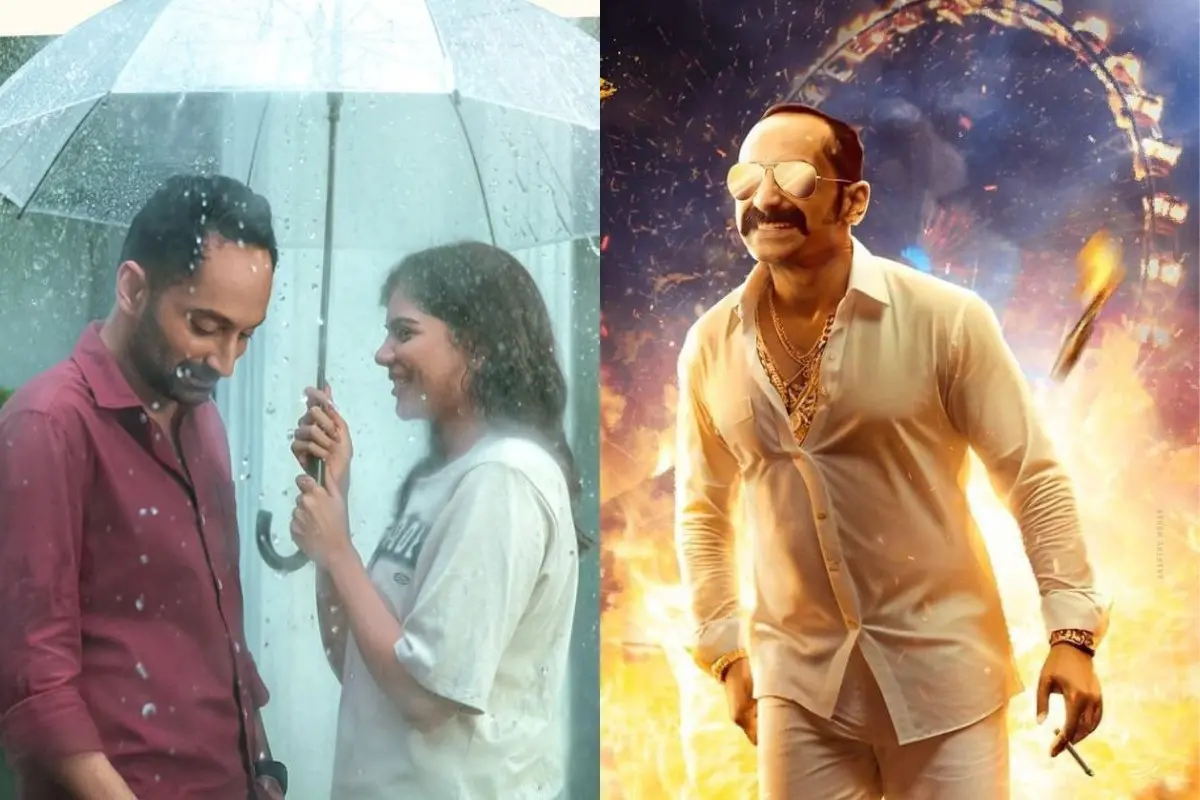
Vinayak points to ‘Kunjikkavil Meghame’ from ‘Aashaan’, a song that wasn’t created with Reels in mind at all.
"A recent example from my own work is ‘Kunjikkavil Meghame’ from ‘Aashan.’ In that film, none of the songs were created with Reels or social media trends in mind. The film's director and music director, John Paul George, was very clear about that. He felt there was no need to make songs specifically for trends and that we could simply focus on creating soulful music. If the songs found visibility, that would happen naturally”
“For me, that was a pleasant surprise. Aashan wasn't a film that people expected to have a huge star cast or massive visibility, so hearing a filmmaker take that approach was refreshing. I was completely on board with it.”
“Kunjikkavil Meghame is proof that a song doesn't have to be designed for Reels to become popular on social media. Even though it wasn't made with that intention, it became a huge hit across platforms, including Instagram. It came from a relatively small film and yet it reached an audience far beyond what anyone expected. I think it's safe to say that almost everyone has heard at least a part of that song. So when we talk about making music specifically for Reels, Kunjikkavil Meghame is an example of how a genuinely good song can still find its audience.”
Lyricist Suhail Koya sees the trend even more positively.
“People use songs in everything — weddings, birthdays, travel videos, even random moments from daily life. If even one percent of those viewers go and listen to the full song, that’s a win,” he said.
So... are songs being written for Reels now?
The short answer is sometimes. The longer answer is where things get interesting.
Vinayak admits that certain songs are intentionally built around a memorable hook.
He cites ‘Onam Moodu’ from Sahasam as an example.
“On the other hand, there are songs that are planned differently. Take Onam Mood, for example. We approached it almost like creating an advertising jingle. Even before the tune was composed, we had already decided on the template. We knew the phrase 'Onam Mood' would be the hook.”
“The idea was simple: ask a question about what puts people in the Onam mood and then list all the things associated with the festival… Saree, Sadya, flower carpets, and so on before landing on the punchline, 'the Onam Mood.' The whole structure was built around a memorable hook.”
“Whether you like Onam Mood or not is a different question. But if I ask you about the song, chances are you've heard it. That's the impact it had. Of course, some people loved it and some didn't, but even among people who felt neutral about it, the song still became familiar. It reached them.”
“The song went beyond music as well. People started creating their own content around it, and even advertisements drew from its popularity. So I've seen both approaches work firsthand. I've seen a song succeed without being designed for social media, and I've also seen a song become successful because it was consciously built with that format in mind,” Vinayak said.
But not everyone starts from that place.
Singer-songwriter Zeba says she personally finds it difficult to create music while thinking primarily about virality.
“In some ways, it does take away from the essence of making music as an art form. That's my personal opinion. At the same time, I understand where it comes from. It would be a little naive to pretend that commercial success and audience reception don't matter, especially today when social media and content are such a huge part of how music is discovered and consumed.”
“As someone who works in both the indie space and the commercial playback music industry, I've seen both sides of this. Being an independent artist has also made me realise how much goes into releasing music today. It's no longer just about writing a song, composing it, recording it and putting it out into the world. There's a whole ecosystem around it now.”
“Honestly, that can be quite overwhelming. Unless you're an established artist with a label, a budget and a team handling everything, you're often doing it all yourself. For a solo independent musician, managing the creative side as well as the promotional side can be a lot.”
“Personally, when I make music, I try to focus first on the kind of music I genuinely want to create and connect with. But I also think it's important to find a healthy balance. You don't have to completely ignore the realities of the industry, but if you're only chasing virality and the commercial side of things, then you risk losing sight of why you started making music in the first place,” she said.
Suhail added that it's not always done deliberately. But if a song ends up having a strong hook, then that's just how the creative process has unfolded. Sometimes you start with a single word, sometimes with a phrase or a couple of lines. Once you find that central idea, you build the rest of the song around it.
“Of course, everyone is aware of what works well on Reels and what tends to be shareable. That's something people discuss all the time, so there's no need to spell it out. Those influences naturally find their way into the creative process.”
“But honestly, it's not as if we sit down with the intention of creating a trending Reel first and then making a song around it. That's not really how it works,” he said.
Are we missing the best parts of songs?
This might be the biggest fear people have about Reel culture. What happens to the second verse? The bridge? The beautifully written lyric buried halfway through a track?
Suhail isn’t entirely convinced those moments are disappearing. In fact, he’s seen the opposite happen.
He recalls the song ‘Dupattawaali’ from ‘Odum Kuthira Chaadum Kuthira’, where everyone assumed the hook would become popular online. Instead, listeners gravitated towards a softer, more poetic section.
“Interestingly, people ended up using the romantic, melodic section of the song ‘Njanum neeyum raavum ambiliyum...’ more than the hook we had expected to take off. That's why there's really no predictable formula. What we think will connect with audiences isn't always what they respond to. Sometimes you plan for one part of a song to become popular, but listeners latch on to something completely different. It can be anything, and that's what makes it difficult to predict. As creators, we can make guesses, but we can never truly judge in advance which part of a song people will connect with the most.”
Which is probably why some of the most emotional songs still find devoted listeners despite never becoming dance trends.
While catchy hooks may help a song travel online, he doesn't believe they're replacing the rest of the writing process.
In fact, lyricists point out that technology has done something unexpected; it has made audiences more curious about lyrics.
Suhail sees lyric videos, streaming platforms and social media discussions as positive developments for writers.
"People now actively read lyrics. They look up meanings. They discuss them online."
From Spotify displaying lyrics in real time to fan pages decoding song meanings line by line, words are arguably getting more attention than they did a decade ago.
Can a song succeed without social media anymore?
Not quite. But everyone agrees social media is impossible to ignore.
Vinayak believes the answer depends entirely on how success is measured.
“If we're talking purely about commercial numbers, then social media definitely plays a huge role. For most people, that's where they first discover a song. They might hear a snippet on Reels, like it, and then go looking for the full version. From there, they may listen to it on YouTube or an audio streaming platform. So in terms of reach and numbers, social media is incredibly important. But not every song is judged by those metrics alone. I don't think music directors measure the success of every song in the same way.”
“There are times when it matters more than the numbers. You may not have a viral hit, but if you feel you've created a great song and the film has benefited because of it, that's still a win. In the end, it all depends on how you choose to define success,” he added.
Suhail takes a similar view.
“From the perspective of artists and technicians, this has been incredibly beneficial. It has given a huge boost to independent music. Today, songs don't need the backing of a film or a major label to find an audience.”
“Take artists like Dabzee, Baby Jean, MHR and Vedan. Their popularity isn't built primarily on film songs. They created their own music, put it out there, and found listeners. Social media helped create that space. Many of these artists became widely known because audiences discovered and shared their music directly.”
“What excites me most is that this has created a beautiful world where anyone can come forward with their own music and their own voice. They can release it, see how people respond, collaborate with others and keep pushing it further.”
“Collaboration has become much easier too. Today, Malayalam artists work with Tamil artists, Hindi artists collaborate with musicians from Kerala, and people are constantly crossing regional boundaries. In that sense, technology and social media haven't limited music at all. They've expanded the possibilities and opened doors for an entirely new generation of artists,” Suhail said.
While composer and performer Varun Sunil appreciates how platforms have made music easier to discover, he believes artists still need to focus on their craft.
“I see it as an evolution. In many ways, it's a positive change. It's become much easier to promote music and reach people through Reels, Instagram and other platforms. Artists today have tools that simply didn't exist before. At the same time, I feel the most important thing is still the craft. No matter how much promotion is available, you have to keep working on your music and improving as an artist.”
“For me, performance is a big part of that because I'm a performer first. Whenever I create a song, I always imagine performing it live. That's my approach. A song should be able to stand on its own, not just online but also in front of an audience. Social media can help a song travel further, but at the end of the day, the music itself has to connect with people, whether they're hearing it on a Reel or experiencing it live.”
So, is this Reel-first era here to stay?
Not everyone thinks so.
Vinayak believes music consumption will continue evolving as technology changes.
“I think this approach is temporary. Five or 10 years from now, the way commercial songs are made could be completely different.”
Suhail sees it differently.
"If you go back 10 or 12 years, songs in cinema had almost reached a point where they seemed to be disappearing. Many films felt that one song, or at most two, was enough, with background scores taking over much of the space that songs once occupied.
“But then technology changed everything. It gave music a completely new life. In fact, the last few films I worked on had eight, 10, even 12 songs. For singers and musicians, the opportunities have become much bigger. A lot of that is thanks to social media and the technological changes that came with this generation.”
“That's why I see this shift very positively. Some people treat it as a passing trend, but I see it as part of a larger evolution. Things will keep changing. New formats will emerge, and some of them may even feel strange for us to accept at first. But that's the nature of change,” he said.
Yes, the viral hook matters. Artists are more aware of social media than ever before. But despite all the talk about algorithms, trends and Reels, the people making music still keep coming back to the same idea.
“A good song is a good song”
The hook might grab your attention. And sometimes, the best part of a song is still hiding somewhere beyond those famous 15 seconds.