The voice before the name: Remembering Asha Bhosle through a childhood echo
When I think of Asha Bhosle now, I think of a dusty road—a narrow stretch between Chennamangalloor and Mukkam in Kerala, sometime in 1976. I was 8, walking with a group of boys towards PC Talkies, an old theatre roofed with palm leaves. In those years, cinema did not come easily to us. It arrived through negotiation—often denied, rarely granted. That day, permission came because of Salam Master, a new teacher at our school who believed that films, like books, had something to teach. He brought with him a quiet revolution that changed our school in many ways.
We walked over four kilometres in a line, the late afternoon light stretching ahead of us. And then, before the theatre came into view, I heard it.
A voice, carried through a slightly distorted loudspeaker, drifting into the open air.
"Swayamvara Shubadhina Mangalangal... anumodhanathinte aashamsakal..."
I slowed down. The others moved ahead. I stood there for a moment, not fully understanding why.
I did not know who was singing. But something in that voice stayed back with me.
The film we watched that day — Utharayanam — faded with time. The walk, too, became part of the blur that childhood eventually becomes.
But the song did not leave.
A few days later, a jeep passed through our area announcing the Malayalam film Sujatha. The same song "Swayamvara Shubadhina Mangalangal" poured out through its loudspeaker. I remember running behind the jeep, trying to hold on to the sound for as long as I could. Someone handed me a notice. I kept it carefully, as though it contained the song itself.
I wanted to hear it again.
At home, that was not an easy wish to fulfil. Cinema-going was not encouraged. But childhood finds its own ways. My uncle, Abulais, three years older than me, cautious in a way I was not, became my accomplice. We told them we were visiting an aunt in Mukkam. The plan was simple: leave early, watch the film, and then go where we said we would go.
It was enough.
We reached the theatre. We watched Sujatha. And there it was again — the same voice, now closer, clearer, filling the dark hall.
But still, I did not know who was singing.
At home, music had a different presence.
My father kept a shelf of old Hindi song cassettes, and in the evenings, they would come alive. Some of them arrived from Dubai, sent by a close friend. Those cassettes carried their own quiet excitement. When a new one came, it was announced almost ceremonially. We would gather, and the house would settle into listening.
We were a Malayalam-speaking household. Hindi was not a language we used. And yet Hindi songs moved through our home without resistance. Across Kerala, this was a familiar story. Through Radio Ceylon, through records from Bombay, and later through the Gulf, Hindi film music entered homes where the words were not fully understood, but the feeling was immediately recognised. Voices travelled more easily than language, and they stayed.
"Abhi Na Jao Chhod Kar."
That is how that song first found me. The words were not fully mine then. But the feeling was unmistakable — the hesitation in the voice, the gentle insistence, the sense of a moment being held back from ending.
Dil abhi bhara nahin.
The heart is not yet full.
Over time, I learned to recognise the others — Mohammed Rafi, Kishore Kumar, Lata Mangeshkar.
And then, gradually, without any formal introduction, that same voice I had first heard outside PC Talkies began to take shape within that world.
It was not fixed in one mood. It could be light, playful, almost teasing. And then, without warning, it could turn inward — measured, controlled, and deeply felt.
I did not connect these moments then.
The boy standing by the roadside. The evenings by the cassette shelf.
They remained separate memories.
It was only years later, after I had moved to Dubai, that the connection revealed itself. The distance had not dimmed any of it. If anything, away from Kerala, those childhood sounds returned with more clarity than they ever had at home.
I came across an article about the film Sujatha. About the making of that song, "Swayamvara Shubadhina Mangalangal", a song that has outlived its moment, still circulating today, finding listeners far removed from the world in which it was first heard. And then, almost in passing, the name.
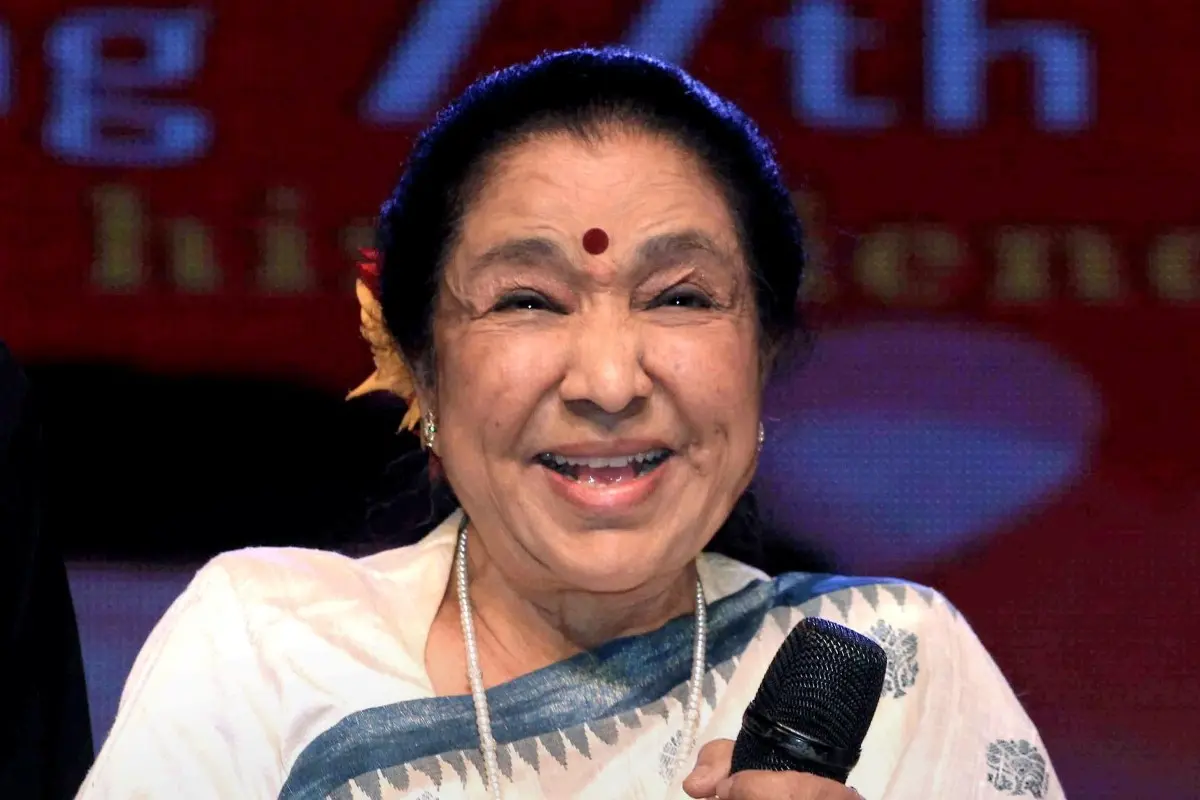
Asha Bhosle.
It was her only Malayalam song.
They had always been the same.
Her passing now does not arrive as news alone. It arrives as something you were not prepared for, even though you had lived with her voice your whole life. A kind of grief that belongs not to the present moment but to all the moments that led to it.
It returns as memory.
A road in 1976. A loudspeaker carrying a song into open air. A boy pausing, without knowing why. An uncle, Abulais, walking beside him. An evening at home, where music made the rooms feel larger than they were.
And a line that has remained, all these years, without ever asking to be remembered:
Abhi na jao chhod kar...
The heart is not yet full.
Perhaps it never is.