The melody of rivalry and love: How Asha Bhosle found her voice in the shadow of Lata Mangeshkar
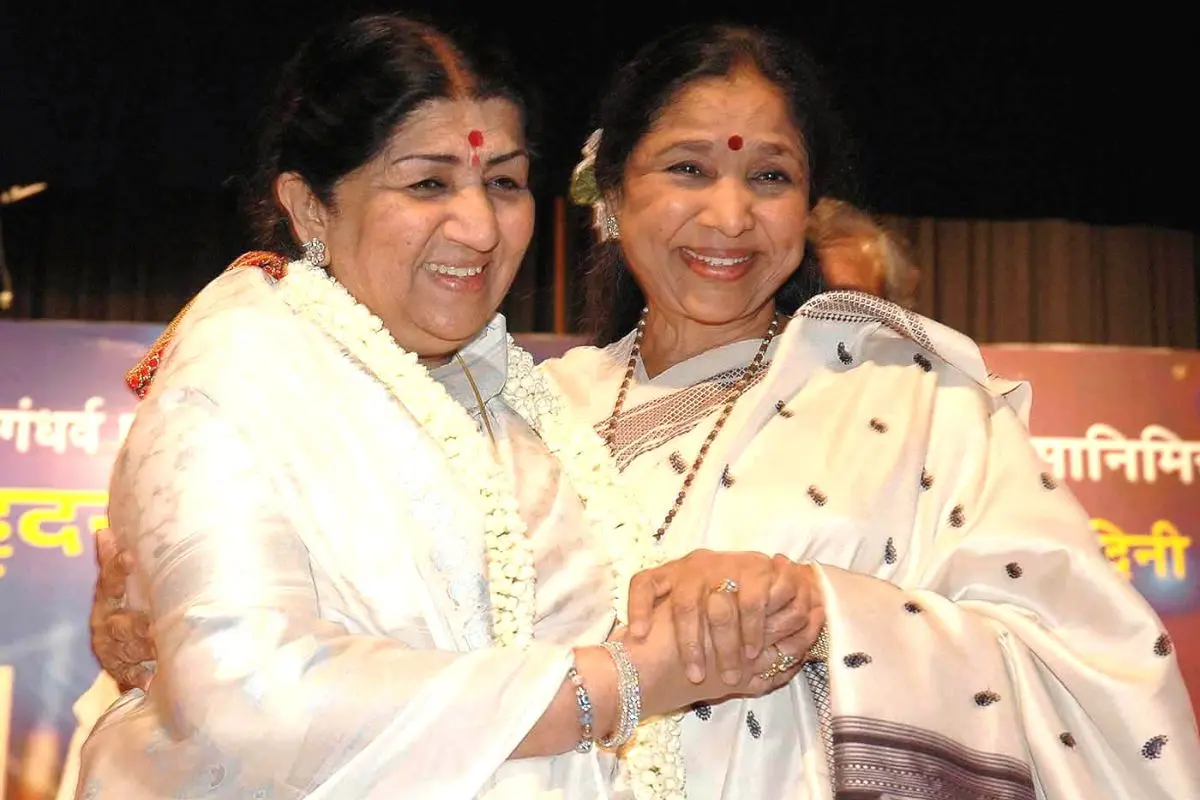
In the golden era of Indian cinema, the airwaves were dominated by two voices that felt like two sides of the same coin: the ethereal purity of Lata Mangeshkar and the versatile, velvet grit of Asha Bhosle. While the world celebrated them as the "Mangeshkar Sisters”, behind the recording booth lay a complex tapestry of professional fear, personal rebellion and an eventual, unbreakable bond.
A voice at risk: The fear of being overshadowed
For a young Asha Bhosle, the challenge was not just entering the music industry; it was surviving in the same space as a living legend who happened to be her elder sister. Early in her career, the two sounded so remarkably similar that even industry insiders could not tell them apart.
Asha once recalled a pivotal moment when a production member mistook Didi’s (Lata’s) voice for hers on a record. That mistake sparked a realisation that led to many sleepless nights.
"I thought to myself, if I continue to sing in a similar voice to didi, then I will never get work as long as didi is in the business. I won’t have a name and fame of my own," Asha admitted during an interview with India Today.
Driven by the fear that she would remain a mere echo of her sister, Asha made a conscious, radical choice: she changed her soul. She began watching Western films to master modulation, studied the intricacies of Qawwalis and Ghazals, and experimented with pop and classical forms. This "healthy competition" didn't just save her career; it pushed her to become a Guinness World Record holder with over 12,000 songs to her credit.
The 16-year-old rebel: A family divided
While their professional lives were defined by competition, their personal lives were fractured by a bold act of defiance. At just 16, Asha fell in love with Ganpatrao Bhosle, who was 31 and served as Lata Mangeshkar’s personal secretary.
The union was met with fierce opposition, particularly from Lata. The marriage caused a deep rift, leading to a period of painful estrangement where the family cut ties with Asha. This forced the young singer into a life of emotional isolation, balancing a struggling marriage and three children while trying to carve out a legacy independent of the Mangeshkar name.
Two sisters, one indelible legacy
Despite the bitter separation from Ganpatrao and the initial disapproval of her later marriage to the legendary composer R D Burman—who was six years her junior—the bond between the sisters eventually softened.
Asha often noted that recording with Lata was an exercise in intense self-awareness. She felt a constant pressure to add a "unique touch" to every duet, ensuring she left her own mark alongside her sister's formidable talent.
"There was definitely a competition between us. It was a healthy one. This competition enhanced our songs," she shared.
Ultimately, the story of Lata and Asha is not one of a feud, but of metamorphosis. Lata’s presence forced Asha to innovate, leading to the creation of the versatile icon we know today. Their relationship, marked by long silences and soaring harmonies, remains the most poignant duet in the history of Indian music—a testament to how two stars can occupy the same sky without dimming each other's light.