EXCLUSIVE! 'It's the scariest thing for an actor...' Roshan Mathew on being typecast
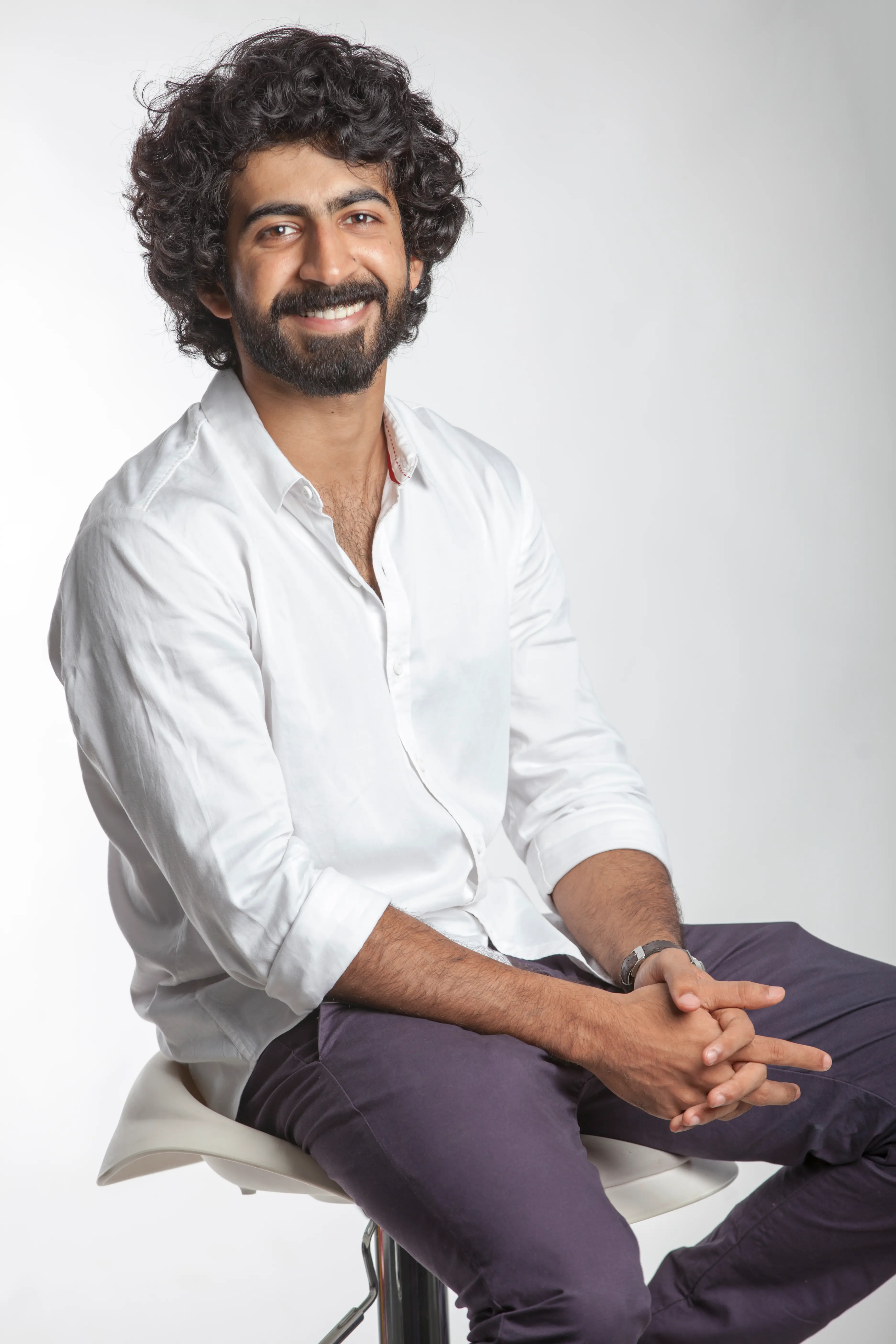
In an industry that often struggles to define versatility, Roshan Mathew continues to quietly — and powerfully — defy boxes.
Whether it’s playing the morally ambiguous Ashu in ‘Kankhajura’, stepping into a quiet storm of a role in 'Paradise', or prepping for a full-blown action-comedy with ‘Chatha Pacha: The Ring of Rowdies’, the actor thrives on variety, nuance, and risk.
In this candid and wide-ranging conversation with Mathrubhumi English, Roshan opens up about the calculated unpredictability of his choices, the excitement of collaboration, the pressures of navigating perception in the industry, and the joy of switching between minimalism and madness — often in the same year.
Q. From international film festivals to theatre releases and now OTT, 'Paradise' has steadily expanded its audience since its 2023 debut. How has that journey felt for you?
With every movie, I feel like the stand of test of time — it’s the most fruitful outcome of the efforts that were put into it. With 'Paradise', technically, in the lifespan of a film, two years is a very short span. But within this short period of time, it has travelled all over the world, it has had a proper theatrical release, it played at IFFK, it went to Busan International Film Festival for the premiere, and now it’s landing on MUBI, where it’s also going to find a new audience.
It’s overall very heartwarming for me. Personally, it felt like 'Paradise' is a film that surprised me in terms of the audience connect that it found, no matter where it was played.
Something that Prasanna Sir has done, or something with the purity of the intention of the film, has made sure that it connects with people all across.
Q. Was there a particular moment or scene in ‘'Paradise'’ that challenged you emotionally, not because of its intensity, but because of its subtlety?
We had a bunch of really incredible co-actors working with us — all the Sri Lankan actors I’m talking about in 'Paradise'. Darshana and I were constantly wowed by the performances of Mahendra Perera, Shyam Fernando, and Sumith Ilango.
There is this one scene that happens between Keshav, the character that I play, and Sergeant Bandara, played by Mahendra, outside the hospital. Keshav doesn’t get out of the car; he went and got himself a new phone, so he’s back in touch with his virtual world and his circle of people. And he has a quick interaction with Sergeant Bandara.
Prasanna Sir, after that scene, said that he saw how empowered a man feels when he has a piece of technology in his hands. That’s not something I thought while doing the scene, but I definitely felt the change and equation that just happened organically.
That was one moment where I felt like — yes, firstly, what the filmmaker, writer, and the rest of the filmmaking team are making of this film is much bigger than what, as actors, we think we’re doing. We’re just providing them with what they require to tell the bigger story.
Q. If you had to describe ‘'Paradise'’ using just three words that reflect your personal takeaway from the experience, what would those be?
Firstly, minimal. I feel like 'Paradise' is an experience; it’s a film that objectively shows you that less is more. It is quite unravelling in a situation of crisis, where I feel like nobody can continue to pretend anymore when you’re faced with a crisis.
People’s most honest moments and revelations come in moments of crisis — that’s something that I always found exciting about the script.
I feel, in the sense of gratitude that I associated with this project, it's purely for the kind of people I got to collaborate with for this — be it Prasanna, Rajeev Ravi, or Darshana, and all of our actors from Sri Lanka.
Q. Darshana Rajendran said that she is in “awe” of you as a director, that you’re both critical of each other’s work, and that you know her tricks as an actor. How does your off-screen friendship help in the on-screen chemistry?
She knows all of my tricks too, so that really helps. As actors, we sometimes, without realizing it, fall into a place of lying a little bit, where a moment is not played out as honestly as it should be, or it can be. It just sort of slips in. Sometimes you don’t even realize it, but it’s great when your co-actor can catch it, and it doesn’t even have to be a verbal acknowledgement of it.
Sometimes there is nothing said, but I can read it in how she responds to me in the scene — that I know I can do something with this, or I can do something better. Somebody who holds you to your highest possible standards is always a great person to have around on the set whenever you’re working together.
With Darshana, the fact that we’ve known each other for so long — we know each other very closely also — that helps. Especially in a film like 'Paradise', where you land in Sri Lanka with the characters of Amritha and Keshav, and we have to almost immediately convince the audience that we’ve been together for five years, and this is our fifth anniversary celebration.
So, at that point, it really helps to be working with somebody that you’re already comfortable with, and convey certain history without specifically talking about it or showing it.
Q. Ashu, in ‘Kankhajura’, comes across as a highly manipulative character. How did you approach playing someone like that?
It is what excited me the most as well — that Ashu’s power is quieter. Manipulating somebody is completely dependent on the other person. It depends on who the other person is, whom you’re trying to get into the head of, or what your equation/relationship is with that person.
So, each instance of Ashu manipulating somebody had to be different. It only depended on who the other character was going to be. A lot of it couldn’t actually be planned in advance. Just the fact that it depends on the other character also means that it depends on the other actor’s portrayal of their character, or how the actor is playing the equation that they share with Ashu.
A lot of it had to be figured out while we were shooting the scenes. That is where Chandan Arora (the director) really came in. He is not somebody who spends a lot of time during pre-production in terms of prep work or discussions. He just wants to get on the shoot and then figure it out and crack a scene.
There were a lot of scenes where Ashu is seen manipulating someone, where we started off with something, tried out multiple options, and then Chandan would come in with a suggestion that would be completely in the opposite direction, and we’d go for it.
Working with him on those scenes was particularly exciting.
Q. You’ve played everything from an earnest lover to a deeply flawed man. How do you manage to switch so smoothly between such varied characters?
I’m really flattered that you think the transitions are so smooth and the roles are diverse. It has the most to do with the writing, and I’ve also picked very carefully.
When I read something, I’m very aware of whether a particular character that I’m reading will end up being similar to something that I have played in the recent past. Obviously, if it’s been two or three years since you’ve done something in that territory, you should expect yourself as an actor to have evolved enough to make it different.
Otherwise, if it feels like it’s almost a repetition, or almost similar to what I’ve done recently, then I don’t do it. I look for variety in the material itself. Out of the options that I get, I look for really good writing, and I’ve been fortunate enough to work with great writers and directors who have also helped me with this.
None of this is possible for an actor; there has to be a reliable outside eye always to nudge you in a fresh direction, to make new discoveries, and there has to be good writing to back you.
Q. What’s one conception people might have about you as an actor that you wish they didn’t?
Generally, when I do interviews, I get asked these questions: “Oh, you do all these serious films and realistic movies. You want to do something commercial?”
I feel like the numbers have been in balance, but I’m as open to a complete commercial entertainer as I am to a film like 'Paradise'. That is something that felt like—I don’t know why people think that.
It’s the scariest thing for an actor when you feel like you’re rejected before being considered.
Q. You’ve directed plays in the past. Is a directorial feature film on the horizon for you?
Sometime before I die for sure! There is a lot that I need to learn about the medium and the process of filmmaking. I have worked very conveniently, so far, purely as an actor without bothering myself with trying to find out about the process of filmmaking. And I’ve worked with some of the most incredible directors, so it’s not easy to watch a director at work and understand how to do what they’re doing. Also, there are so many more directors and filmmakers out there with whom I’m just waiting to work with.
Q. You’ve worked with some of the best directors of Indian cinema. Tell us about a director that you wish to work with - Indian or international.
So many people that I can think of. Since you said Indian and international, I really want to work with David Fincher.
Q. What’s next for Roshan Mathew that we should watch out for?
All of us actors are constantly in search of the next, fresh, and extremely different thing that we can do. Currently, I’m working on ‘Chatha Pacha: The Ring of Rowdies’ in Malayalam, which is an all-out action-comedy entertainer.
I’m very excited about some of the sequences in the film, and the character that I’m playing, along with the co-actors and team that I’m working with. Hopefully, ‘Chatha Pacha’ will be a very different experience from all of my recent films.
Q. What’s one film performance that you’ve watched and thought: ‘I wish I’d done that’?
‘Manchester By The Sea’ is the first thing that comes to my mind, and also ‘Masaan’.