Ram Madhvani: 'The Waking of a Nation’ is really about racism, colonialism, prejudice...
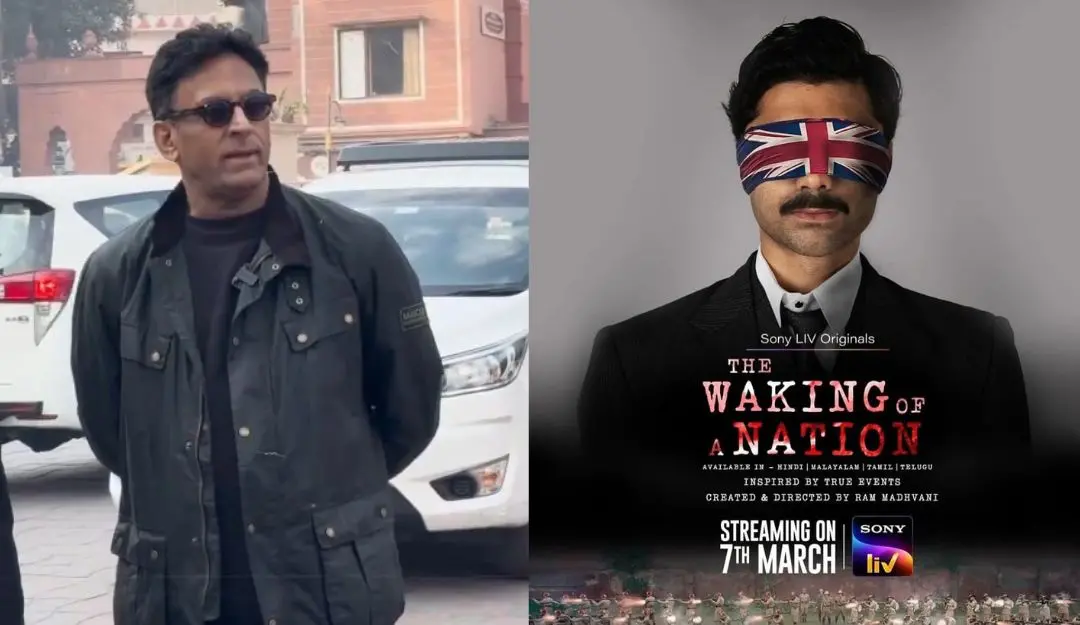
Acclaimed filmmaker Ram Madhvani is enjoying good reviews from the public for his latest OTT release—‘The Waking of a Nation,’ which was released on March 7. In a candid conversation, the director delved into the making of his latest series, a historical drama inspired by the Jallianwala Bagh Massacre.
With a career marked by critically acclaimed titles like National Film Awards winner ‘Neerja’ and International Emmy Awards nominated series ‘Aarya,’ Ram shared his approach to crafting period dramas, the importance of authenticity, and the pressures of living up to audience expectations.
He also opened up about his experience working with a young cast, his favourite moments from the series, and the responsibility that comes with creating content for a wide audience. Excerpts from the interview:
Walk us through how ‘The Waking of a Nation’ came into being.
We started writing this series about five years ago; my co-writers, Shantanu Srivastava and Shatrujeet Nath, have been a part of this journey. I was troubled about the idea that the people who came here (in India) during the British Raj, because we have brown skin, made us feel that we, the natives, are savages. They taught us to eat with a fork and knife, suggesting that eating with [your] hands isn’t a good thing. All of these things they taught us. Even in school, we were taught how to eat with a fork and knife, which seems like it is a mark of civilisation. Why is eating with your hands not a mark of civilisation?
These things were troubling me for many years, including the language that we are speaking in (right now). The fact is that I want to be a part of this country, and I want to be rooted. The freedom struggle and how we got our independence, that is also a part of it, but more than anything else, the show is really about racism, colonialism, prejudice, and about a whole bunch of white people who came here to try and civilise us. It is inspired by the Jallianwala Bagh Massacre.
We don’t show the massacre, but we have dedicated it to the people who lost their lives. It also speaks about something that we didn’t really know about, which is what happened before and after the massacre, and that there was also a commission that was set up. There is a completely fictitious character, and it’s a story of four friends and what they went through during this period in our nation’s history.
In the context of periodical dramas, what are the crucial elements that filmmakers must get right to transport audiences to another time and place?
Even ‘Neerja,’ in a way, was a period (film) because it was set in the ‘80s. I think what happens is that you must take it for granted that there must be thorough research on the project and that a period (drama) should be authentic, because if it wasn’t there, then you would not accept it. You should, in fact, accept it to such a point that you should feel like you are living in that era.
When you watch the series, everything is so detailed that I don’t think there is any way that you can say, ‘I’m not living in 1919.’ The problem with production and costume is that you see it when it’s perfect, but you focus on it when it goes wrong. In this show we’ve been very careful with these details. It should not look like a “period film” that there’s a set made for it. We’ve not used any set; we’ve shot at live locations.
Do you worry about potential backlash or criticism over historical inaccuracies in period dramas?
It depends on the lens at which you are looking at it. We have very clearly said that it’s inspired by true events, and not that it is based on true events. Unlike ‘Neerja,’ which was based on a real character, ‘The Waking of a Nation’ is based on a fictitious character. When you are upfront saying that I’m not making a historical and I’m not making a documentary, so when people watch it, they will receive it with that honesty and with the way we are meaning it to be. That’s the lens with which people will see it.
What inspired you to choose a cast of relatively new and young actors for this project, and what qualities did you look for during the selection process?
In a way, they are not newcomers; they have been around. It’s a show about youth. I’m hoping that it will reach out to the youth. It’s a story of four friends, and just like today’s youth, this show is about their ambitions and problems and what they go through. SonyLIV has been so supportive about the cast that is deserving and the right age.
Abhimanyu, our casting director, took a lot of auditions and testing. There must have been 200 auditions for even Taaruk (Raina)’s role. I don’t judge it from their earlier work; I judge it from their audition. But most importantly, I judge it out of the hunger that they have. One thing that I realised with all four of them is that they are very talented. I also looked at their hunger, their work ethic, and whether they can adapt to my system of filmmaking.
What I found with these four actors is that I am very happy with all of them. Nikita (Dutta) has also done a great job; it’s a new way of looking at her. It’s a new way of looking at Taaruk too, who has sung four songs in the show.
Now when you look back, what are your favourite moments from the series?
We had four DOPs (directors of photography), and all of them were females. Kavya and Dhawalika are two of the main DOPs. Sometimes when I used to take long shots during lunch break, I would later see them putting their feet in tubs with hot water and salt. It was a very tiring shoot like that. These off-camera moments that you remember of people and what they went through are what matter. I don’t treat my junior artists as junior artists; they are not my background, but my foreground. I thank them for what they give me. If you look at ‘Neerja,’ the passengers feel as if they were inside the plane at the time of the incident. You believe that they are there. So, it’s these things that I remember of what they give me and the energy they give me.
After achieving success with titles like 'Neidera' and 'Aarya,' do you approach a new project with a fresh perspective, or does the pressure of past successes and the expectation to deliver your best work weigh on you?
The pressure is always there. There are two kinds of people I don’t want to let down—my team and, most importantly, the audience. I think that that expectation comes with certain respect and regard. I hope that I don’t let them down. I also don’t want to waste their time; they have given me so much love. I do make projects for the full family. I‘m interested in reaching out. I think televisions are in bedrooms and living rooms.
So whoever is watching it, I respect their time, and I respect the regard that I have received so far from them. The pressures and anxieties are there, but I hope that I don’t let the people down.