Deva Katta on ‘Mayasabha’: ‘OTT wasn’t on my radar, but this story chose its own destiny’ | EXCLUSIVE
Deva Katta never planned to venture into the OTT space. The filmmaker behind acclaimed political dramas like ‘Prasthanam’ and ‘Republic’ only briefly considered it when he collaborated with SS Rajamouli on a ‘Baahubali’-universe series—an ambitious project that ultimately didn’t materialize.
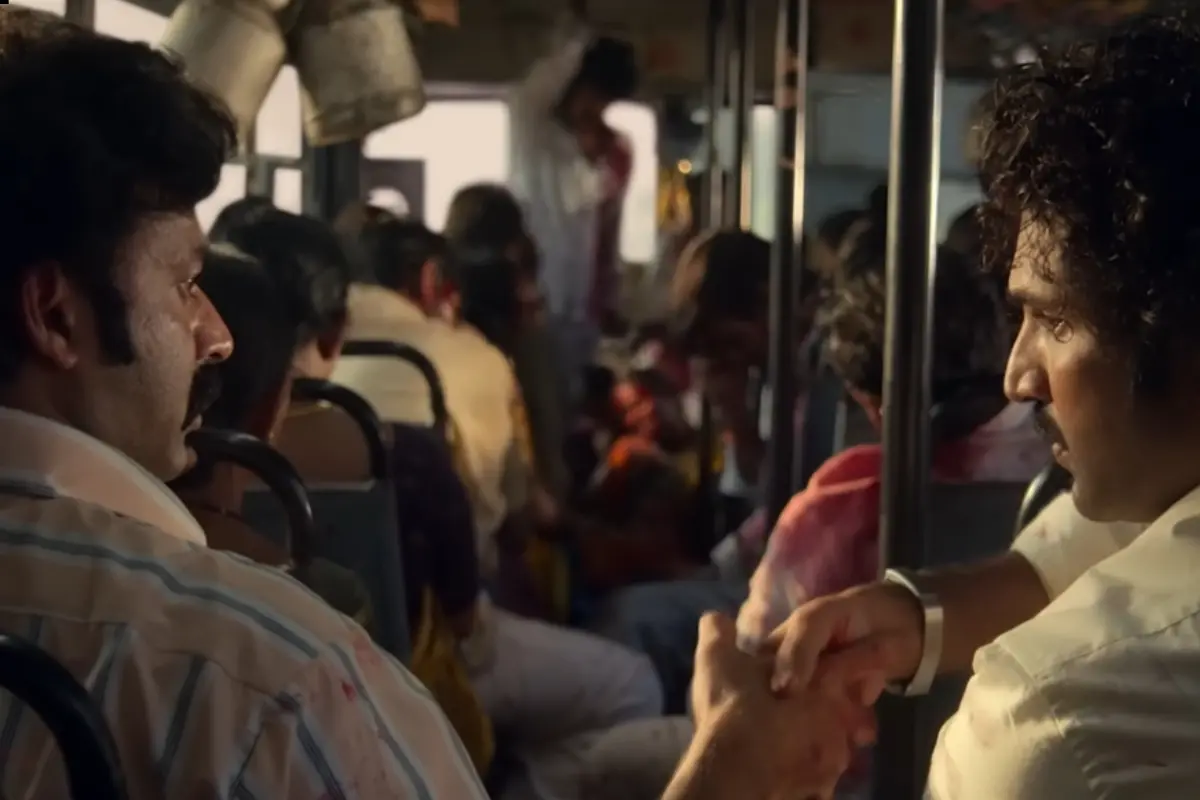
Now, years later, Deva makes his streaming debut with ‘Mayasabha – The Rise of the Titans’, premiering on Sony LIV on August 7. Set in the politically charged backdrop of 1970s Andhra Pradesh, the series blends fiction with emotional truth.
In this exclusive conversation, he opened up about reimagining a story he once intended as a film trilogy, navigating the unexpected challenges of OTT censorship, and why ‘Mayasabha’ isn’t just about political icons—but about all of us. Read excerpts:
Q: From ‘Prasthanam’ to ‘Mayasabha’, your focus has shifted from legislative power in a rural setting to a multi-season political saga in Andhra Pradesh’s volatile history. How did your mindset evolve when transitioning from a two-hour film to long-form storytelling?
It really came down to the demands of the story—its layers, the number of characters, and the world we wanted to build. Honestly, I never set out to create something for OTT. The only time I even considered it was when we explored developing a ‘Game of Thrones’-like series set in the ‘Baahubali’ universe, owing to my association with SS Rajamouli sir.
We invested time into writing and shaping it, but the process felt rushed. There was this pressure to finish it quickly, which didn’t sit well with me. Eventually, we shelved that idea. Apart from that phase, OTT wasn’t really on my radar. Even now, my next project is a theatrical film.
'Mayasabha' pulled me toward this format organically. I initially conceived it as a trilogy—my version of a ‘Godfather’-like saga. But the challenge was finding actors willing to commit to three parts, especially for a drama that’s grounded in realism. It’s not the kind of high-concept spectacle like ‘KGF’ or ‘Baahubali’ that usually justifies such a commitment.
Post-COVID, after I wrapped writing ‘Republic’, I felt the writer in me craving a new challenge. That’s when I decided to reshape 'Mayasabha' for OTT. I started developing a Bible, episode outlines for Season 1, and structured the arcs for Seasons 2 and 3 based on the original movie version.
Once we started pitching, every platform showed interest. But Sony LIV, being home to content of this kind, felt like a natural fit. It was as if we were drawn together. Ultimately, this format allows me to tell the story with the depth and nuance it deserves.
Interestingly, OTT has now become a space where grounded dramas—if executed well—can gain the kind of reach we associate with theatrical giants like ‘Baahubali’, ‘RRR’, or ‘KGF’. It’s like the story found its own destiny.
Q: You’ve described 'Mayasabha' as going “beyond Prasthanam”, promising neutrality in depicting two political titans. How did you maintain that balance while dramatizing emotionally charged narratives drawn from real-life figures?
I always say—this is a beautiful lie. Like a dream. And in dreams, every character is you, born from your subconscious. It’s the same with storytelling.
That’s why we never claimed it’s anyone’s biography. We’ve positioned it as the story of United Andhra Pradesh. If you think of Andhra Pradesh as a single family—’kutumbam’—then ‘Prasthanam’ was just the drama of a small-time MLA’s family. But 'Mayasabha' is about the entire Telugu family during the 1970s, a time of political awakening brought about by leaders I see as “Avengers” of that era.
I wanted to honour them—give them their due. Yes, they had their differences, but I focused on their heroism along with their vulnerabilities. Some may take offense—“My hero never smoked,” or “My hero never had a girlfriend.” I didn’t want that baggage.
This story is fiction rooted in emotional truth. I explored universal human emotions—just like I did in ‘Prasthanam’. Fiction allowed me to remain unbiased because I genuinely admire all these leaders for their strengths. And I believe it’s in confronting and overcoming weaknesses that greatness is born.
So for me, being biased would only hurt the story—and me as a storyteller. There’s an incentive to stay neutral. And when your intent is pure, the universe—and the process—guides you in that direction.
Q: As a director known for political storytelling, what does OTT offer that theatrical cinema doesn’t?
Primarily, it offers narrative space. You can spend more time developing characters and their worlds, making the audience emotionally invest in them.
Contrary to popular belief, OTT doesn’t come without scrutiny. In fact, it involves even stricter legal and content checks than theatrical releases. Sony LIV, for instance, is extremely cautious and respectful, especially with socially and politically sensitive material. Look at their track record—'Scam 92’, ‘Maharani’, ‘Rocket Boys’, and the most recent one, ‘The Hunt’—all handled with dignity, and none sparked controversy.
That’s the standard 'Mayasabha' aims for. Before ‘Republic’ came out, people speculated about its political bias—some even linked it to caste dynamics or Pawan Kalyan garu’s political speeches. But once the film was released, it transcended all of that. It became a story about the system, democracy, and who we are as a society.
I hope 'Mayasabha' achieves the same—something of real value, like a treasure you bring into your home with a modest OTT subscription. If there were any pitfalls, I would’ve seen them during the writing itself. These characters are like my children—I created them, flaws and all, with love and responsibility.
Q: Your filmography spans documentaries, campus romances, and political thrillers. If you had to define your directorial voice in a single phrase today, what would it be?
Perspective. Everything I write begins with that—how we perceive life. My philosophy is rooted in the idea of being “pro-life.” Every character, event, or conflict is analyzed through that lens: Is it nurturing or destructive to life?
Take ‘Vennela’, my rom-com. It stemmed from this thought: a man often believes that once a woman falls for him, she must stay committed forever. But what if he turns into someone toxic? Doesn’t she have a right to happiness? That was the emotional core.
‘Prasthanam’, on the other hand, explored moral vulnerability—the idea that the seeds of crime we sow will eventually grow and come back to haunt us.
I gravitate toward themes other filmmakers may overlook. Influences like Martin Scorsese and Quentin Tarantino push me to explore the darker, more dramatic corners of human experience. At the heart of it, I’m just someone trying to tell stories that reflect and unify our shared humanity.
Q: Adi Penisetty and Chaitanya Rao, who play the lead actors in 'Mayasabha', have contrasting styles. How did you develop their chemistry and rivalry?
The best part is—they’re real-life friends. That history brought a natural ease and layered chemistry to their performances. On set, there was a playful rivalry—something I could channel into confrontational scenes.
But the moment the camera stopped rolling, they were sharing snacks, laughing, and teasing each other. It was adorable. It felt like I was traveling back in time with them, watching a genuine friendship unfold in different attire.
Working with actors like them—and the rest of the cast—was a blessing. Thinking back on it makes me emotional, honestly. I was surrounded by such sincere, passionate souls.
Q: Divya Dutta called you “a sensation” and “a truly visionary director” in an interview with us. What was it like directing her in her Telugu-language debut, and did her intensity or preparation process surprise you in any way?
Divya is transformative. She disappears into every role. From our very first meeting, she connected with the emotional beats of the story. I gave her an English version of the script, and the moments—especially the intro—hooked her immediately.
She was actively looking to do a Telugu project, and this felt like a perfect fit for both of us. What amazed me was her generosity—she and many senior actors came on board. I don’t think we even compensated them up to their market value. They were okay to work with whatever we were able to allocate from our casting budget. They believed in the story.
On set, she was phenomenal—often delivering single-take performances. Most retakes were due to other actors needing to match her energy. She also added depth to the script through her silences, her expressions. Once you watch the show, you’ll understand why I hold her in such high regard.
Q: Finally, can you give us a glimpse of what’s next? What kind of stories are calling to you after 'Mayasabha'?
My next project is a theatrical film—a kind of event movie that still carries my personal storytelling sensibility. It’s a coming-of-age story with a grand scale, something along the lines of ‘Nayakan’. But it has nothing to do with caste or politics. I’m calling it Deva Katta 2.0—it’s a new world for me.
Beyond that, I’m working on a couple of projects as part of a writing partnership. Due to NDAs, I can’t reveal much yet, but they’re both incredibly exciting. You’ll hear about them soon enough.