When women drink, the different price of the same poison
"Is that vodka?" Margarita asked weakly.
The cat jumped up in his seat with indignation.
"I beg pardon, my queen," he rasped. "Would I ever allow myself to offer vodka to a lady? This is pure alcohol!"
— Mikhail Bulgakov, The Master and Margarita
Alcohol is perhaps humanity's favourite poison. We celebrate with it, grieve with it, and use it to mark life's biggest milestones. It is woven into culture so deeply that refusing a drink often invites more questions than accepting one.
Yet despite its ubiquity, we rarely examine our relationship with alcohol beyond hangover jokes or health warnings. As Olivia Laing writes in ‘The Trip to Echo Spring’, “People don’t like to talk about alcohol. They don’t like to think about it, except in the most superficial of ways. They don’t like to examine the damage it does and I don’t blame them. I don’t like it either. I know that desire for denial with every bone in my body: clavicle, sternum, femur and phalanx.”
That discomfort has begun to change, especially among younger generations who are increasingly questioning drinking culture.
Alcohol, after all, is remarkably democratic in its damage. Given enough time, it cares little about wealth, education or profession. But there is one place where the experience of drinking is anything but equal- gender.
Biologically, women pay a higher price. They metabolise alcohol differently, develop alcohol-related illnesses sooner and often progress from casual drinking to dependency more quickly than men, a phenomenon researchers call the "telescoping effect." But the more fascinating difference begins long before the first sip.
Society tells very different stories about intoxicated men and intoxicated women.
A drunk man is often imagined as someone revealing his authentic self. Alcohol supposedly helps him express emotions he usually suppresses, such as love, grief, vulnerability or regret. His drunkenness becomes honesty.
A drunk woman, however, is rarely seen as becoming more herself. Instead, she is viewed as losing herself. Where male intoxication is associated with revelation, female intoxication is associated with a loss of control, composure and respectability.
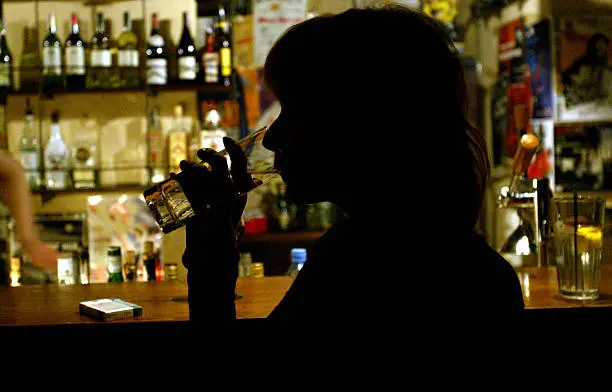
This difference shapes everything, including how women occupy public spaces. A man can sit alone at a bar without becoming a subject of speculation. A woman drinking alone is often assumed to be waiting for someone, recovering from heartbreak or signalling something about herself. She is rarely allowed to simply exist with a drink in her hand.
John Berger writes this dynamic in ‘Ways of Seeing’, "One might simplify this by saying: men act and women appear. Men look at women. Women watch themselves being looked at. This determines not only most relations between men and women but also the relation of women to themselves. The surveyor of woman in herself is male: the surveyed female. Thus she turns herself into an object – and most particularly an object of vision: a sight."
His observation explains why alcohol carries a different emotional burden for women. Even while drinking, many remain conscious of how they are being perceived.
That vigilance turns drinking into a performance. A woman is expected to enjoy alcohol without appearing to enjoy it too much. She checks whether she's slurring, watches how much she's had and makes sure she still looks composed. Alcohol is meant to lower inhibitions, yet many women find themselves becoming even more self-aware after drinking.
There is also the invisible arithmetic of safety. Who poured this drink? Can I leave it unattended? How will I get home? Who knows where I am? These calculations accompany many women throughout the evening in ways most men never have to consider.
Perhaps that's why female drinking so often happens behind closed doors. Home offers privacy from both judgment and danger, a space where there is no audience to perform for.
One of television's most memorable portrayals of this was Bree Van de Kamp in 'Desperate Housewives'. Her identity rested entirely on perfection and self-control, making her private struggle with alcoholism especially poignant. Night after night, she drank alone until the carefully maintained image finally collapsed. Her story reflects a larger truth, male drunkenness is often portrayed as emotional unraveling, while female drunkenness is portrayed as public exposure.
Alcoholism affects both men and women. But how often do women try to hide their suffering, carrying it quietly rather than allowing it to become visible? Not because it hurt less, but because the shame surrounding female addiction often demands silence.
Alcohol may be the same chemical for everyone, but it moves through very different social worlds. For men, drinking has long been framed as a journey towards the self. For women, it is too often framed as a journey away from it.
If alcohol is the world's favourite escape from consciousness, women have always paid a higher price in expectation, judgement and the burden of never being allowed to lose control.