Valentine’s Day 2026: Voices from India’s polyamorous relationships
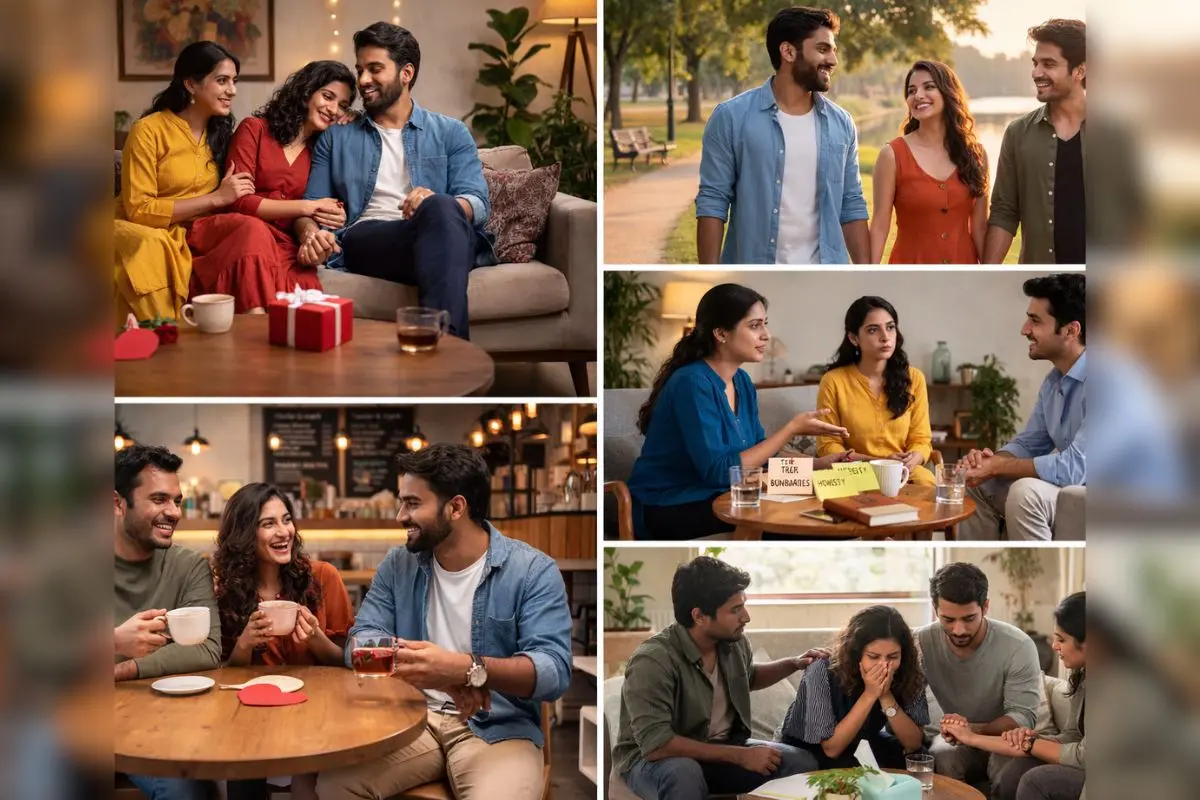
Valentine’s Day has long been associated with a familiar image of romance, two people, exclusive devotion, and the promise of lasting partnership. In India, where monogamy remains the dominant social norm, love is often understood through this traditional lens.
Yet, as conversations around relationships continue to evolve, alternative models such as polyamory are increasingly finding visibility.
Polyamory, broadly defined as the practice of engaging in multiple consensual and emotionally aware relationships, challenges the idea that commitment must be tied to exclusivity.
Those who identify with this relationship structure emphasise that it is not about the absence of boundaries, but about consent, honesty, and communication.
This Valentine’s Day, Mathrubhumi spoke to individuals who identify with and practise polyamory, offering insight into how they experience love, negotiate expectations, and navigate a day culturally centred on couples.
Rohit Mishra, 37, describes his marriage as one rooted in hierarchical polyamory, where the spouse remains the primary partner. While Valentine’s Day itself is not particularly significant to him, he says he values gestures that make his wife happy.
Their arrangement allows space for connections outside the marriage, but without displacing mutual priority. “It’s about understanding and honest intentions,” he explains, adding that small expressions of care matter more than grand celebrations.
For Pratik Guha, 31, Valentine’s Day represents intentionality rather than exclusivity. He views the occasion as an opportunity to acknowledge affection across relationships.
In polyamorous dynamics, he notes, conversations around emotional needs become central. “Love is not about possession,” he says. “Commitment is reflected in honesty, presence, and effort.”
Karan Mehta, 35, regards the day as a moment of reflection. Rather than adhering to fixed rituals, he describes it as a pause to reassess connection and emotional alignment.
He challenges the perception that polyamory is chaotic or casual. “Freedom comes with responsibility,” he says, emphasising the need for boundaries, awareness of emotional capacity, and open dialogue.
Maneesha Bhatnagar, 45, from Haryana, speaks about agency and authenticity in love. “I always knew I couldn’t stick to one person for the rest of my life. It is my choice. I don’t cheat or lie, and having multiple partners does not make my love any less deep,” she says.
Emphasising personal freedom, she adds, “Love is free, love is wild. Let people live. Whether one or more, let love galore.”
Rwiti Roy, research scholar, expresses a more sceptical view of Valentine’s Day itself, describing it as an idea she outgrew after adolescence. Her understanding of love, she explains, lies in everyday acts of care rather than symbolic celebration.
She also addresses a persistent stereotype. “Polyamory is often misunderstood as emotionless,” she says. “In reality, sincerity and emotional depth remain central.”
Offering an international perspective, Arbaaz Akhtar, 30, based in Germany, notes that his partnership does not actively celebrate Valentine’s Day, viewing it as heavily commercialised. Nevertheless, the day occasionally serves as a reminder of shared trust.
He highlights another common misconception, that polyamory is solely about sexual exploration. “Like any relationship, it is built on companionship, routine, and emotional investment,” he says.
What do mental health experts say?
Mental health professionals caution that while relationship models may be diversifying, emotional complexities remain significant.
Dr Shailesh Umate, psychiatrist and sexologist from Thane, points to the stress and stigma surrounding polyamory in Indian society.
“Many people cannot speak openly about it. Some youngsters and Gen Z individuals are exploring it, but not all fully understand the concept,” he says. According to him, individuals sometimes enter such arrangements under pressure from partners, which can lead to emotional strain.
Umate notes that patients occasionally seek therapy carrying feelings of burnout, confusion, or shame linked to their experiences.
"There are challenges, particularly around jealousy, insecurity, and changing partner behaviour,” he explains. Managing expectations and boundaries, he adds, can be difficult and may contribute to anxiety, depressive symptoms, or unhealthy coping mechanisms if not handled with clarity and support. Understanding the concept, healthy communication, strong trust, and prioritising physical health are essential,” he added.
Kavita Mungi, psychologist and developmental counsellor, echoes this balanced view. “Polyamory can be as difficult as a monogamous relationship.
Exploring alternatives is only healthy if both partners are fully on board and clear about their choices,” she says. Communication, consent, and mutual respect, she emphasises, remain foundational regardless of the relationship structure.
As Valentine’s Day continues to celebrate love in its many expressions, these voices reflect a broader shift in how relationships are being understood.
Whether monogamous or polyamorous, one principle remains consistent: relationships flourish when built on consent, honesty, empathy, and respect.