Inside Argentina’s Therian trend: Why teens are choosing to live like animals
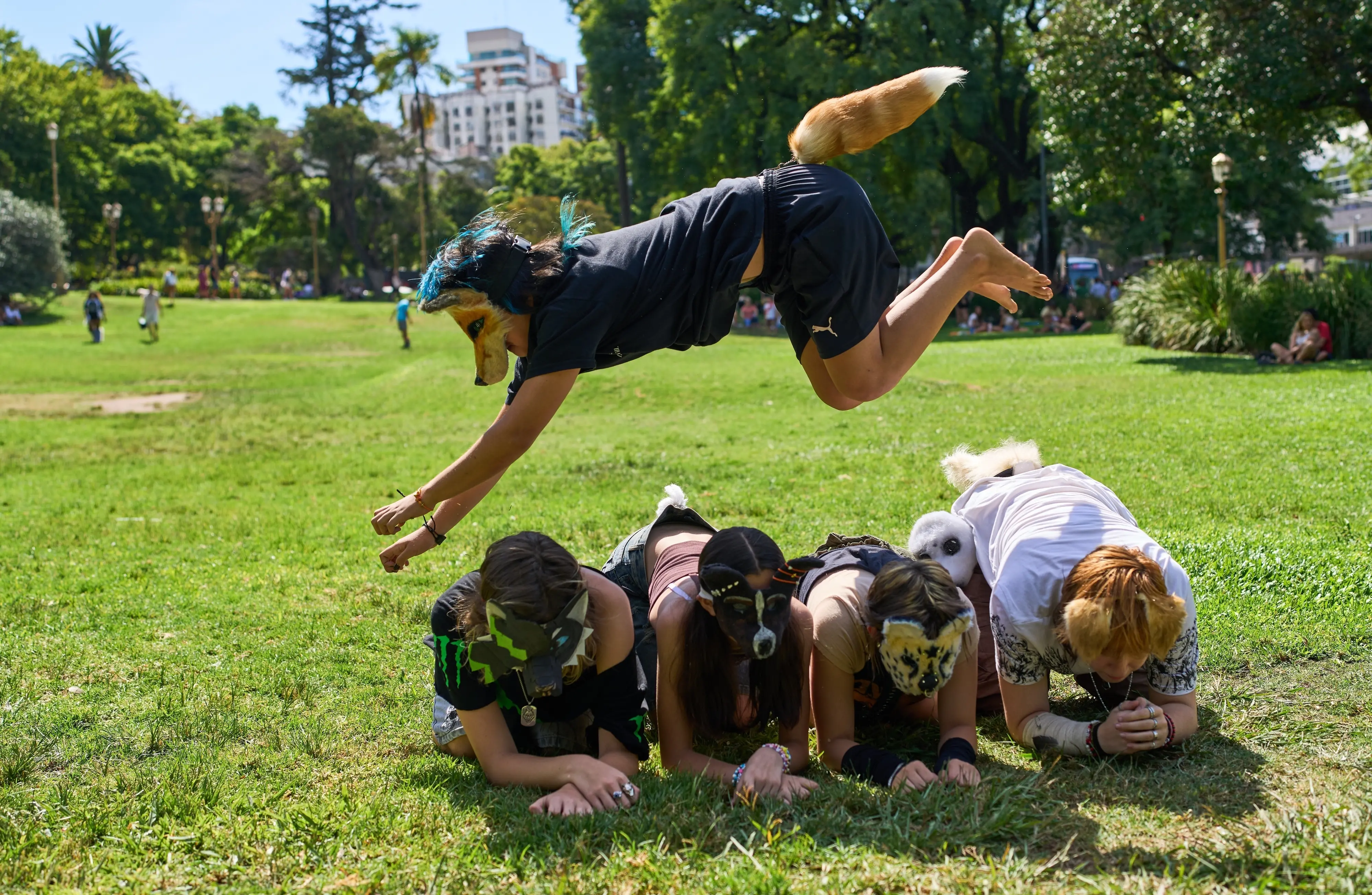
On a recent Sunday afternoon, a public plaza in the Argentine capital took on the feel of a small urban wilderness.
Teenagers in animal masks darted across the grass, crouched in trees and leapt over makeshift obstacles while mimicking the movements of dogs, cats and foxes. Passersby slowed, some amused, others puzzled, as the gathering unfolded.
Among them was Sofia, wearing a lifelike beagle mask, running on all fours. Nearby, 15-year-old Aguara bounded over an improvised course, carefully imitating the agility of a Belgian Malinois.
Also read | Waking up at 5 am may not work for everyone, but is it right for you?
The meet-up was organised by a group of young people who identify as “therians” — individuals who say they feel a mental, spiritual or psychological connection with non-human animals.
A digital trend moves offline
The phenomenon has surged across Argentine social media in recent months, particularly on TikTok, where the hashtag #therian has crossed 2 million posts. Argentina currently leads Latin America in engagement with the trend, drawing the attention of influencers, traditional media and critics alike.
What began as an online subculture has spilt into public spaces, with regular meetups in Buenos Aires drawing teenagers who describe the gatherings as a space for self-expression and community.
Also read | The worse your mental health problem, the less sympathy you get: Why it happens
Aguara, who says she identifies as a Belgian Malinois and describes her age as “two years and two months” in dog years, insists her daily life is otherwise ordinary.
“I wake up like a normal person and live my life like a normal person,” she said. “I simply have moments when I like being a dog.”
With more than 125,000 TikTok followers, she refers to herself as the leader of a “pack” and helps coordinate the group’s outings.
Play, identity and belonging
Not all participants frame the experience in the same way. Aru, a 16-year-old wearing a seal mask, said she belongs to what she calls the “otherpaw” branch — teenagers who treat the practice as a form of play rather than identity.
“It’s not necessarily about identifying as an animal,” she said.
Also read | Can social media design worsen eating disorder vulnerability? Research raises concerns
For many, the gatherings offer a sense of belonging. Participants say the movement provides a non-judgmental environment where they can experiment with self-expression and find acceptance among peers.
Some observers attribute the trend’s rapid growth to Argentina’s relatively open youth culture and strong social media ecosystem, which has allowed niche online communities to quickly gain visibility offline.
Mixed reactions and psychological questions
Public reaction has been sharply divided. Videos of the meetups have circulated widely, drawing responses that range from curiosity and humour to confusion and criticism.
Psychologists say the phenomenon is not entirely new but reflects longstanding patterns of symbolic identification among young people.
“From a psychological standpoint, this is a symbolic identification with an animal,” said Debora Pedace, director of the Integral Therapeutic Centre in Buenos Aires. “It becomes pathological or alarming only when it turns into a deeply rooted belief and the person fully assumes the role of an animal, potentially leading to self-harm or hurting others.”
Also read | Why was Punch abandoned? The survival instincts that drive some animal mothers to walk away
Experts note that, for most participants, the behaviour appears to be performative and social rather than clinical.
Between performance and identity
At the plaza, the atmosphere remained closer to a youth club than a statement of ideology. Teenagers filmed short videos, compared masks and tails, and practised jumps for social media clips.
Curious onlookers kept their distance as the group posed for photos and then dispersed, blending back into the Sunday crowd.
For Aguara and her followers, the gatherings are less about rejecting human identity and more about carving out a space, online and off, where imagination, performance and community intersect.
“I wake up like a normal person and live my life like a normal person,” she repeated, before jogging off to join the rest of her “pack.”