How to save your favourite plant from root rot before it's too late
Plant parents often think more water equals more love. You water it regularly. You keep it near a sunny window. You even talk to it occasionally. Yet one day, your once-healthy plant starts looking miserable. The leaves droop, turn yellow and refuse to perk up no matter how much water you give it.
Ironically, that extra watering could be exactly what's causing the problem. Root rot is one of the most common reasons houseplants die, especially during the monsoon when the air is humid and the soil stays damp for much longer.
Here's how to spot root rot and what you can realistically do to save your plant.
First, what exactly is root rot?
Despite the name, root rot isn't something that appears overnight.
It usually starts when the roots stay wet for too long. Healthy roots need both water and oxygen. When they're constantly sitting in soggy soil, they struggle to breathe.
Over time, fungi and other microorganisms that thrive in wet conditions can begin damaging the roots, causing them to decay.
Once the roots stop working properly, the rest of the plant struggles too.
The signs are easy to miss at first
One of the frustrating things about root rot is that the warning signs often look like other plant problems.
Your plant may have:
- Yellow leaves
- Drooping stems even though the soil is wet
- Leaves falling off more than usual
- Slow or no new growth
- A musty or sour smell coming from the pot
- Soil that never seems to dry out
Many people mistake these signs for underwatering and add even more water, making the situation worse.
Take the plant out of the pot
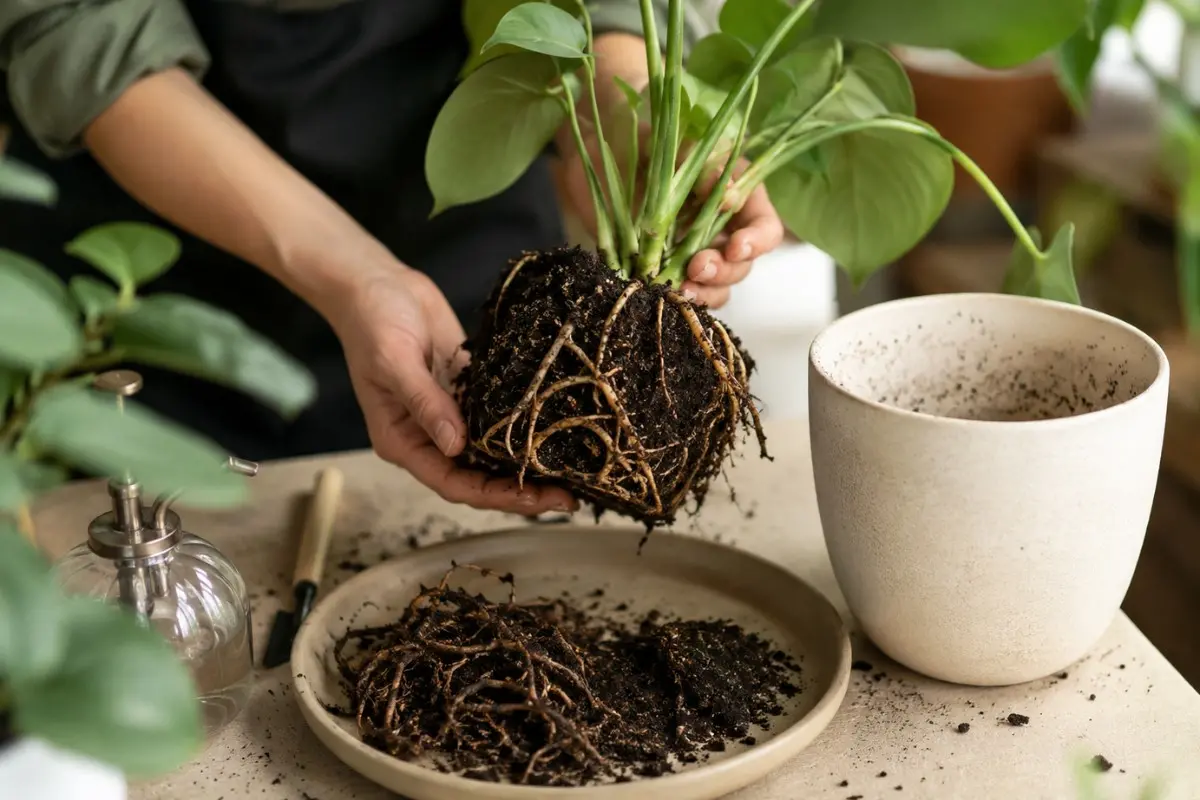
If you suspect root rot, don't wait for the plant to recover on its own. Carefully remove it from its pot and have a look at the roots.
Healthy roots are usually white or light brown and feel firm.
Rotten roots are often dark brown or black. They feel soft, mushy or may even fall apart when touched. They can also have an unpleasant smell.
Trim away the damaged roots
Using a clean, sharp pair of scissors or pruning shears, cut away all the soft, black or mushy roots.
Leave only the healthy, firm ones behind. It might feel like you're removing too much, but rotten roots won't recover. Keeping them attached can allow the decay to spread further.
Clean your scissors before and after pruning to avoid spreading disease to other plants.
Replace the old soil
Once root rot develops, the old potting mix has usually stayed wet for too long.
Throw it away instead of trying to reuse it.
Repot the plant in fresh, well-draining potting mix. Make sure the new pot has proper drainage holes so excess water can escape easily.
If you're using the same pot again, wash it thoroughly before replanting.
Hold back on the watering can
This is probably the hardest part. After repotting, resist the urge to keep watering every day.
The roots need time to recover. Water only when the top layer of soil has started to dry out. During the monsoon, this can take longer than you expect because the air is already humid.
When in doubt, check the soil with your finger instead of watering out of habit.
Give it the right spot to recover
A stressed plant doesn't need harsh afternoon sun, but it also shouldn't be kept in a dark corner.
Place it somewhere with bright, indirect light and good airflow.
Good air circulation helps the soil dry more evenly and reduces the chances of fungal problems returning.
Don't rush to add fertiliser
It can be tempting to feed the plant in the hope that it will bounce back faster. Unfortunately, fertiliser won't repair damaged roots. Wait until you see healthy new growth before returning to your normal feeding routine.
For now, the plant's energy should go into rebuilding its root system.
Prevention is easier than a cure
Once you've dealt with root rot, you'll probably never want to go through it again.
A few simple habits can make a big difference:
- Always use pots with drainage holes.
- Water according to the plant's needs, not a fixed schedule.
- Check the soil before watering.
- Empty water that collects in saucers after watering.
- Use a well-draining potting mix suited to your plant.
- During the monsoon, remember that plants usually need less water than they do in summer.
Don't panic if it happens
Root rot sounds serious, but it doesn't always mean your plant is beyond saving.
Many common houseplants, including pothos, peace lilies, snake plants, monsteras and philodendrons, can recover if the damaged roots are removed early and growing conditions improve. You just have to check what's happening below the soil and giving the roots a fresh start.
(Disclaimer: This article is for general informational purposes only. Plant care varies depending on the species, growing conditions and climate. If you are unsure about the specific needs of your plant, consult a local gardening expert)
-Compiled by Salma