IVF failed the first time? Doctors explain what they examine before trying again
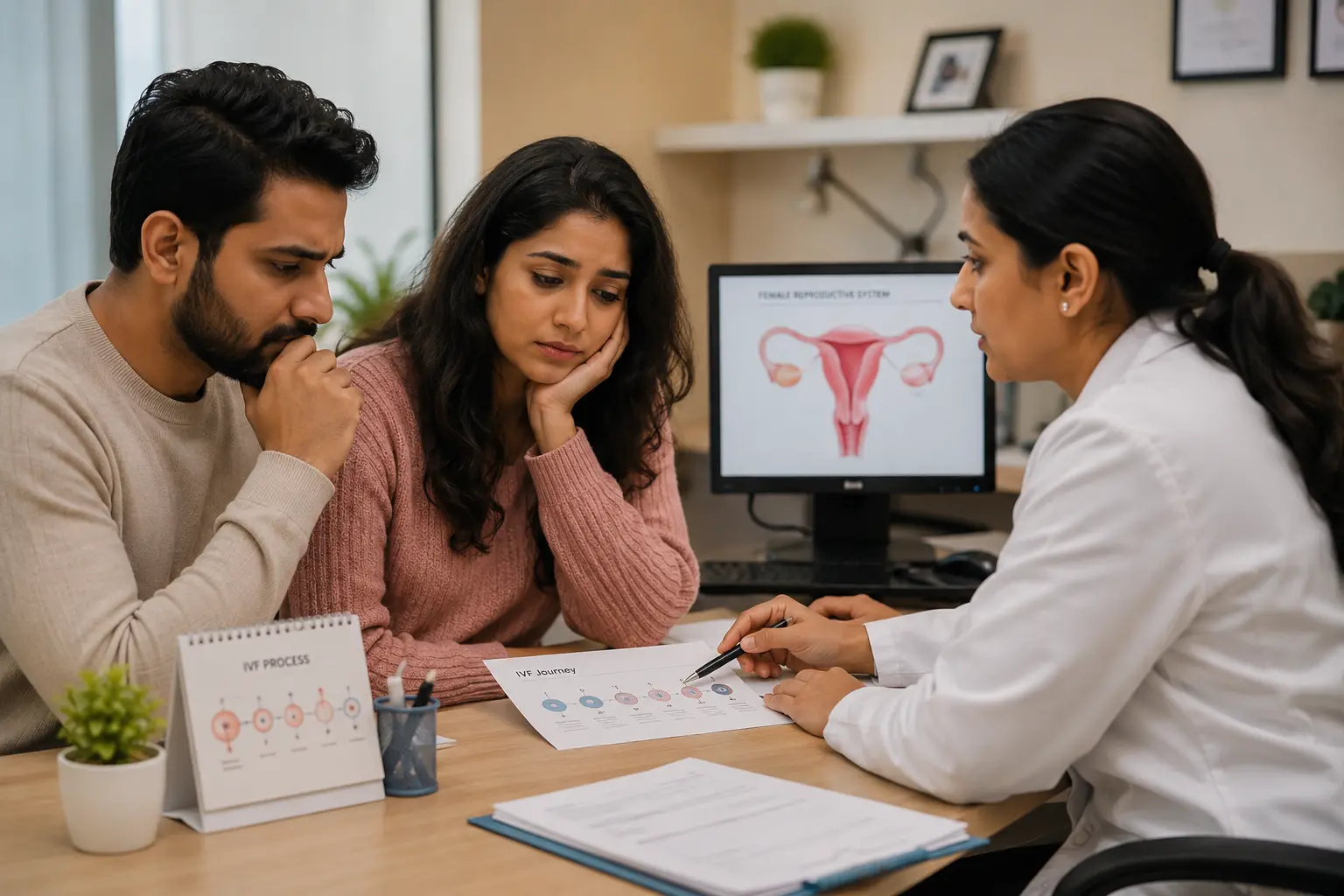
For couples who have invested months of hope, time and emotion in IVF, an unsuccessful first cycle can feel like a verdict. But fertility specialists say a failed attempt is rarely that simple.
IVF is not one single event; it is a chain of biological steps, and understanding where that chain may have faltered can offer important clues for the next attempt.
‘A couple's first IVF cycle that yields no results should not be taken for granted as treatment failure or evidence that IVF will not work for them,’ says Dr Indumati Joy, Fertility Specialist, Nova IVF Fertility, Chennai.
‘IVF is a biological process made up of several stages and failure can result at any step from ovarian response and oocyte maturation to fertilization, embryo development, implantation and early pregnancy. We should identify the possible problems and address them before deciding to start a new cycle.’
That means doctors often go back to the beginning rather than focusing only on the final pregnancy test.
The first review centres on the ovaries and the response to stimulation: how many follicles matured, how many eggs were retrieved, whether they were mature, how fertilisation progressed and how the resulting embryos developed.
Tests such as AMH and antral follicle count can provide information about ovarian reserve and expected response, but they do not, by themselves, predict whether someone will become pregnant.
Age, meanwhile, remains an important factor in pregnancy chances.
‘We then examine embryo-related factors. If embryos were created but did not implant, we consider their developmental quality and, where clinically appropriate, whether chromosomal abnormalities could explain the outcome. Embryo aneuploidy is particularly relevant because chromosomally abnormal embryos have a substantially lower potential for sustained implantation,’ Dr Joy adds.
The male partner, too, remains part of the picture. Semen parameters can vary between assessments, and selected couples may need further evaluation of sperm-related factors.
Then comes the uterus and the transfer itself. Polyps, fibroids affecting the cavity, adhesions, congenital abnormalities, hydrosalpinx and adenomyosis may become relevant depending on the individual's history.
Dr Manju B Nair, Clinical Director - Fertility Services, Rainbow Children's Hospital, says the entire previous cycle should be reconstructed before another attempt is planned.
‘Before recommending another IVF attempt, I would first reconstruct the entire previous cycle rather than focusing only on the final pregnancy test. IVF provides us with a remarkable amount of biological information. The stimulation protocol offers insights on the type of reaction from the female reproductive system; how many and how mature oocytes are collected can tell about the recruitment and development of the follicles; the rate of fertilization will let us understand the gamete interaction; development of the embryo gives another level of information on reproductive capability.’
What happens next depends on where the cycle appeared to encounter difficulty. A very low egg yield may prompt a review of ovarian reserve, age and stimulation strategy. Poor fertilisation can lead doctors to examine sperm factors, egg maturity and the fertilisation method. If embryos stop developing early, both laboratory factors and the biology of the eggs, sperm and embryos may need consideration.
And if good-quality embryos were transferred but did not implant, attention may turn towards embryo factors, the uterine cavity, the endometrial lining and the transfer procedure.
‘The uterus deserves particular attention when there is a pattern of repeated implantation failure. Current ASRM guidance recognises evaluation of the endometrial cavity as an established way of identifying structural abnormalities such as polyps, submucosal fibroids, septa and intrauterine adhesions. Depending on the clinical history, sonohysterography, three-dimensional ultrasound, hysteroscopy or other investigations may be considered.’
Importantly, specialists caution against assuming that one unsuccessful transfer automatically means implantation failure: or that every possible test is necessary after a single failed cycle.
‘The second attempt should therefore be evidence-based and individualised. We review the stimulation strategy, laboratory outcomes, embryo development, sperm and oocyte factors, uterine anatomy, endometrial preparation and embryo-transfer technique. The objective is not simply to ‘try IVF again’, but to use the information from the first cycle to make the next cycle biologically and clinically more informed.’