Main character energy: Why 2026 is the year of the vision board
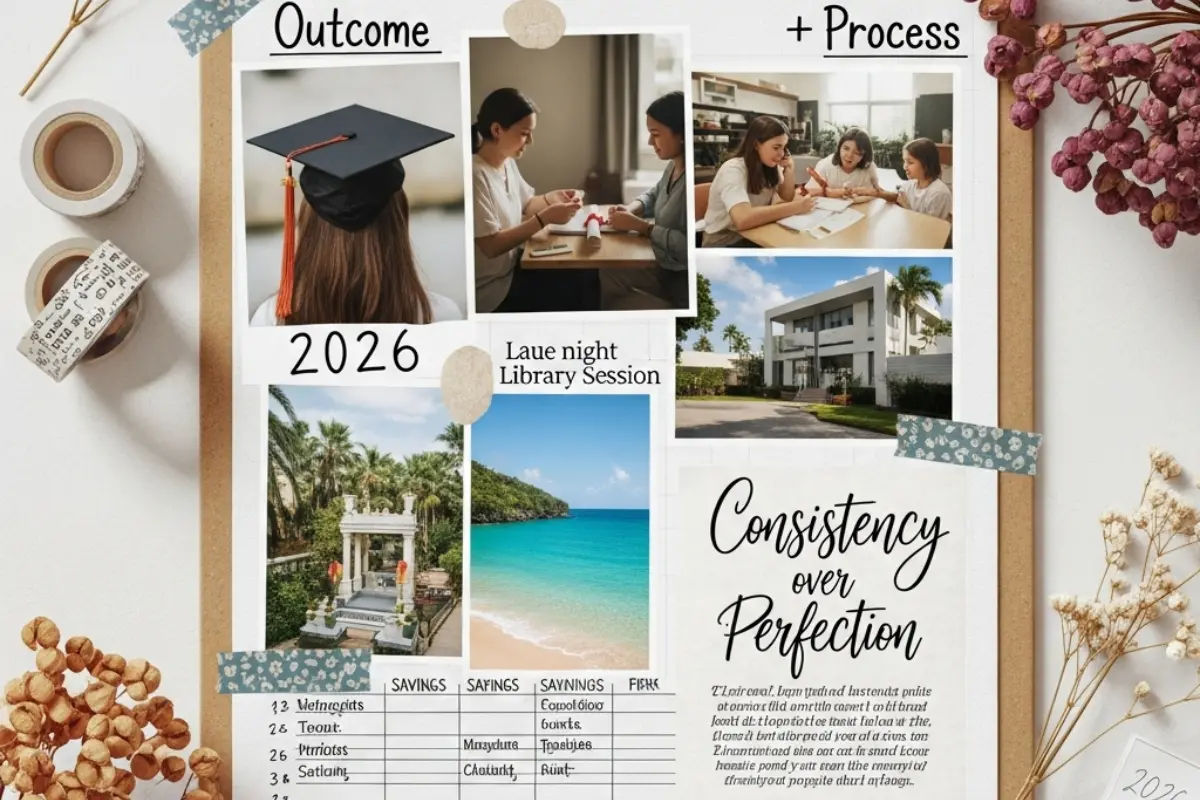
As the New Year approaches, Gen Z has largely traded traditional "to-do lists" for a more visual ritual: the vision board. These collages of images, quotes, and symbols are no longer just craft projects; they have become a sophisticated tool for "manifesting" personal and professional intentions.
While the practice has roots in ancient visualization, modern neuroscience suggests there is a functional reason why these boards work.
The Neuroscience of the "Visual Map"
Experts in psychiatry explain that vision boards operate by reducing cognitive load. Because the brain processes images up to 60,000 times faster than text, a visual board allows the mind to absorb complex goals holistically rather than as a stressful list of chores.
Key scientific drivers include:
- The Reticular Activating System (RAS): This bundle of nerves in the brainstem acts as a filter for the millions of data points we encounter daily. By repeatedly exposing the brain to specific images, we "program" the RAS to notice opportunities that align with those goals—a phenomenon often called "value tagging."
- Neuroplasticity: Research shows that the brain often struggles to distinguish between a vividly imagined experience and a real one. When you visualize success, you are essentially "pre-playing" the event, strengthening the neural pathways required to actually perform the task.
- Dopamine Loops: Looking at a representation of a desired goal triggers a small release of dopamine. This doesn't just feel good; it creates an anticipatory reward system that keeps motivation high during the "boring" middle stages of a project.
Beyond the Outcome: Process Visualization
The latest research in goal psychology suggests a shift in how these boards are built. While older "manifestation" trends focused purely on the outcome (e.g., a luxury car or a finished degree), experts now recommend process visualization.
Adding images of the work—such as a person studying at a desk or someone meal prepping—is more effective than just showing the end result. This prepares the brain for the effort required, making the journey feel familiar and less intimidating.
A Generation Seeking Alignment
For young adults navigating "hustle culture" and burnout, vision boards are shifting away from pure luxury. Today’s boards often emphasize "The Soft Life"—focusing on boundaries, mental health, financial literacy, and rest.
Ananya Singh, a 23-year-old computer science student in Boston, uses her board as a grounding tool. "My current vision board sits on my desk," she says. "I take a look at it whenever I am studying, which makes me think about my goals and everything I have planned."
Similarly, Harleen Kaur, a 25-year-old software engineer from Gurugram, credits her board with helping her land a balanced job. "I absolutely believe in them because manifestation actually works," she shares, recalling how her board helped her secure both a career milestone and a personal trip to Mumbai.
Creating a "High-Value" Board for 2025
To move beyond "aesthetic" and into "action," experts suggest a four-step approach:
- Select Your Medium: Choose between a tactile physical board (which offers a grounding, sensory experience) or a digital "altar" using platforms like Pinterest or Canva for your phone lock screen.
- Curate Emotional Resonance: Don't just pick "pretty" images. Choose visuals that trigger a specific feeling of how you want your life to feel, not just look.
- The 70/30 Rule: Dedicate 70% of the board to your goals and 30% to the "process" (the habits and steps needed to get there).
- Strategic Placement: The "set it and forget it" method doesn't work. Place your board in your "high-traffic" visual zones—the bathroom mirror, the fridge, or your workspace—to ensure constant cognitive imprinting.
Ultimately, vision boards serve as a psychological framework. By turning abstract desires into a tangible map, they help individuals transition from passive dreaming to actionable planning, fostering the optimism needed to navigate the year ahead.