Why adding raw papaya to meat can completely change your cooking
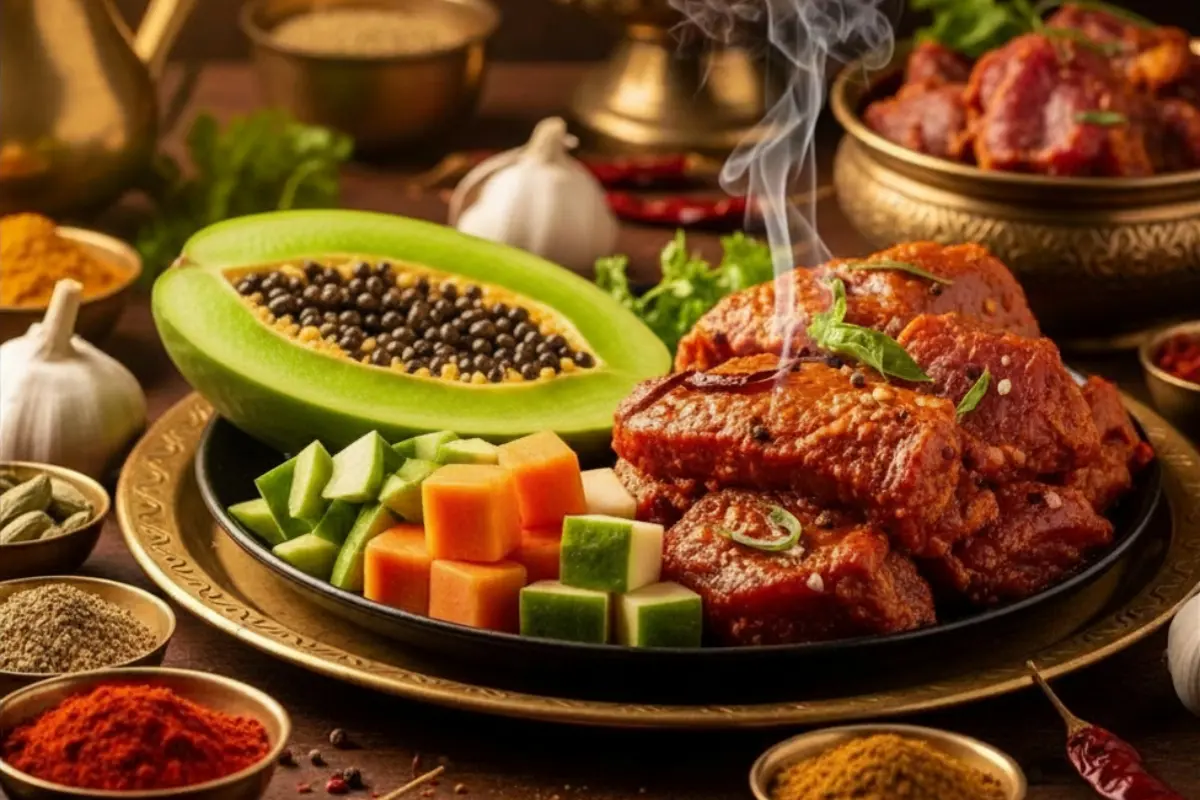
You may have noticed that meat served in restaurants, kebab shops or traditional wedding feasts often feels much softer, juicier and more flavourful than meat cooked at home. One of the oldest secrets behind that texture is surprisingly simple — Raw papaya.
For generations, cooks across India, the Middle East and parts of Asia have quietly used raw papaya in meat marinades to soften tough cuts naturally. Whether it is melt-in-the-mouth mutton curry, juicy seekh kebabs or tender grilled meat, raw papaya plays a major role in transforming texture and taste.
Why raw papaya works so well with meat
The magic lies in a natural enzyme called papain, which is found in green, unripe papaya.
Papain breaks down proteins and connective tissues present in meat. Tough muscle fibres begin to loosen, making the meat softer and easier to chew even before cooking starts.
This is especially useful for meats such as mutton, beef and certain cuts of pork that normally require long cooking times to become tender.
Professional cooks often rely on raw papaya because it can help achieve restaurant-style tenderness without excessive pressure cooking or overboiling the meat.
The secret behind softer kebabs and juicy curries
One major reason restaurants use raw papaya is because it helps meat retain moisture.
When meat cooks for too long, it can become dry and rubbery. But papain helps soften the fibres while still allowing the meat to stay juicy inside.
This is why kebabs marinated with raw papaya often feel softer and more succulent compared to ordinary marinades.
Many traditional Mughlai and barbecue recipes include raw papaya specifically for this purpose.
Helps marinades go deep inside the meat
Raw papaya does more than just soften texture.
As the fibres loosen, spices, herbs and marinades can penetrate deeper into the meat instead of remaining only on the surface.
This creates richer flavour throughout the dish. Every bite tastes more seasoned and balanced because the spices get absorbed properly.
This is particularly important in dishes like tandoori chicken, mutton roast, biryani meat preparations and grilled recipes where deep flavour matters.
Cuts cooking time significantly
Another reason many cooks prefer raw papaya is that it reduces cooking time.
Since the protein structure begins breaking down during marination, the meat cooks faster once heat is applied.
This can save both time and fuel while reducing the chances of overcooking the meat.
For households preparing tougher cuts, this simple trick can make a noticeable difference in texture and cooking efficiency.
Raw papaya also contains nutrients
Apart from its cooking benefits, raw papaya is also rich in nutrients.
It contains vitamins A, C and E along with antioxidants that help support overall health.
Papain may additionally help digestion by assisting the body in breaking down protein-rich meals more effectively.
Because of this, some people also consider raw papaya beneficial for easing heaviness after eating meat-heavy dishes.
How cooks usually use raw papaya
To prepare it, raw green papaya is peeled and deseeded before being grated or blended into a smooth paste.
Usually, a small amount is mixed into the meat marinade and left for around 30 minutes to four hours depending on the toughness of the meat.
Chefs generally recommend using fresh raw papaya because the enzyme remains more active in its natural form than in processed powders.
Too much can ruin the texture
Experts also warn that raw papaya should be used carefully.
If meat is marinated for too long, the enzyme may overly break down the fibres and make the texture mushy or pasty.
Only unripe green papaya should be used because ripe papaya contains much lower papain activity and may not tenderise meat effectively.
Why this old cooking trick still survives today
Despite modern cooking techniques and packaged tenderisers, raw papaya continues to remain popular because it is natural, affordable and highly effective.
From home kitchens to high-end restaurants, this traditional ingredient is still trusted for producing soft, juicy and flavourful meat dishes without relying heavily on artificial additives.
(Disclaimer: This article is intended for general informational and culinary purposes only. Cooking results may vary depending on ingredients, meat type and preparation methods. Individuals with allergies, digestive sensitivities or dietary restrictions should consult a qualified healthcare or nutrition professional before making significant dietary changes.)