‘Everybody’s from the village, Shanaya’: How a viral Instagram reel became the internet’s favourite clapback
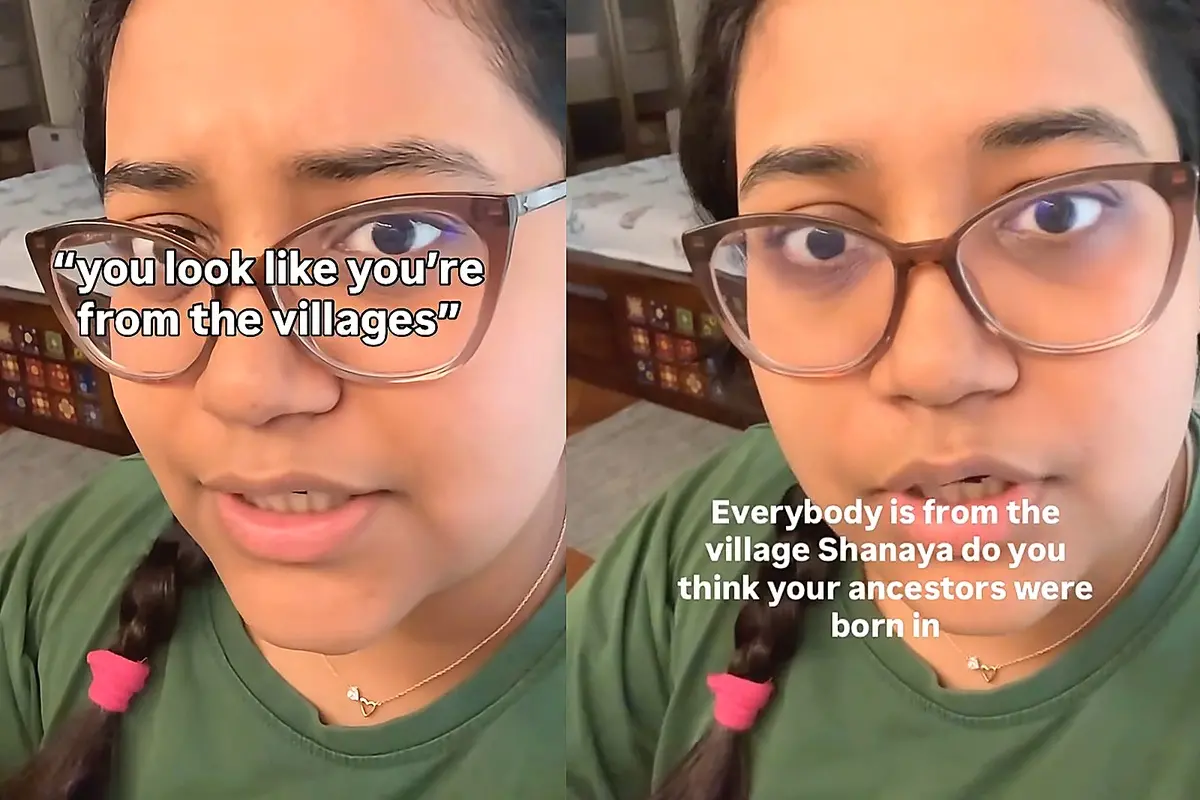
A 13-second Instagram video, a pointed remark about Bandra and avocado toast, and a name that has suddenly become synonymous with urban snobbery.
The internet has found its latest obsession in the phrase ‘Everybody’s from the village, Shanaya’, with celebrities, content creators and brands jumping on the viral trend.
However, behind the humour lies a conversation about India's deeply entrenched class divisions, caste prejudices and the tendency to look down upon people from rural backgrounds.
The trend originated with content creator Divyanshi Chauhan, who posted a video on Instagram on April 19, 2026, under the handle @divivocal.
What began as a sarcastic response to people who look down upon those coming from villages has since evolved into a widely circulated meme format.
The original video has reportedly garnered more than 36 million views, over two million likes and thousands of comments.
How did the ‘Everybody’s from the village, Shanaya’ trend begin?
In the original video, Chauhan imagines a conversation in which someone makes a condescending remark about another person's village background.
She responds by questioning the assumption that moving to a metropolitan city makes someone inherently superior.
‘Everybody's from the village, Shanaya. Do you think your ancestors were born in Bandra, next to Boujee Cafe, eating avocado toast?’ she says in the video.
She follows it up with a pointed message about not disrespecting people simply because they reached cities earlier than others.
The reference to Bandra, one of Mumbai's affluent neighbourhoods, and the mention of Boujee Cafe and avocado toast are central to the joke.
Together, they represent a particular image of urban privilege, where expensive lifestyles, fashionable food choices and proximity to metropolitan culture are sometimes treated as markers of social superiority.
The underlying message, however, is more serious. Migration from villages to cities is a familiar reality in India, with millions moving in search of education, employment and better opportunities. Chauhan's video questions why such backgrounds should become a reason for ridicule or discrimination.
Why has the meme become so popular?
The format's popularity lies in its adaptability. Social media users have taken the original audio and recreated it to address everything from class discrimination and unemployment to accents, food preferences and lifestyle choices.
The name Shanaya has effectively become a fictional character representing an entitled person who looks down upon others.
The humour comes from turning everyday experiences of judgment and condescension into exaggerated, witty responses.
The trend has also spread to celebrity and brand promotions. Celebrity chef Ranveer Brar joined the conversation with his own take on the format, while snack brand Bingo Mad Angles used the viral reference in its promotional content.
Its popularity demonstrates how internet humour can become a vehicle for discussing larger social realities.
What makes the trend particularly relatable is that it takes an everyday form of prejudice and gives people a memorable way to challenge it.
Why did the trend face criticism?
Despite its popularity, the trend has not been entirely free of criticism. Some social media users questioned why the fictional character representing classist behaviour was given a woman's name.
Responding to the criticism, Chauhan acknowledged that the format could be perceived as somewhat misogynistic because it repeatedly targets a female name.
However, she questioned whether that meant women could not also hold casteist or classist attitudes.
She argued that conversations about gender, particularly in Indian society, cannot be separated from caste and class.
Her response brought another dimension to the discussion. While the meme was initially celebrated as a humorous attack on urban elitism, the debate surrounding it highlighted how conversations about gender and social privilege often intersect in complicated ways.
Shanaya Kapoor reacts to the viral trend
The meme eventually reached the person whose name had become its most recognisable feature.
Actor Shanaya Kapoor joined the conversation after her series 'Student of the Year: After Dark' released on JioHotstar on November 13.
Sharing a video of herself listening to the original viral audio, Kapoor burst into laughter before delivering her own response.
‘Guys, I just spent six episodes trying to solve a murder. What did I do to your ancestors?’ she joked.
Her caption added to the humour, saying she was simply trying to get people to watch her show while the internet was busy roasting 'Shanaya'.
The actor's reaction drew amusing responses from social media users, many of whom appreciated her decision to embrace the joke rather than distance herself from it.
Chauhan also reacted positively to Kapoor's video, expressing her appreciation for the actor's response.
The moment gave the trend another burst of attention, bringing together the original creator, the actor and millions of social media users participating in the conversation.
More than just another internet trend
The ‘Everybody’s from the village, Shanaya’ phenomenon is an example of how a seemingly insignificant internet joke can open up a larger conversation about social attitudes.
Its appeal comes from the contrast between its humorous delivery and its underlying message.
While references to Bandra, avocado toast, and an affluent urban lifestyle make the video entertaining, the central argument challenges a prejudice many people still encounter.
At its heart, the trend questions the idea that geographical background, lifestyle or economic privilege should determine a person's worth.
And perhaps that is why Shanaya has become everyone's favourite fictional internet character.
In a country where millions continue to migrate from villages to cities in pursuit of better lives, the reminder is both funny and uncomfortable: reaching the city first does not make anyone better than the people who are still on their way.