Can you trust AI with your money and health? Here’s the real answer
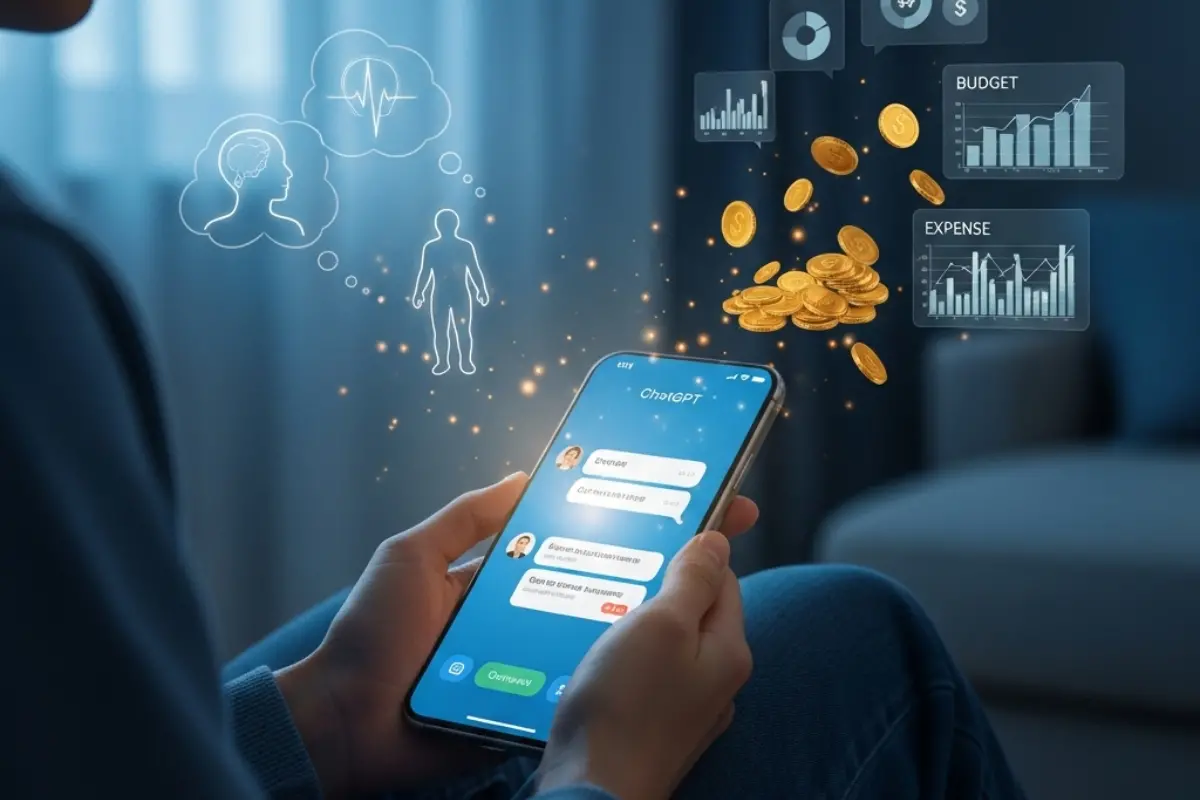
You’re sitting alone and suddenly a small doubt hits you—maybe it’s a strange headache, or just feeling unusually tired. The first thing you do is not panic, but open ChatGPT or Google Gemini, tools that already “know” your earlier conversations about your habits and lifestyle, and you type your symptoms to get a quick idea of what might be going on. Or it’s the end of the month, and you’re trying to make sense of your salary—you open the same AI tool again and ask it to break down your budget, divide your expenses, and suggest how much you should save or spend. In both cases, AI feels like a personal assistant that is always available, always fast, and surprisingly familiar with your life.
AI is no longer a futuristic concept – it is quietly becoming part of everyday life. From tracking your expenses to suggesting possible health conditions based on symptoms, it promises speed, convenience, and clarity. But when the stakes involve your money or your health, the question becomes more serious: how far should you trust it?
The answer, at least for now, lies somewhere in between dependence and caution.
When AI helps you manage your money; but misses the bigger picture
Imagine this: you open a finance app after a long month, and it neatly categorises your spending -groceries, rent, subscriptions, dining out. It even suggests that you cut down on “non-essential” expenses to save more.
On paper, it makes perfect sense.
But what if that “non-essential” expense was a monthly dinner with your family? Or a hobby that helps you manage stress? AI sees numbers, patterns, and efficiency. It does not see emotions, relationships, or personal priorities.
That is where the gap begins.
AI can be extremely useful for organising your finances, spotting trends, or even running scenarios like “what happens if I retire earlier”. It can help you think more clearly about money. But it cannot decide what matters to you.
And there is another layer-trust. Sharing financial data with digital tools means relying on systems that are not entirely risk-free. Data leaks, misuse, or even overly personalised scams built from such data are real concerns today.
When AI becomes your first ‘doctor’; but not your final answer
Now consider a different situation. You feel unwell-maybe a persistent headache or unusual fatigue. Instead of visiting a doctor immediately, you type your symptoms into an AI tool.
Within seconds, you get a list of possible causes, ranging from minor issues to something more serious.
This can be helpful. It gives you direction, helps you ask better questions, and sometimes even pushes you to seek medical help sooner.
But it can also mislead.
AI might miss the nuance of your condition. It might not fully understand your medical history, lifestyle, or underlying risks. In some cases, it may even present incorrect information with complete confidence.
That is the risk-AI sounds certain, even when it is not.
Doctors, on the other hand, do more than just match symptoms. They observe, question, interpret, and make decisions based on years of training and real-world experience. AI can support that process, but it cannot replace it.
Why AI feels reliable; but still needs a human check
One of the reasons people trust AI is because it is fast and often accurate in specific tasks. It can scan thousands of data points in seconds, identify patterns, and present answers in a clear way.
But speed is not the same as understanding.
AI works based on data it has been trained on. If your situation does not fit that data well—whether due to unique financial circumstances or a complex health condition—the output may not be as reliable.
There is also the issue of transparency. Often, AI cannot clearly explain why it made a certain recommendation. This “black box” nature makes it difficult to fully trust its decisions, especially when consequences are serious.
How people are actually using AI in daily life
In reality, most people are already using AI in small but meaningful ways:
- Checking spending patterns before making a budget
- Using health apps to track sleep, steps, or heart rate
- Looking up symptoms before deciding to visit a doctor
- Exploring investment options before speaking to an advisor
In all these cases, AI acts as a starting point—not the final decision-maker.
And that is where it works best.
A safer way to use AI in real life
Think of AI as a smart assistant that prepares you, not a decision-maker that replaces you.
Use it to gather information, organise your thoughts, and explore possibilities. Let it do the heavy lifting when it comes to data. But when it comes to final decisions—especially about your health or finances; bring in human judgement.
A financial advisor can understand your life goals. A doctor can interpret your symptoms in context. AI cannot fully do either.
AI is powerful, efficient, and increasingly accurate. It can make life easier and decisions clearer. But it does not understand you as a person.
So yes, you can trust AI—to an extent.
Trust it to inform you. Trust it to assist you.
But when it comes to your money and your health, trust it only as a guide—not the one in control.
(Disclaimer: This article is for general informational and educational purposes only. It does not provide financial, medical, or professional advice. Readers should not rely solely on artificial intelligence tools for decisions related to health, money, or legal matters. Always consult a qualified financial advisor, medical professional, or relevant expert before making any important personal decisions.)