Mangrove Magic at Pichavaram
Not many are aware about this place – Pichavaram - a small village located near Chidambaram in Cudallore district in Tamil Nadu. It is also not widely recognised by tourists as it remains relatively hidden. But you will be surprised to know that the world’s second largest mangrove jungle is located here in this remote village (first is Sundarbans in Bengal), which can be reached 30 minutes drive from the temple town of Chidambaram.
Pichavaram is not a developed place and the road from Chidambaram to reach this place is through the paddy fields, traditional huts with thatched roofs and women selling fish, prawns, dry fish by roadsides. Private transport services do fulfil the needs of those who want to explore the green jewel hidden amidst the backwaters. There are no frequent bus services from Chidambaram to Pichavaram except for local buses which run a hourly service to the place and returns back. Private vehicles are the best option available.
Would you be surprised to hear that many South Indian movies have been filmed in this picturesque locale with the unique setting of the expansive mangrove trees stretching across acres of land. This location served as the backdrop for the climax scene of the film Manthrikam starring Mohanlal. A first song sequence from Kamalahassan movie Dasavathaaram was shot here and the final scene of Vishal’s `Thupparivalan’ was also filmed in these serene backwaters.
Once you reach the place you will be taken aback as the beauty of the place is not seen from outside. Only the mundane ticket counters welcome you at the entrance. You will have to purchase tickets and take the boat rides through the mangrove forest to ideally explore the hidden beauty. Tickets are available for row boat and motorised boats. Various packages are available with costs based on boat types, distance, number of people, etc. The boat journey usually takes an hour to explore the wetlands. Paddle boats just take you to a safe distance and return within an hour and the man rowing it generally becomes tired soon.
The mangrove forests, located between two prominent estuaries, the Vellar estuary and Coleroon estuary, boasts of an extended waterscape spanning over thousands of hectares. This unique ecosystem also provides a habitat for a diverse array of flora and fauna.
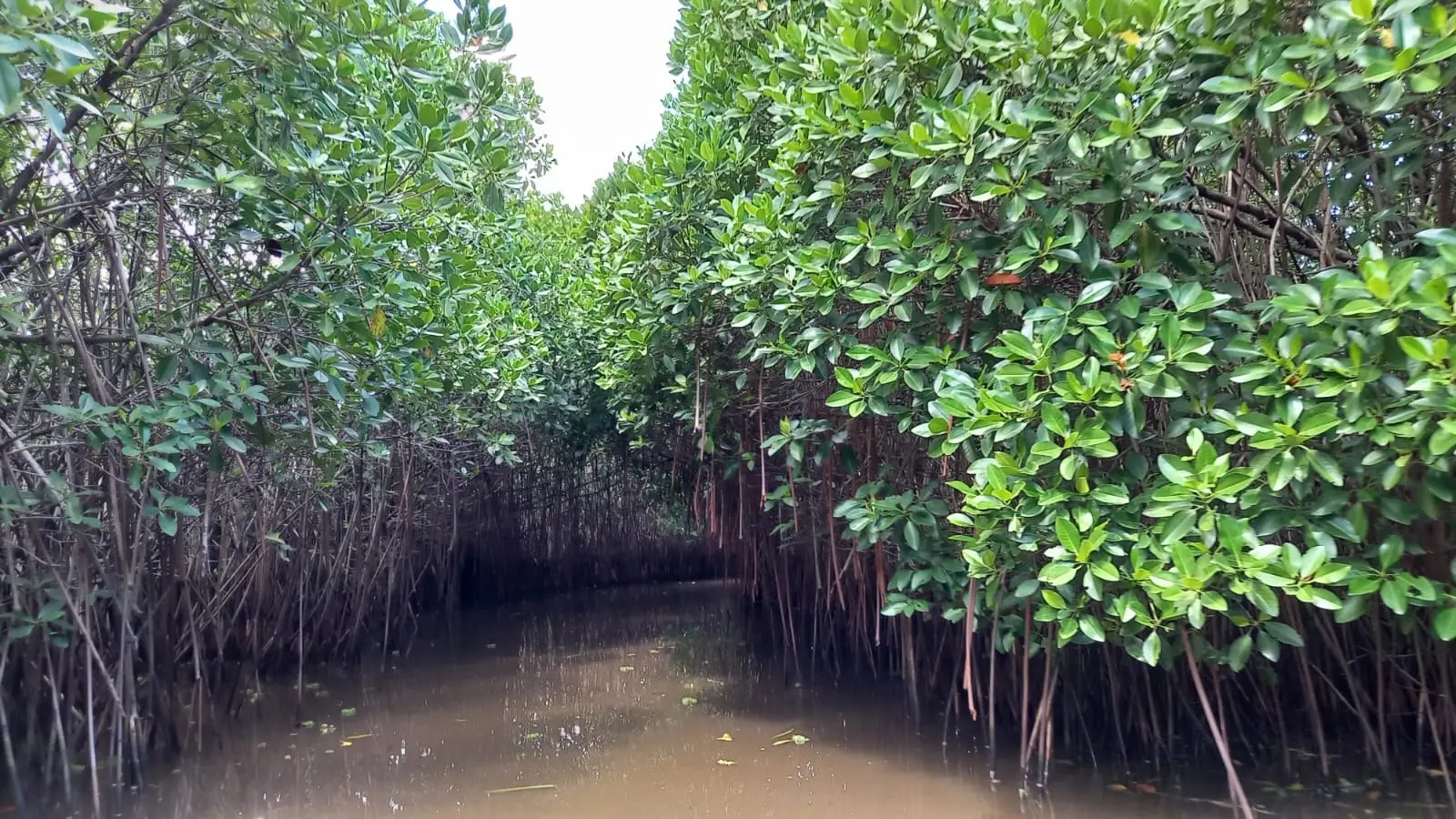
As you start exploring the beauty of the mangrove forest, all you can see is the vast waterscape with mangroves all around. Whether you look to your left or your right, a verdant carpet of green lines the waterways. It is impossible to tell where the waters end as the boat navigates this watery maze. The boat ride is enthralling with mangroves forming a continuous, lush corridor that seems to stretch endlessly in every direction. One thing that amuses you is when the boatman mentions that the mangroves are rooted in just 5 to 10 feet of water but warns not to disembark from the boat because the area is filled with swamp.
Pichavaram mangrove forest, which has 50 islands of various sizes, was also designated as the Wetland of International Importance in 2022 and supports migratory birds, reptiles and a unique diversity of flora and fauna.
The boatman never takes you deep into the forests but only offers you to see the serene journey along the banks, where mangroves are gracefully lined. It is a straight drive, a few kilometres back and forth, and it leaves you in awe wondering how the thickly grown roots stand binding within a few feet of water. The boatman explains that the area is marshy and sandy and during heavy rains, the water levels can rise significantly. During bad weather conditions or during heavy rains, the boat rides are cancelled for safety reasons, as waters rise abundantly. Boating is banned due to risk factors. However, on sunny days, when the weather is calm, you can ride through. The only sounds you will hear are the gentle ripples beneath the boat, the calls of birds, and the serene stillness of nature.
With a little persuasion and the promise of a few extra bucks, the boatman will gladly escort you to the heart of the mangroves. The lazy boat ride becomes an enthralling experience as you enter the shimmering water canals. There you'll find yourself surrounded by a network of roots and branches, a world where only the embrace of the mangroves awaits. As you venture deeper, you'll be enchanted by the sight of a narrow passage enveloped by towering mangroves; some firmly rooted while others lean precariously, as if poised to make a fall over you.
Tall mangrove trees with interlocking roots and branches cast a dappled shadow on the surface of water. The thick roots and branches hanging so low almost grace you. You can see the dense canopy of leaves amidst the sun kissed light.
Sometimes, the boat cruises slowly in silence where there is hardly any sunlight, the pathway looks eerie as if it is closing in on you. You wonder if the boat can actually navigate the narrow turns. The boatman gives us useful information about the place, the fauna and talks about his life. “Pichavaram is the lifeline of our village,” he says. “One should never be scared of entering the waters. Fear is something that should not accompany any driver. We should be fearless and only then we can overcome the challenges,” he says.
The boats criss crosses each and every turn, encountering floating leaves on the water’s surface. Despite the occasional bumps, we remain static, as the boatman offers reassuring words at every twists and turn. Sometimes, the boats inadvertently collide with the tightly interwoven root system, jolting us. It's a thrilling journey through the tangled mangroves, a world where these resilient trees exists amidst the external threats.
After going inside admiring the beauty and how the trees survive the natural disasters, the boat exits the secret world untouched by time, leaving us in a world of nature’s maze atleast for sometime. A return ride for about 2 kilometres leaves us all spellbound.