When Hormuz chokes, why India and Kerala feel the heat first
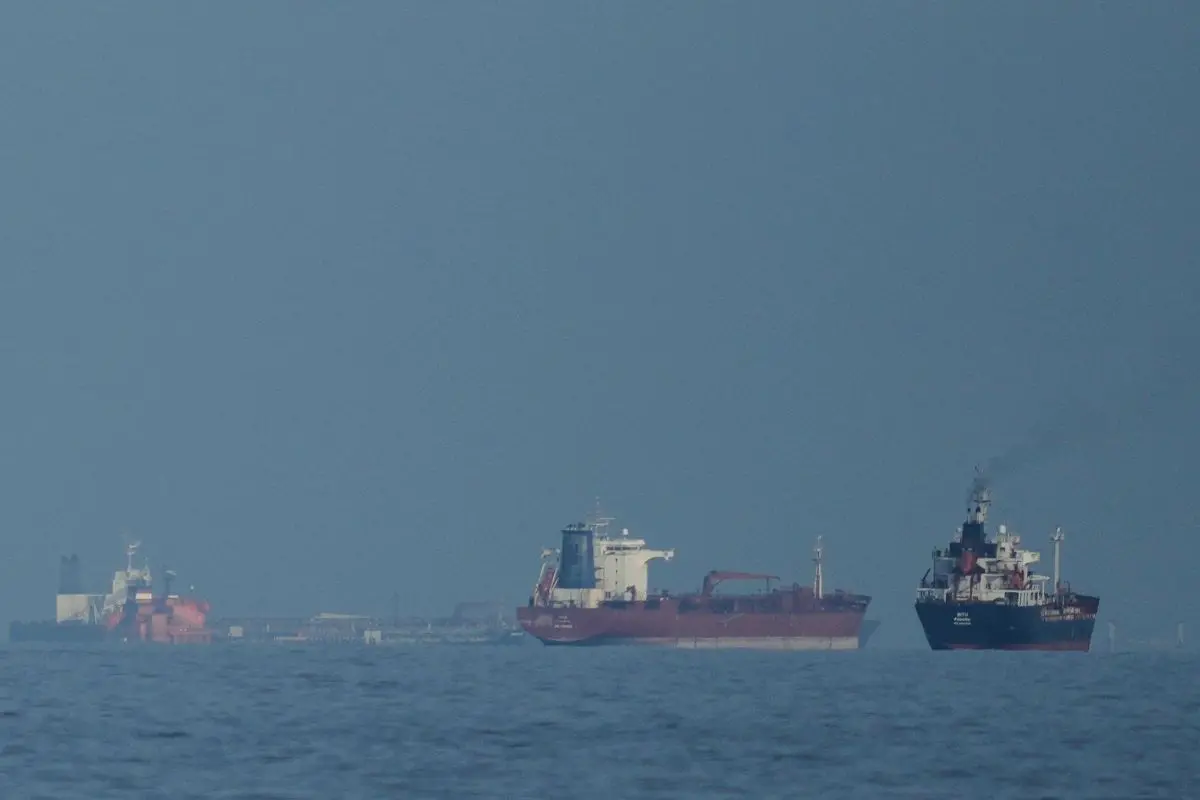
As smoke rose over Tehran on February 28, the shockwave did not hit Washington. It travelled east and was felt at a petrol pump in Bhopal, on a chip factory floor in Yokohama, and in a shipping yard in Busan. And it arrived, with particular force, in the homes of Kerala where more than three million people have staked their family’s future on Gulf nations that is now a war zone.
US-Israeli strikes on Iran lead to the subsequent partial shutdown of the Strait of Hormuz. In less than two weeks, Brent crude surged from around $70 per barrel to a peak of $119.50 a near-doubling that no government in Asia had planned for and no family budget can easily absorb.
India’s Double Bill
India imports around 88 percent of its crude oil, with approximately 63 percent coming from the Gulf. Its strategic petroleum reserves cover just nine and a half days of demand not a buffer, but a countdown. When Brent spikes and the rupee weaken at the same time, which is precisely what happens in a Gulf crisis, Indian consumers pay twice: once in commodity prices, and again through a depreciating exchange rate.
Americans produce their own oil and pay in their own currency. They pay once. For Indians it’s a different maths. Since oil is priced in dollars, every rupee that falls makes the import bill larger. And because almost all food in India travels by truck, a diesel shock pushes up the price of dal, vegetables, and rice within days. The government has held retail petrol prices steady at roughly ₹94.77 per litre in Delhi, with state oil companies absorbing the gap, but officials have privately warned that shield will not hold if the conflict extends beyond April.
The number of ship transits through the Strait of Hormuz has decreased to one per week from 200–300 prior to the war. Brent is currently at about $100, and the only buffer India has obtained is a 30-day Russian oil waiver, which expires before any truce is anticipated.
Kerala’s Gulf Remittance
India’s annual trade surplus with the United States is $58.2 billion. The number that drives every tariff negotiation, shapes diplomatic positions, and is treated as foreign policy. There is another number, almost identical in size, $51.4 billion and that is what India’s Gulf expatriates sent home last year. It is filed as a welfare statistic or a migration footnote. In a crisis, though, it hits faster and harder than any trade route and it reaches the people least able to absorb the blow first.
And this crisis shall land harder in Kerala, where remittances make up 36 percent of state GDP. Over three million of its people live and work across the Gulf, and that money pays school fees, retires debt, and keeps construction loans alive. The Gulf is not something Kerala watches from a distance. It is woven into the rhythm of daily life
Ironically, remittances can momentarily rise in the early stages of a crisis as workers rush savings home, but if the war lasts for months and employment decreases, the total flow will weaken; after six weeks, that turning point is drawing near.
From the Gulf region to East Asia’s Factories
The next casualty, less visible but already in motion, is the smartphone. On March 2, Iranian drones struck Ras Laffan, Qatar’s vast industrial city and the source of 30 to 36 percent of the world’s helium supply. A second strike on March 18 destroyed two LNG production trains and repair will take three to five years. Helium is irreplaceable in semiconductor fabrication and it is injected between the silicon wafer and its carrier to control heat, and without it, wafers warp. There is no substitute. South Korea sources 64.7 percent of its helium from Qatar, and imports 90 percent of its bromine, another chip material from Jordan and Israel, both now deep inside the conflict’s geography.
Shortages of helium and specialised gases from the Gulf are already creating a near-immediate crisis for semiconductor and advanced electronics production. The two-month chipmaker inventory buffer is now being consumed in real time, and the constraint your next laptop and phone purchase will feel is no longer a projection.
Asia’s Allies Without Agency
Japan and South Korea are America’s closest partners in Asia. Japan hosts nearly 55,000 American troops. South Korea hosts 28,000 more. In August 2023, the three nations signed the Spirit of Camp David, a formal trilateral commitment to consult one another before taking action on regional threats.
Following the February 28 strikes, Seoul’s Foreign Minister confirmed to parliament that no consultation had taken place. Tokyo condemned Iran’s response while carefully stopping short of endorsing Washington’s action.
Six weeks in, both economies are absorbing an energy and chip shock their governments had no hand in creating. The cost of the alliance is paid by ordinary families in Tokyo and Seoul.
India has no such framework at all. It has the Quad, a strategic partnership, a growing defence relationship, none of which were designed to place New Delhi at the table when Washington acts in the Gulf.
If instability in the Strait of Hormuz persists, these effects are unlikely to remain contained. The same channels that carry impacts across Asia can extend them further west, into European and American markets, though often with delay.
(The authors share research interests in politics, security and strategic transformations of East Asia and Indo-Pacific affairs. Vaishnavi Mishra is an independent researcher and alumna of the East Asian Studies programme at Delhi University while Akhila Sudharma is an independent researcher currently pursuing East Asian Studies at Delhi University)