‘The BJP is not the nation’; Youth movement signals a new struggle for India’s Democracy
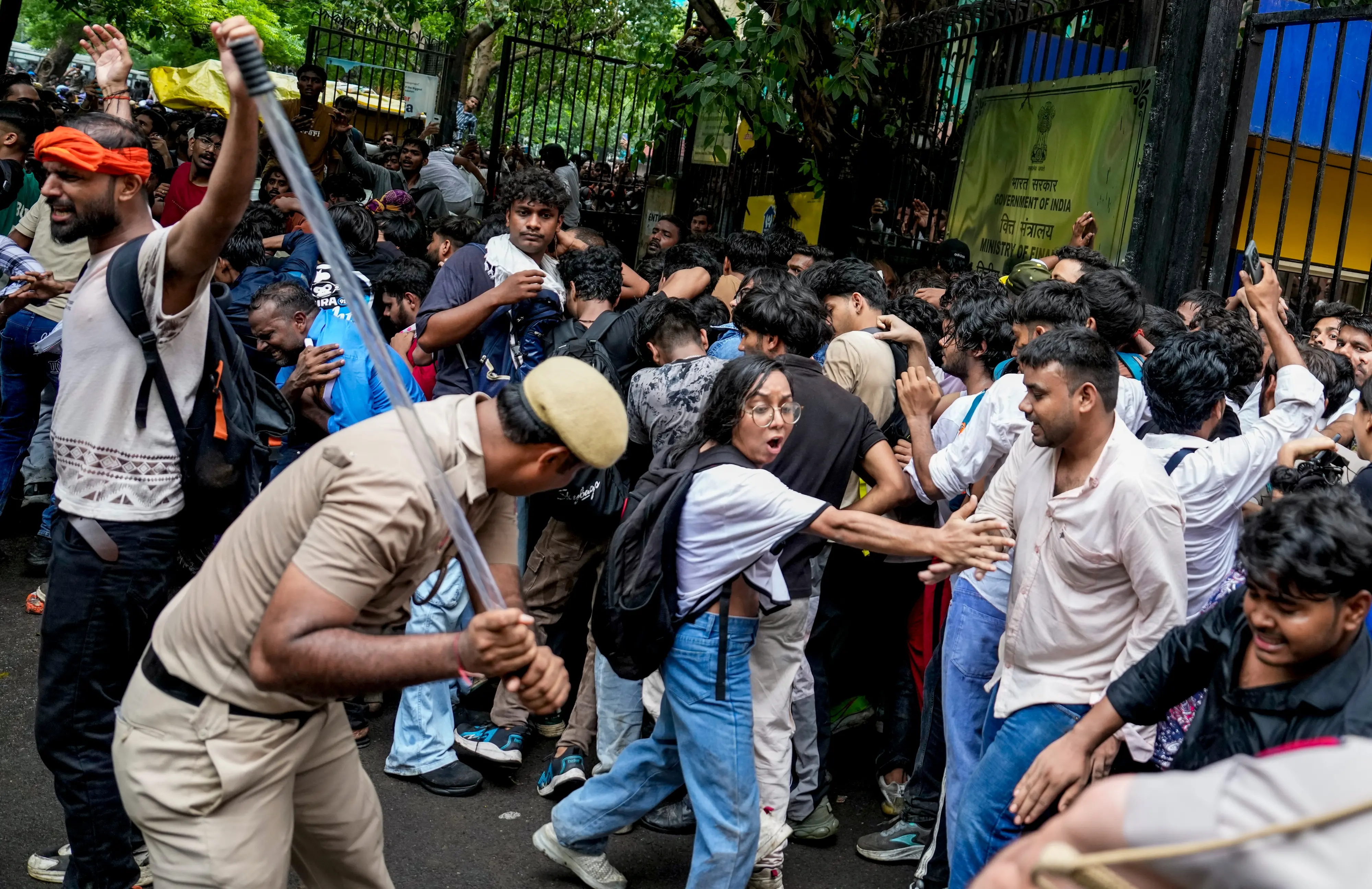
As I sit and reflect on the youth movement that the nation witnessed on the anniversary of Quit India movement, the parallels hard to miss. Rulers who think they are not answerable to the people of the nation. The iron fist of law and policing that cages dissent and criminalises free speech. In many ways I see continuities today with the struggles of the youth of the past. Perhaps the starkest difference, however, is that one of the strongest voices which spoke to the people of this country during the freedom struggle and even during the Emergency, has now turned a puppet and servant to the forces in power. Of course I refer to a majority of the establishment media. And even here rises the spectre of the freedom struggle, independent journalists who, like the revolutionary presses printed truth in defiance of orders of the British, have dared to stand against the current and show the reality of what youngsters were demanding.
The sweetest of all parallels that I can find is that this government fears the youth and the people of this country united, just as the British feared the freedom struggle and the icons of our resistance who we remember today. Their fear is so strong that they unleash every mechanism that they have at their disposal to defeat us. From brutal violence at the hands of agents of the state, to targeted harassment and intimidation by their IT Cell and goons who carry out violence at their behest, and finally to all attempts at trying to discredit the youth who express their discontent democratically. It is their fear that despite all their weapons we have stopped fearing.
The highest achievement of this movement was that it created a broad solidarity and momentum beyond any lines by which the BJP may try to divide us. In that, the most enduring aspect of this movement was its plurality, in both the coming together of people across divides of caste, class, gender, region and religion, as well as the plurality of modes and shapes the movement took. The sit-in and hunger strike inspired by Gandhi and Bhagat Singh was transformed in a space where presence was turned into content. Where every person who came to the site staked their claim in a creative manner of their choosing and made their presence felt through, humour, music, sarcasm and slogans.
The movement at Jantar Mantar was not just confined to Jantar Mantar, but saw protest sites joining up and transforming this movement into a country-wide agitation. 12 years of political hopelessness, 12 years spent teaching us to sit quietly and accept whatever the BJP wanted to do, that’s what we overcame when we found each other. Solidarity and unity in struggle were the values that built the Jantar Mantar protest and is set to shape every youth protest from here on out. It was a reminder that the BJP is not the nation, that the government is not the nation. It was a call for every citizen to challenge the government when it turns against the interest of the people and refuses to be accountable for its misdeeds in doing so.
The question that this movement faced the most was: are you a NEET student? But it was exactly that fallacy of thought that this movement overcame, where the students and youth built a living, breathing connection between the multitude of issues faced by this generation. From paper leaks to privatisation of education, to unemployment and the precarity of today’s gig economy, to the rising cost of living and falling conditions of living, this movement created a broad banner and platform that saw people uniting across demands. This movement was a definitive rejection of the politics of hate and division that the BJP embodies, and a movement that embraced every shade of life and every voice of resistance.
The youth of our country braved every kind of repression that this state had to offer. The violence against students and moreover the fact that the BJP thought it could continue being unaccountable was something that they decided was not going to be tolerated. The struggle has only begun is something I think is broadly agreed upon by the constituents of this movement. This movement was simply the first phase in the larger struggle for education, democratic rights and social justice. This movement was strongly articulated around the ideas and ideals of our freedom struggle, and the secular and democratic vision of India that it mobilised and catapulted into reality. Today’s movement was also built on the memory and strength provided by the Equal Citizenship movement of 2019 and the Farmer’s movement, movements that showed us that it was possible to hold one’s own against the government.
This legacy is something that the students and youth will carry forward. This struggle will go on to inspire even further and greater struggles. The Jantar Mantar showed us what was possible when we came together and now we cannot stop dreaming. The struggle ahead is to reclaim the republic, it is to show a fascist government and its lackeys that we are the inheritors of Bhagat Singh and Ambedkar who will bring a better tomorrow.
(The author is national president of AISA)