The day the honey waves fell silent
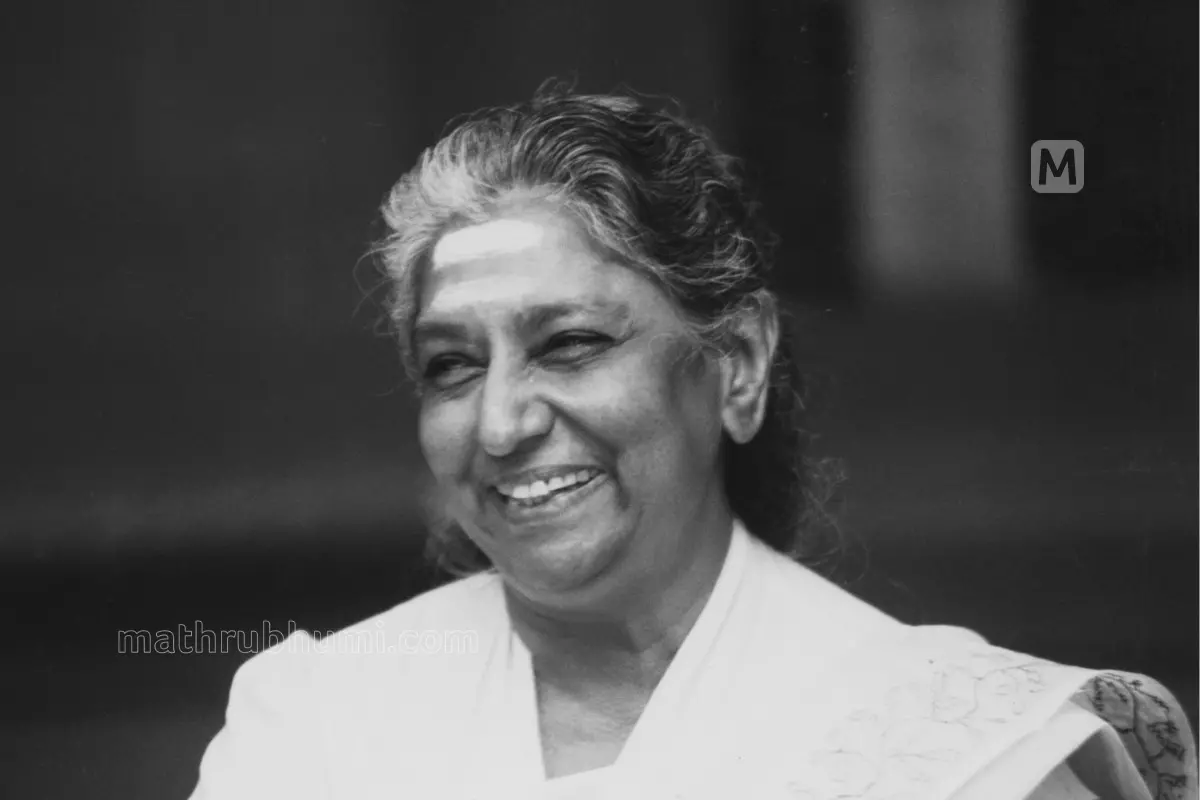
There is a quiet consolation in knowing that death is the one promise life never breaks. Yet some departures refuse to feel natural. They leave behind an emptiness so profound that it seems a part of our own soul has slipped away with them.
That is how I feel today.
With the passing of S Janaki, the world has not merely lost one of its greatest playback singers. We have lost a voice that breathed inside millions of hearts for more than six decades. She never simply sang a song. She entered it, lived it, and then gently placed it inside us, where it remained for a lifetime. Love, longing, joy, grief, devotion, desire, innocence, motherhood, loneliness, and silence itself found their truest expression through her voice.
It is difficult for me to accept that neither S Janaki nor SP Balasubrahmanyam walks this earth anymore. We hardly knew them in person. Most of us never even met them. Yet their presence was constant, almost protective. They were unseen members of our families, faithful companions through childhood, youth, and adulthood. They sang us into love, held us through heartbreak, comforted our losses, and quietly celebrated our joys.
My thoughts drift first to Malayalam cinema.
Janaki Amma gifted Malayalam its first National Film Award for Best Female Playback Singer with the unforgettable "Ettumanoorambalathil" from Oppol. But long before that honour, she had already become part of our emotional inheritance through songs like "Thaliritta Kinakkal," "Oru Kochu Swapnathin," "Vasantha Panchami Naalil," and countless others. Those melodies have never grown old. They still carry the fragrance of another time, another innocence.
Then there was Tamil cinema.
Whenever Janaki Amma's voice met the luminous presence of J Jayalalithaa on screen, something extraordinary happened. It was more than playback singing; it was the perfect meeting of voice and expression. Songs such as "Ammaiyappan," "Neela Niram," "Yethirundho Vandhaal," and so many others remain among the most beautiful moments in Indian cinema. Through Janaki Amma's voice, Jayalalithaa's grace, strength, and vulnerability became unforgettable. And this was only a fraction of her greatness.
She sang in more than twenty languages, yet every listener believed she belonged to their own language, their own home, and their own heart.
For my generation, our emotional education came through her songs. We learnt love through "Sendhoora Poove," "Chinna Chinna Vanna Kuyil," "Malare Mounama," and "Inji Iduppazhagi." We understood longing through "Aa Nimishathinte Nirvrithiyil." We discovered devotion through "Kaatril Varum Geetham." In Malayalam, songs like "Malar Kodi Pole," "Raakendhu Kiranangal," "Mizhiyoram," and "Nirangal Than Nritham" became woven into the fabric of our lives.
The list has no end because our lives themselves were written between her songs.
For me, music was never entertainment. It was shelter.
Whenever life became too loud, music became my silence. Whenever the world became too harsh, her voice became my refuge. Looking back today, I realise that the entire architecture of my inner life was built upon the foundation of S Janaki's music.
I still remember the first time I watched "Sendhoora Poove." Sridevi, radiant in a flowing white sari, surrounded by glowing shades of green and yellow, while Janaki Amma's voice floated like nectar across the screen. I cannot explain what happened to me that day. It was as though the moon had lowered a swing for me, and Janaki Amma herself fed my soul the sweetest milk of love. That single song split my universe open. Nothing was ever the same again.
Music became my first love, my deepest obsession, and my safest home.
For more than 25 years, my days revolved around Radio Ceylon. Neyar Viruppam, Puthu Padalkal, and Pon Malai Pozhuthu were not merely radio programmes; they were sacred appointments.
My family often wondered why I lived so completely inside music. Even my father, himself a lover of literature and music, could not fully understand the intensity of my devotion. Janaki Amma became my doorway into literature.
Following the lyricists who wrote for her led me to giants such as P Bhaskaran and many others. Through them, I entered the vast worlds of Tamil and Malayalam poetry. Somewhere along that journey, the tiny poet sleeping quietly inside me finally awoke.
Her collaborations with MS Baburaj introduced me to the mesmerising sound of the tabla. That fascination became years of study and eventually transformed my understanding of both music and life. The tabla taught me that the highest form of music is silence, and the deepest form of love is also silence.
Perhaps that is why I eventually married a tabla player. For years, I had quietly decided never to marry. I longed for love, but not for the institution of marriage. Then I met my husband, Manoj Siva. My decision dissolved simply because he was a tabla player. Even today, through all the ordinary rhythms and occasional dissonances of married life, the heartbeat of our relationship continues to move to the sound of the tabla—a rhythm that, in many ways, began with S Janaki.
Her influence reached far beyond music.
Listening to her effortless command of so many languages inspired me to learn languages myself, to explore different literary traditions, and to understand the histories behind songs and cinema. She made me feel less confined by geography and more connected to humanity.
More importantly, following the lyricists whose words she sang planted the first dream of becoming a lyricist myself. That dream slowly grew into an enduring love for literature. Poetry ceased to be something I admired; it became the very way I understood life.
Every poet has a beginning. Mine was S Janaki. I was fortunate enough to meet SP Balasubrahmanyam once. Overcome with childlike affection, I impulsively kissed his generous tummy before he had the slightest chance to react. He accepted my madness with warmth and laughter. It remains one of the happiest moments of my life. Meeting Janaki Amma, however, remained an unfulfilled prayer.
For years, I carried one simple dream—to sit quietly beside her, to touch her feet, or simply to rest my head on her lap. To many, this may sound excessive. But anyone who truly loves music knows that some people become essential for the soul to keep breathing.
I believed our paths would meet. I truly believed it. But life chose otherwise.
Since the news of her passing, my phone has become a vessel of shared grief. Friends from different states, different languages, and different walks of life have been sending messages, not merely expressing condolences but trying to comfort me as though I had lost someone from my own family. Many have sent voice recordings of themselves singing Janaki Amma's songs.
As I listened, I found myself crying—not only because she was gone, but because I suddenly realised something extraordinary. The world knows me through her.
People associate me with her music so deeply that they instinctively reached out to comfort me. And then another realisation followed.
My love for S Janaki is immense. But it is not unique.
Across India and far beyond, there exist countless hearts that love her even more deeply than I do. There are galaxies of people whose lives were shaped by her voice. That thought, strangely, brought me peace. She did not simply create songs. She created an invisible family.
A family bound not by blood, language, or geography, but by music. Today that family grieves together. Yes, there is sorrow. There is also an unfamiliar fear.
The physical presence of these great artists—even from a distance—gave us a sense of security. Without them, the world suddenly feels colder, as though a great tree beneath whose shade we all rested has quietly disappeared.
Yet I know that Janaki Amma has not truly gone anywhere. Like every truly immortal artist, she has simply moved into another form of presence. She now lives wherever someone hums a forgotten melody. She lives wherever a young singer discovers his or her voice.
She lives in every poet, every musician, every lover who closes their eyes and finds comfort in one of her songs. She lives in everyone who smiles genuinely.
As for me, I shall continue sailing through the endless ocean of her music until my own final day. And today, while listening to those voice messages sent by friends from across the country, I understood one final truth.
Love is never small. Music is never lonely.
Somewhere, in countless homes across the world, tears are falling to the sound of S Janaki's songs. Those tears do not divide us. They unite us.
Together they become an endless galaxy of love—one vast, luminous universe connected forever through her voice. Perhaps that is the greatest gift she has left behind.
Rest peacefully, Janaki Amma.
The honey waves may have fallen silent, but the sea you created will sing forever.