National Librarian's Day: How Indian libraries embrace the digital age
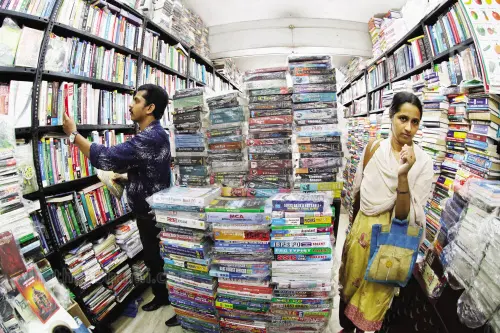
August 12 each year is the day when National Librarian's Day in India celebrates Dr. S.R. Ranganathan, a visionary whose Five Laws of Library Science continue to reverberate in every nook and corner of the country's wisdom realms. For decades, Indian libraries have been more than mere brick and mortar buildings with rows of shelves; they have been havens for truth seekers, cradles of knowledge, and spaces where minds eager for change meet. At present, when the country is standing at the crossroads of tradition and technology, the tale of Indian libraries is one of sheer makeover—of how they survived the waves of change without sacrificing the spirit that imbued them with life in the first place.
There was once a time when a library in rural India was as indispensable to the people as the village well. It was not only a repository of books but a living thing that breathed in synchrony with the pace of the people it served. The wooden tables groaned under the weight of decades of readers—children hunched over their schoolbooks, pensioners reading the day's newspapers, and local writers scribbling away at their poetry. The comforting smell of paper and the soft hum of discussions regarding international affairs filled the air. These are memories that linger vividly for most: a pooled transistor radio listening to Akashvani News, a night spent arguing over the editorial in The Hindu, or the arrival of a new book that would find its way through every excited pair of hands in the village. The librarian was not just a book custodian but the guardian of the people's collective curiosity.
Cut to the present day, and the Indian library scene is almost beyond recognition to one who visited last in those times. The hushed, reverent reading rooms remain, but accompanying them are rows of computers, touch-screen terminals, and Wi-Fi areas humming with students accessing lectures streaming and researchers tapping global databases. The transformation did not happen overnight; it was forged in the crucible of necessity as information consumption changed dramatically in the digital age. With smartphones replacing reference books and search engines rivaling encyclopedias, libraries had to evolve or risk irrelevance.
Modern Indian libraries have responded with ingenuity and resilience. Digitalization has emerged as their new lifeblood. Nationwide, dusty catalog cards are now replaced by Online Public Access Catalogs (OPACs), allowing a small-town reader to discover and reserve a book from a distant state library. Programmes like the National Mission on Libraries have given this change fresh new life, guaranteeing both urban and rural institutions can be modernized. Digital storerooms now contain gems previously inaccessible in physical repositories—earlier manuscripts, vintage newspapers, and historical papers—awaiting anyone with an internet connection. For exam aspirants, researchers looking for niche journals, or general readers searching for that hard-to-find out-of-print title, the virtual library has made the unbelievable possible.
It's not merely about preserving information; it's about making knowledge universal. Libraries now have e-books, audiobooks, online journals, and access to specialized databases that take the world's knowledge to the fingertips of India. Public digital libraries expanding means that a schoolgirl in a far-flung Assam village can download the same study material as a postgraduate student in Delhi. Even government-sponsored initiatives such as the Community Library and Information Centre scheme in West Bengal indicate how government-supported initiatives can take these advantages to disadvantaged groups.
Yet this digital revolution hasn't wiped out the human factor; in fact, it has redefined it. Libraries are again asserting themselves as cultural and intellectual centers, but only now their reach far transcends book lending. Children's storytelling sessions, digital literacy workshops, local history exhibitions, and training programs ranging from computer basics to employment readiness are becoming the norm. The Raja Ram Mohan Roy Library Foundation has played a special role in rural outreach, supporting and mentoring projects that make libraries relevant in areas where internet penetration is minimal. The physical library space is being transformed—not as a passive repository but as an energetic platform for community exchange.
This transformation has not been without its challenges. Money is always an ongoing issue, especially for smaller village or district libraries. Upgrading infrastructure takes money, and technology, although freeing, also necessitates regular upgrades and technical staff to operate it. Librarians find themselves increasingly taking on digital curation, event planning, and technology teaching roles without corresponding funding streams or structured training programs. For each cutting-edge city library with 3D printers and VR education rooms, there are still several hundred under-budget rural outposts fighting to replace broken seats or power a few lights.
These issues, however, have also given rise to innovative solutions. Cooperations among libraries, schools, and private technology firms are surfacing. Open-source programs are being used to control catalog systems. Crowdsourcing and fund-raising campaigns have provided funds as well as material donations. Even the concept of the "mobile library"–a book-and-equipment-filled van–has become popular in serving geographically remote communities. In urban areas, co-working facilities in libraries are luring young businesspeople and freelancers, integrating libraries into the economic structure of the knowledge economy.
"Academic libraries are on a path of transformation. As part of UGC NAAC accreditation, college and university libraries have been modernised, and infrastructure has been improved. Under the Central Government’s One Nation One Subscription scheme, the availability of e-journals has been increased. At present, this service is available in universities across India, and it will soon be extended to colleges as well.
Public libraries in Kerala continue with traditional services, and modernisation efforts are yet to be completed. Once computerisation is fully implemented, it will be possible for them to collaborate with college and university libraries and share information resources. AI services have transformed the information-gathering methods of both the academic community and the general public. However, the services of libraries and librarians are still essential to find and use authentic information.
The National Education Policy has brought changes to higher education in the country. Changes in library services and operations are expected in alignment with the new education policy", said Dr. Vimal Kumar V., Assistant Librarian, Mahatma Gandhi University, Kottayam.
The future is as limitless as the information these libraries hold. Artificial intelligence may soon drive targeted reading suggestions and automated cataloging. Virtual reality may immerse a student of history in a simulation of the Mughal court or the streets of Harappa. Machine translation might overcome linguistic barriers, letting a Tamil reader read a Marathi classic in an instant or a Hindi scholar read an article in Malayalam. These are not distant dreams—these are on the threshold of becoming reality as costs fall and innovation gains speed.
However, in this mood of technological excitement, the philosophical underpinnings established by Dr. Ranganathan do not lose their relevance. His Five Laws—books are for use, every reader their book, every book its reader, save the time of the reader, and the library is a growing organism—are deceptively well adapted to the demands of the 21st century. They remind us that the heart of a library is not in the medium—parchment, print, or pixels—but in the relationship it creates between knowledge and people.
"I am proud to be a librarian. In Kerala, nearly nine thousand libraries are affiliated with the Kerala State Library Council. As society moves from print reading to E-reading in this age of peak information technology, the methods and concepts of reading and libraries are evolving. Yet, the enduring mission of librarians across the nation remains the same—accurate information, delivered at the right time to the reader', said Jayan Avanur.
On this National Librarian's Day, as we celebrate the guardians of these spaces, it's perhaps time to think about what the library represents in contemporary India. It is still a sanctuary for the curious, still a link between the self and the total knowledge of humankind. But it is also a monument to resilience. From simple village reading rooms with rows of wooden benches to vast digital repositories stretching across continents, Indian libraries have not just weathered the storm of the digital era—they have employed it to transform themselves.
They are still the silent revolutionaries in an otherwise cacophonous world, standing with the door of learning open to the willing to enter. And as the next installment in their tale is being written—coded and cloud servers as much as on paper—their purpose does not change: to inspire, to educate, and to empower. In a nation as vast and disparate as our own, where the thirst for knowledge is as ancient as civilization itself, that purpose is nothing short of nation-building.