Messi: an epitome of 'late style'
Towards the end of his life, the Palestinian-American critic Edward Said became fascinated with the phenomenon of "late style". In 'On Late Style' -- published posthumously in 2006 -- he highlights those whose output assume a holistic dimension, as though they "crown a lifetime of aesthetic endeavour", as in Bach, Matisse, Rembrandt, and Wagner.
Continuing this critical investigation Nicholas Delbanco’s Lastingness: 'On the Art of Old Age' {Hatchette, 2011} looks at both those who thrived in sunset years -- Sophocles, Yeats, Monet, Liszt -- and those who lapsed into silence, or lost their invention, into which deck he slots Saul Bellow, James Baldwin and Norman Mailer. Our own Basheer, and MT, without casting aspersions on their epochal literary legacy would be egregious examples; the obverse being Punathil and C V Sreeraman.
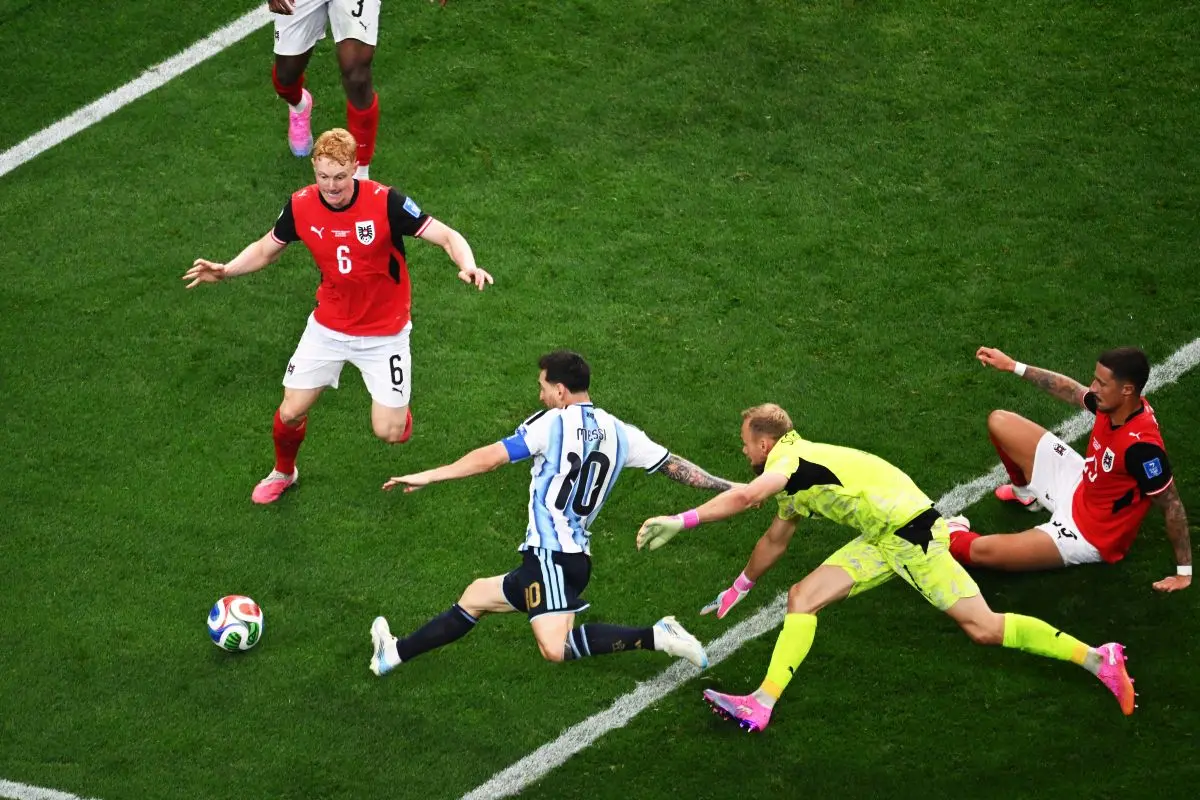
Which brings us to the current FIFA World Cup 2026. In footballing years, 39, makes Messi a near sporting dinosaur. The 2022 World Cup was his seemingly final opus, a footballing version of Beethoven's last string quartets or Monet's lily ponds. But, the world had reckoned without his genius to blossom even 'later', when on June 22, Messi became the greatest goal scorer in the history of the World Cup.
Full Coverage: FIFA World Cup 2026
Of the eighteen he has scored so far there is one mind-boggling statistic: twelve have come after he turned 35. To put that in perspective, one should remember that Pelé scored the same number in his entire fabled World Cup career.
In this later avatar, without the legs to carry him, Messi has become miserly with his movements. Rather than pretending to be a young man, he plays like an older one. He mooches through games, conserving himself for the moments that he can assert himself; sometimes walking three miles a game. In a world that fetishises youth, Messi epitomises late style.
Also Read: 'For me he is the best and he keeps proving it'
José Luis Mendilibar, the former Eibar coach, once said that the Argentine captain “parks” better than anyone: The 2022 and the '26 World Cups are testimony to that.
A related aspect that 'late style' Messi has mastered is what is termed the “quiet eye”. It describes how elite sportspersons keep a perfectly still gaze for a fraction longer than their lesser blessed counterparts, thus extracting more information before they execute. The rest of this tournament might yet prove it.
The author is a senior journalist.