5-K belt: From Kochi to Koduvally, can Kerala build a gold empire beyond smuggling?
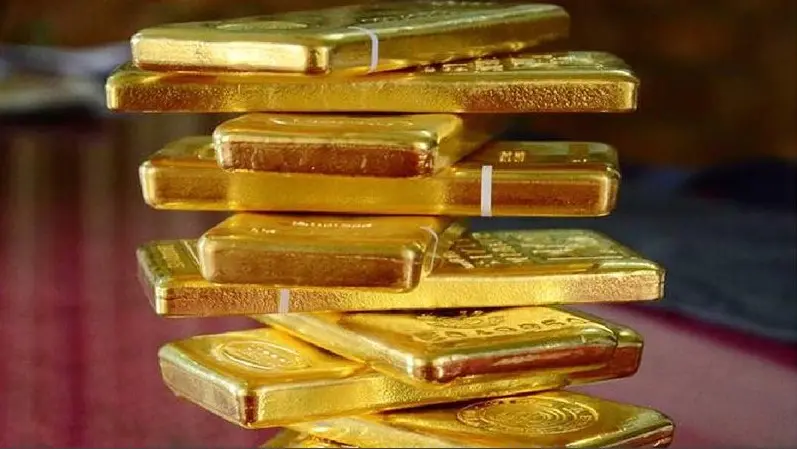
Kerala has a unique 5-K-Gold Belt stretching across Kochi-Kozhikode-Kannur-Kasaragod and the buckle is Koduvally. This gold belt comprising five iconic heritage cities and towns is literally a golden path, brimming with gold, representing power, glitz, wealth and glamour, and vying for a unique global identity, as famous as the Yemeni Gold Belt, Twangiza-Namoya Gold Belt of Congo, Gold belt of California, USA, Birimian Greenstone Belt of West Africa, Abitibi Gold Belt of Canada and El Indio Gold Belt between Chile and Argentina. While the foreign gold belts represent rich mining belts, Kerala’s 5-K Gold Belt are centers for legal and illegal gold imports, used for manufacturing exquisite gold jewelry. The Kochi to Kannur sector, just a distance of 278 km, covered by the Vande Bharat train in just 3 hours and thirty-five minutes, boasts 3 international airports, located at Kochi-Kozhikode-Kannur. Kasaragod town is sandwiched by two international airports, Kannur International Airport is just 91 Kms away and Mangaluru International Airport is only 53.3 Kms away. All the legal and illegal gold flowing, every day, through the four international airports in Kerala and through the Mangalore International Airport in Karnataka end up in Koduvally town, which is just 37.4 Km away from Kozhikode International Airport.
With more than 100 gold shops lining a 500-metre stretch of road, Koduvally town boasts the unique distinction of being India’s densest jewelry hub and is one of the largest markets for gold in India. But Koduvally is not a gold trading center like Mumbai’s Zaveri Bazar, Dubai Gold Souk, London OTC Market, US Futures Market, and the Shanghai Gold Exchange. Koduvally enjoys the reputation of being a gold jewelry destination, covering the entire spectrum of gold procurement, manufacturing, design, and purity testing. There are no swanky and glittering shops here, but only tiny shops and they enjoy great customer confidence and reputation.
Predictably, two locales in Kerala - Koduvally and the district of Kasaragod figure prominently in the crime map of the Customs Department, and the Directorate of Revenue Intelligence (DRI) because of the links that most of the gold smugglers apprehended by them have to the region.
As many as 178 out of the 475 post-seizure gold raids in the country by intelligence agencies and various wings of Customs in the year 2024 were conducted in Koduvally and Kasaragod. Passengers from these two places are closely monitored at airports, by Customs, CISF, Police and all Intelligence agencies in the country, more than any other segment of travellers. The awesome reputation of Koduvally and Kasaragod can be gauged from the fact that Customs officials at Rajiv Gandhi International Airport, Hyderabad refer to passengers hailing from this region as “Kasargod electricians.” Their ingenuity and skill are unparalleled. Gold-plating laptop circuit boards are the latest trend in gold smuggling, along with combining powdered gold with oats to make it practically undetectable! Similarly, gold is disguised in the form of suitcase hand grips, and metal wheels.
The unintended damage done to Kasaragod and Koduvally, as well as the reputation of the four international airports of Kerala, could be partly attributed to the relentless hunting of gold traffickers, carriers, and racketeers by various Central and State enforcement agencies. The place and inhabitants, all have become internationally notorious, But, the focus of this article is, could there not have been a twist in this story, had the Central and State governments, decided to develop the 5K-Gold Belt, into an iconic and unique tourist destination instead of treating it as a hunting ground for enforcement agencies?
Gold has traditionally been seen by Keralites as a long-term store of value and an inflation hedge that could also be utilised outside the risk spectrum. Central banks worldwide doubled their gold purchases in October, led by India's acquisition of 27 tonnes, as well, as Turkey and Poland significantly increasing their gold reserves. This surge in buying, signals continued central bank interest, in gold, despite recent price increases. Such being the case, it should not be surprising that individual buyers in Kerala, are also on a gold buying spree.
The gold trade is an integral part of Dubai’s economy, bolstering the United Arab Emirates’ revenue and economic strength. Known as the “City of Gold,” Dubai's Gold Souk happens to be the world's largest gold market! Situated in Deira, this Gold Souk is a highly visited tourist spot. Dubai’s affinity for this precious metal isn’t just cultural but also a powerful economic driver. With about 4,000 companies operating within this sector, the gold trade generates a massive annual revenue of around $74,882,912,500 (AED 275 billion). Kerala-based gold firms have a strong presence here as also in the workforce.
Why is it that our Keralite entrepreneurs are dazzling in Dubai but are unable to display their entrepreneurial capabilities inside the State? No doubt, many have built a chain of glitzy outlets, and are thriving well, but nobody is even willing to consider setting up what would be the greatest gold souk in the world, spread from Kochi to Kasaragod. The Kochi-Kozhikode-Kannur-Kasaragod- Koduvally, belt would have been a glittering zone, serviced by three international airports and one international seaport! Which country in the world can boast of such an amazing El Dorado? Imagine the tourist traffic flowing into the region. The Kerala government announced that it is expecting to welcome 2.2 crore domestic and 8 lakh international tourists during the 2024-25 financial year, whereas over 16.79 million tourists visited Dubai between January and November 2024. Kerala gold businessmen, workers, and sales teams have managed to create a gold fantasy world in Dubai but are unable to replicate the same in Kerala, why?
Politicians and bureaucrats have been obsessed for too long, sending men in white and khaki, to hound and chase the people, calling them unscrupulous businessmen, tax evaders, hawala operators, smugglers, carriers, and mules. The constant refrain has been to arrest, prosecute, imprison, levy fines, penalty, and put them in preventive detention. But, these very same people, upon landing in Dubai are welcomed as business magnates, enjoy respect and honour from the local rulers and government officials, and they have helped Dubai to become a major gold trading center. The GCC Jewellery Analysis Report 2024-2030: dated October 2, 2024 states “Market Soars with Luxury Retail Expansion - Tanishq, Graff, and Joy Alukkas Lead the Charge.” The stamp of Indian leadership is so evident from this report. While Kerala has unmatched expertise in jewelry craftsmanship, there is a marked inability to match Dubai’s thriving global market and their marketing skills. Ironically, the marketing workforce in Dubai is propelled by a sizeable number of Keralites. What is crippling Keralites in Kerala?
There is now a global consensus that a country needs to get the politics part of the development process right, only then will economic development click. The absence of a powerful and dynamic private sector is very much evident in Kerala. This critical vacuum is presently occupied by a clutch of greedy politicians, their families and some corrupt bureaucrats. In such a situation, money is acquired by manipulating political and bureaucratic processes. The private sector quietly shifts to States that offer a better and more congenial business environment. This in simple terms is the great challenge faced by Kerala. Excessive politicisation complemented by over bureaucratisation, has held back Kerala’s development. It is not that the State has poor governance or that the State has collapsed, but rather it is the diabolical twisting of bureaucratic rules and regulations to build up monumental, individual, familial and political party fortunes, that keeps away the enterprising entrepreneurs. Despite the rhetorical focus on transparency, accountability, improving citizen participation and so on, the overall level of governance is linked to internecine politics, creating a dysfunctional government. While the government is constantly refuting that it is dysfunctional, it is also aware that its spiraling enrichment at individual, familial and party levels, is spurred by this very existing dysfunctionality. Hence their self-interest does not lie in instituting liberal reforms because they benefit from the existing dysfunctions. Hence Kerala needs a transformational political culture to encourage entrepreneurial confidence.
Developing a new Golden path, exclusively for gold, from Kochi to Kasaragod, more wonderful than Dubai, should be entrusted to a task force comprising young entrepreneurs, traders, civil servants, the tourism department and politicians. It should be a Special Gold Economic and Tourist Zone (SGETZ). Our young civil servants are extremely brilliant and resourceful, their talents are being wasted in frustrating file pushing day in and day out. No wonder the extremely frustrated are venting their anger on seniors on social media. But, if a challenging project is assigned to them, not only the civil servants but the entire officialdom at all levels would be enthused to rise to the occasion. An entire generation of budding officials, politicians, gold jewelry business houses, bankers, hoteliers, NRIs, and infrastructure builders, can surely create a glamourous wonderland from Kochi to Kasaragod.
Kerala, Keralites and Malayalees can make the impossible possible.
The author is former Director General of National Academy of Customs, Indirect Taxes & Narcotics