Mach 2.5 guardian: How SMART will secure India's seas
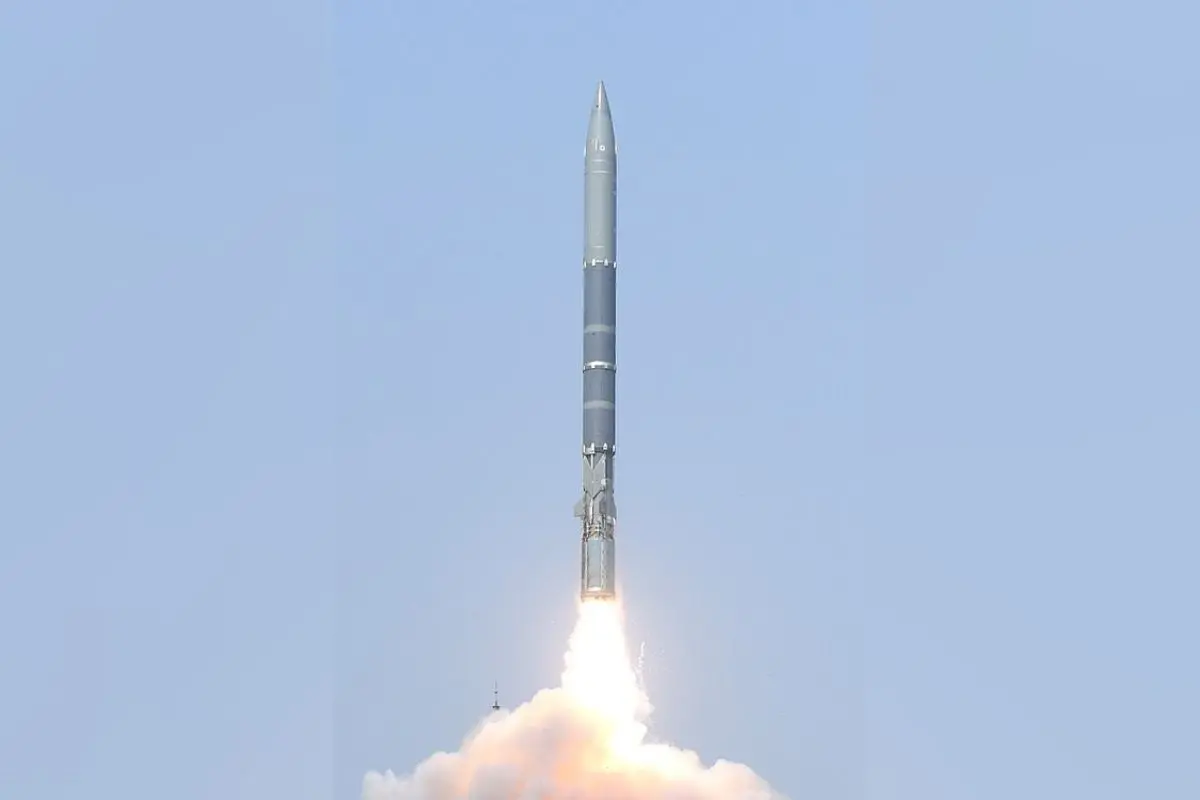
Imagine a missile that flies faster than sound, travels 650 kilometres across the ocean, and then drops a smart underwater bomb exactly where enemy submarines are hiding. That's India's SMART system, and it's almost ready to protect our coasts. According to idrw.org, a trusted defence news source, the final version will be tested very soon.
SMART stands for Supersonic Missile Assisted Release of Torpedo. Think of it as a super-fast delivery system that carries a special underwater weapon called a torpedo. A torpedo is like a self-driving underwater bomb that swims through water to destroy enemy ships and submarines. The SMART system can attack these threats up to 650 kilometres away from our coastline—that's roughly the distance from Mumbai to Pune and back!
The system was successfully tested in 2024, proving it works perfectly. The missile flies like a rocket, and then releases its torpedo with pinpoint accuracy. Now, the upcoming tests will confirm it's completely ready for real defence operations.
How does it actually work? The SMART missile is stored and launched from a sealed tube, much like how crackers come in protected tubes. It's a two-stage supersonic missile, meaning it uses two rocket engines to push it forward at incredible speeds. The missile carries either the DRDO Shyena torpedo or its improved version as its main weapon.
Once launched, the missile zooms through the sky at about Mach 2.5—that's nearly 7,650 kilometres per hour, or roughly three times faster than a bullet train! After covering the distance, the missile makes a sharp downward dive towards the target area. Then comes the clever part: it releases the torpedo, which floats down gently using a parachute. This ensures the torpedo enters the water safely without damage. The torpedo is placed precisely at a GPS location, just like how your phone knows exactly where you are. Once in the water, the torpedo automatically hunts down and destroys the enemy submarine.
The Indian Navy has exciting plans for SMART. They want to use it not just on warships, but also in special coastal defence units stationed along our shores. These fixed coastal batteries would be like powerful guardians protecting our ocean borders. Senior Navy officers have revealed plans to position SMART batteries along both India's west coast (facing the Arabian Sea) and east coast (facing the Bay of Bengal). This creates multiple layers of protection around our entire coastline.
Each battery will have eight to twelve mobile launch vehicles mounted on big TATRA or Ashok Leyland trucks—the same type of heavy-duty trucks you see carrying large loads on highways. These will be supported by command centres, powerful radars that can spot enemies from far away, and special cameras with sensors that help aim the weapon accurately.
These batteries will receive information about enemy positions from ground radars, ships patrolling the seas, and surveillance systems. This gives them complete awareness of everything happening in our waters. The system can detect threats early and respond quickly when enemy ships or submarines approach our maritime boundaries.
What makes SMART truly special is its unique design. Very few countries in the world have a system that combines a long-range supersonic missile with an anti-submarine torpedo. It can hit targets 650 kilometres away, works against both surface ships and submarines, and can be operated from safe land-based positions. This means our warships and aircraft don't need to go into dangerous areas, keeping our sailors and pilots safe.
The final version will have a two-way data link—imagine being able to send new instructions to the missile even after it's launched, like updating directions on a moving GPS. This allows the missile to chase moving targets and adjust based on fresh information from sensors, making success almost certain.
India already uses the famous BrahMos missile for coastal defence, but SMART adds a completely new capability focused specifically on destroying submarines at very long distances. Once SMART is deployed, it will work together with our naval ships, aircraft, P-8I submarine-hunting planes, and our own submarines to create a powerful, multi-layered shield protecting India's vast ocean territories. Our seas will have a smart, strong, and vigilant guardian watching over them day and night.
(Girish Linganna is an award-winning science communicator and a Defence, Aerospace & Geopolitical Analyst. He is the Managing Director of ADD Engineering Components India Pvt. Ltd., a subsidiary of ADD Engineering GmbH, Germany.)