India's new silent hunter patrols our shallow coastlines
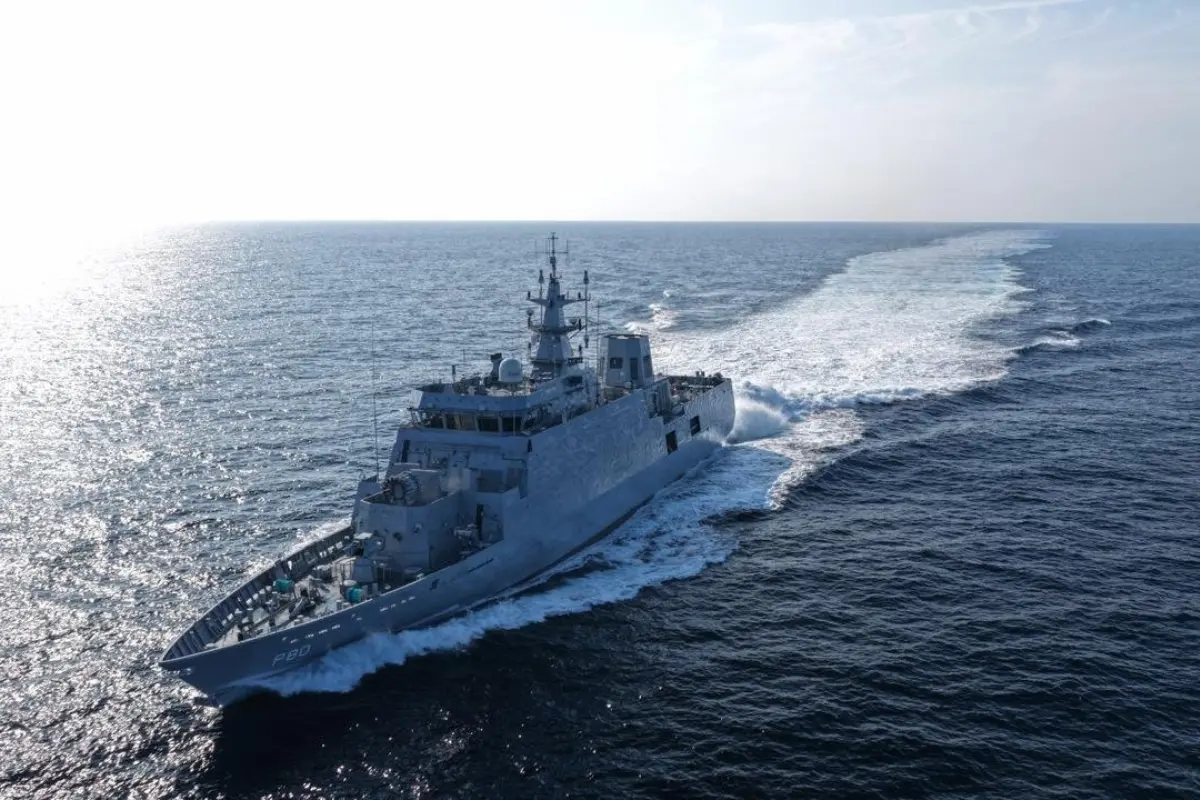
When you think of a warship, you probably imagine a massive grey vessel cutting through the open ocean, far from land. But what about the waters right near our shores—the busy harbours, the shallow coastlines where fishing boats bob gently, the river mouths where fresh water meets the sea? Who guards these vulnerable spaces? This is where INS Mahe comes in, and honestly, it's about time we paid attention to what's happening just off our beaches.
Commissioned on 24 November 2025 at Mumbai Naval Dockyard, INS Mahe isn't trying to be the biggest or the flashiest. At just 26 metres long, it's smaller than many commercial fishing trawlers you'd see at any coastal town. But size isn't everything. This little warrior, designed and built entirely at Cochin Shipyard Limited in Kochi, represents something far more significant—our ability to protect ourselves in waters where traditional warships simply cannot operate effectively.
Think about it this way. Enemy submarines don't always announce their presence in the middle of the Indian Ocean. They're sneaky. They creep along the seabed, moving silently into shallow coastal waters where the noise from waves, boats, and port activity masks their approach. They can gather intelligence on our naval movements, lay mines near busy shipping lanes, or position themselves to strike commercial vessels entering or leaving our ports. And here's the scary part—our big, deep-draft warships that patrol the open seas can't chase them into these shallow zones. It's like trying to catch a thief hiding in a narrow alley with a truck—you need something smaller, more agile, built for tight spaces.
That's exactly what INS Mahe is. With a draught of just 1.5 metres, meaning it sits barely deeper than a person's height in the water, this ship can glide into coastal areas where the depth is 30 metres or less. It carries advanced MG-7 sonar that acts like underwater ears, detecting submarines or mines that regular ships might miss. Armed with twin 25mm guns and equipped with torpedoes and anti-submarine rockets, it can respond swiftly when threats are identified. The ship's motto, "Silent Hunters," isn't just dramatic—it's functional. Speed and stealth are its weapons, symbolised beautifully by its mascot, the Cheetah, and its crest showing the Urumi, that flexible sword from Kalaripayattu that strikes fast and precise.
What makes INS Mahe truly special, though, is what it represents beyond military capability. Over 80 per cent of the ship's components are made in India, involving more than 20 small and medium enterprises alongside defence giants like BEL, L&T Defence, and Mahindra Defence Systems. This isn't just a warship; it's proof that India can design, build, and deploy complex defence systems without depending on foreign suppliers. Every bolt, sensor, and engine represents jobs for Indians, expertise developed here, and money staying within our economy.
And let's not forget geography. India has over 7,500 kilometres of coastline. We have major ports in Mumbai, Chennai, Kochi, and Visakhapatnam that handle billions of dollars in trade annually. We have island territories like the Andamans that need protection. Our fishing communities depend on safe coastal waters for their livelihoods. One submarine laying mines near a busy shipping channel could paralyse trade for weeks. One underwater threat near a port could endanger thousands of lives. INS Mahe is the first of eight such ships planned, creating a network of silent guardians patrolling our most vulnerable maritime zones.
Some might ask whether such a small ship really matters in modern warfare. The answer is simple—absolutely. Wars aren't always fought with aircraft carriers and nuclear submarines in the deep ocean. Sometimes the most strategic battles happen in the shallows, where an enemy submarine can wreak havoc before anyone even knows it's there. Having dedicated shallow-water anti-submarine warfare vessels means we're not leaving our coastal defences to chance.
INS Mahe, named after the historic coastal town in Kerala where rivers meet the sea, embodies both grace and strength. It's a reminder that protecting a nation isn't always about having the biggest weapons—sometimes it's about having the right tools in the right places. And for India's maritime security, these silent hunters patrolling our shallows might just be the most important tools we have.
The author is a Defence, Aerospace & Geopolitical Analyst