How India is building a self-reliant Defence future
As India celebrates 80 years of Independence, the country's defence story is no longer just about protecting its borders. It is becoming a story of building fighter aircraft at home, designing advanced missiles, exporting military equipment to dozens of countries, and creating opportunities for thousands of Indian companies.
A major milestone in this journey came recently when the Ministry of Defence unveiled the sixth Positive Indigenisation List, adding 405 defence items that will now be developed within the country instead of being imported. The move reflects a larger shift that has gathered momentum over the past decade, transforming India from one of the world's largest defence importers into a nation determined to become a global defence manufacturing power.
The ambition goes beyond replacing foreign equipment. It is about creating jobs, encouraging innovation, strengthening national security, and building an industrial ecosystem that can compete internationally.
A new chapter in India's defence story
The latest Positive Indigenisation List carries an estimated business potential of ₹3,070 crore and covers everything from helicopter components and aircraft engine parts to warship systems, radars, missile equipment, and critical spare parts.
Of the 405 items, 389 are linked to Defence Public Sector Undertakings (DPSUs), while 16 are meant for the Indian Coast Guard. Each item comes with a timeline for domestic development, after which it will be sourced from Indian companies.
Defence Minister Rajnath Singh described the initiative as another step towards strengthening the Aatmanirbhar Bharat vision. By opening more opportunities for Indian manufacturers, especially small and medium-sized enterprises, the government hopes to reduce dependence on imports while encouraging investment and technological innovation.
The numbers behind the transformation
The scale of India's defence transformation becomes clearer when the numbers are placed side by side.
The defence budget has grown from ₹2.53 lakh crore in 2013–14 to ₹7.85 lakh crore in 2026–27, while capital expenditure for modernising the armed forces has more than doubled during the same period.
That investment is now showing visible results. Defence production reached a record ₹1.78 lakh crore in 2025–26, with public-sector companies contributing around 76 percent and private industry accounting for the remaining 24 percent.
Behind these figures lies a growing network of factories, research centres, start-ups, and manufacturing companies working together to build equipment that was once sourced almost entirely from overseas.
The rise of Indian defence manufacturers
One of the biggest changes has been the growing participation of private companies.
A decade ago, defence manufacturing was largely dominated by government-owned enterprises. Today, private firms are producing aircraft components, missile systems, electronics, ammunition, and specialised equipment for both domestic use and export.
Government programmes such as iDEX (Innovations for Defence Excellence) have helped hundreds of start-ups and MSMEs enter the defence sector. More than 550 design and development contracts have already been awarded through the programme, creating opportunities for young innovators to solve complex military challenges.
Another initiative, the Technology Development Fund, is supporting companies developing critical technologies with grants of up to ₹50 crore, helping ideas move from laboratories into real military applications.
India's defence exports are taking off
Perhaps the clearest sign of India's changing role is the rapid growth in defence exports.
In 2013–14, India's defence exports stood at just ₹686 crore. By 2025–26, that figure had climbed to ₹38,424 crore, with Indian-made defence products now reaching more than 80 countries.
Private companies have emerged as major contributors, accounting for nearly 45 percent of total exports, while Defence Public Sector Undertakings continue to play an equally important role.
The government's next target is even more ambitious — achieving ₹3 lakh crore in annual defence production and ₹50,000 crore in exports by 2029.
Building aircraft, missiles and helicopters at home
India's self-reliance drive is no longer limited to manufacturing simple equipment.
The latest indigenisation list includes components for important aerial platforms such as the Advanced Light Helicopter (ALH), Light Utility Helicopter (LUH), Su-30MKI, Light Combat Aircraft (LCA), and the AL-31FP engine.
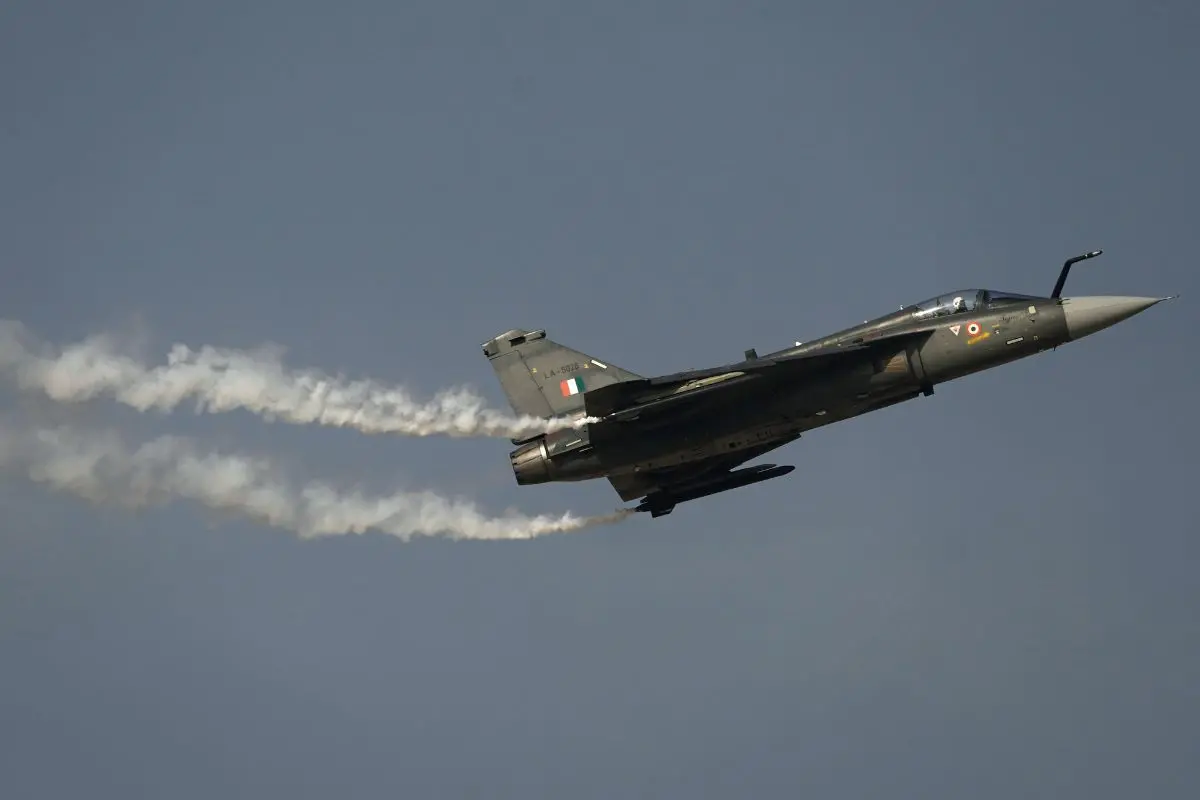
The armed forces are also investing heavily in indigenous platforms. Recent approvals include 97 Tejas Mk-1A fighter aircraft worth ₹62,000 crore and 156 Light Combat Helicopters Prachand valued at ₹62,700 crore.
These projects not only strengthen military capabilities but also create long-term work for suppliers across India's growing aerospace ecosystem.
The missile story
Missile development has become another area where India is steadily expanding its capabilities. Recent successful tests of Agni-4 and Agni-5 missiles demonstrated the country's growing technological maturity. Indigenous systems such as RudraM-II, TARA Glide Weapon, and the Naval Anti-Ship Missile further show that India is developing precision-strike capabilities across multiple domains.
Meanwhile, DRDO continues to push into advanced technologies, including long-range air defence systems, very short-range air defence missiles, and even hypersonic propulsion through successful scramjet engine testing.
These developments place India among the relatively small group of nations working on next-generation military technologies.
A stronger Navy, built in India
The transformation is equally visible at sea. The Indian Navy has commissioned new warships and submarines, including INS Surat, INS Nilgiri, and INS Vaghsheer, while stealth frigate INS Mahendragiri entered service with more than 75 percent indigenous content.
New offshore patrol vessels and survey ships are expanding India's maritime surveillance capabilities, while indigenous missile systems are strengthening the Navy's ability to respond to evolving security challenges.
For a country with a long coastline and growing strategic interests in the Indian Ocean, domestic shipbuilding has become an important pillar of national security.
The invisible revolution inside factories
Much of India's defence revolution is happening away from public attention.
Since the launch of the SRIJAN Defence Portal in 2020, thousands of defence items have been opened to Indian industry for indigenous development. More than 15,700 items have already been successfully indigenised, resulting in an estimated ₹9,000 crore worth of import substitution.
The government has also simplified licensing rules, expanded foreign investment limits, improved procurement procedures, and created digital platforms that make it easier for companies to participate in defence manufacturing.
Defence industrial corridors in Uttar Pradesh and Tamil Nadu are attracting thousands of crores in investment, while facilities such as the BrahMos Integration and Testing Centre in Lucknow are beginning production of advanced missile systems.
Self-reliance
Defence self-reliance is not simply about manufacturing weapons. When equipment is built inside the country, maintenance becomes easier, supply chains become more reliable, jobs are created, and Indian companies gain valuable technological expertise. It also reduces vulnerability during global crises when international supply chains may become uncertain.
Perhaps most importantly, it allows India's armed forces to work more closely with domestic designers and manufacturers to develop equipment suited to the country's own operational needs.
Aiming towards 2047
India's defence journey is still unfolding, but its direction has become increasingly clear. The country is investing more in research, supporting start-ups, encouraging private participation, and expanding indigenous manufacturing across land, air, and maritime platforms. The sixth Positive Indigenisation List is another reminder that the goal is no longer just to buy defence equipment, it is to design, build, maintain, and export it.
As India looks towards 2047, the centenary of its Independence, the vision is of a nation that not only protects its borders with confidence but also stands among the world's leading defence innovators.