Could India really attack Bangladesh? Experts say the truth will shock you
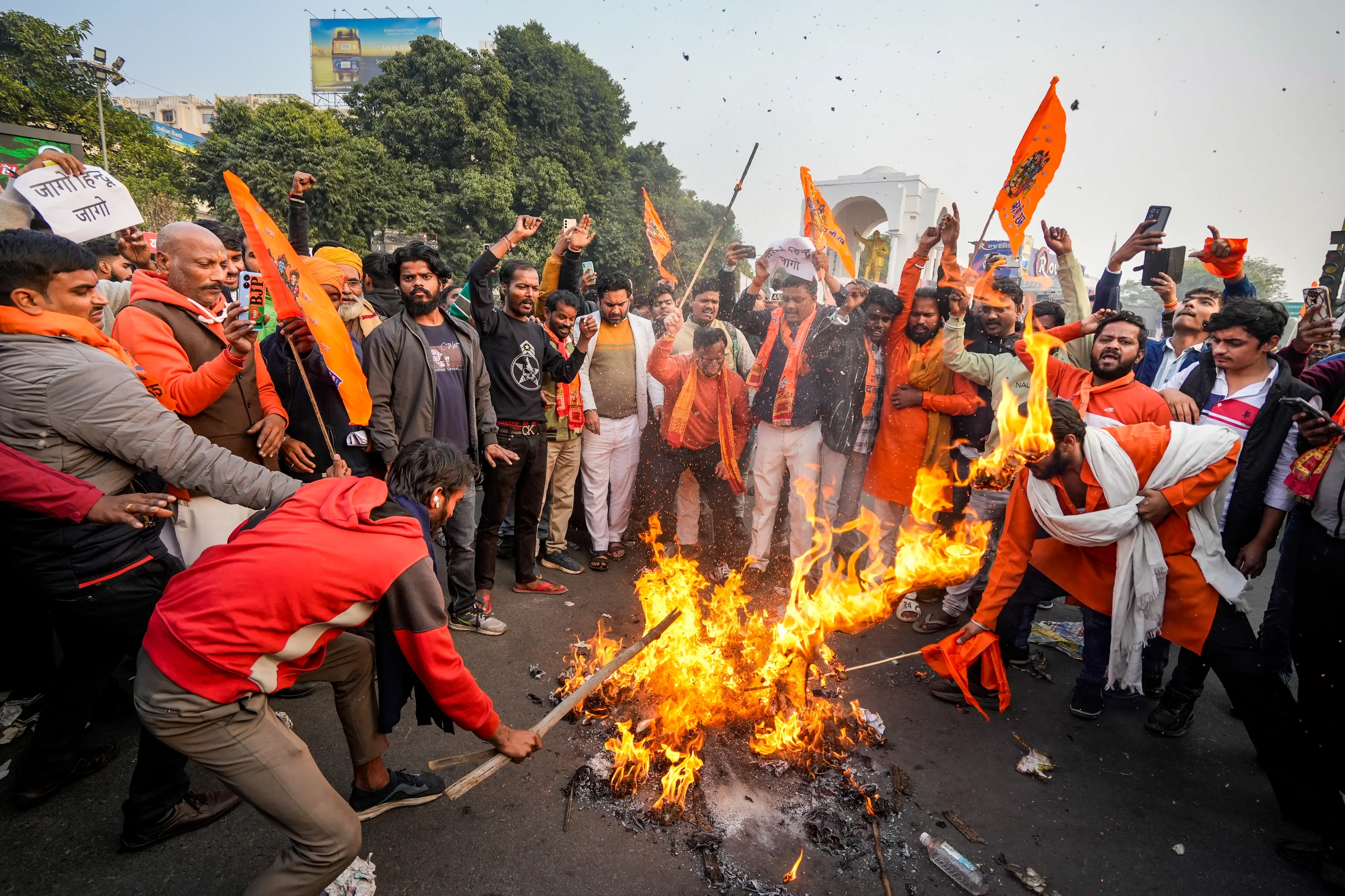
Anger in India is rising, and it is no longer confined to television studios or social media. Disturbing visuals showing the killing of Dipu Chandra Das in Bangladesh—where the Hindu man was tied to a tree, beaten, and set on fire—have struck a raw nerve across eastern India. The incident has revived memories of 1971, heightened concerns about violence against minorities, and intensified calls in some quarters for New Delhi to take action against instability next door.
Given this context, a crucial question arises: Could India attack Bangladesh? And if so, would nuclear-armed Pakistan, which has recently grown closer to Dhaka, intervene?
Bangladesh’s instability and India’s dilemma
Bangladesh is navigating one of its most fragile political phases in decades. The post-2024 regime change has been followed by sustained unrest, including the December 19, 2025, killing of youth leader Sharif Osman Hadi, which triggered riots, attacks on media houses and cultural centres, and increasingly strident anti-India protests. Economic growth has slowed to an estimated 3–4 per cent, while an interim government has banned Awami League activities ahead of elections scheduled for February 2026.
For India, the spillover is a major concern. Violence against minorities has sparked outrage nationwide, protests have erupted outside Bangladesh’s High Commission in New Delhi, and Indian political figures have publicly demanded stronger measures. The Ministry of External Affairs (MEA) has lodged formal protests over attacks on Indian diplomatic premises and rejected accusations that India is responsible for unrest within Bangladesh.
At the same time, India has carefully avoided escalatory language. Official statements continue to emphasise cooperation on trade, water sharing, and security, while reiterating support for a “democratic, stable, peaceful, and inclusive Bangladesh.” Crucially, there are no signs of military mobilisation. No Indian doctrine, political statement, or intelligence leak points to plans for intervention. India’s post-1971 record is instructive: it has repeatedly absorbed refugee flows, cross-border crime, and political instability without resorting to invasion, relying instead on diplomacy, border management, and calibrated pressure.
Why an Indian strike remains improbable
Even under domestic pressure, New Delhi understands the costs of military action against a neighbour with which it shares cultural, economic, and geographic ties. Any strike on Bangladesh would risk destabilising India’s eastern and northeastern states and internationalising the crisis—outcomes that would be detrimental to India’s image as a stabilising regional power.
India’s strategic culture has been assertive when directly attacked, as seen in recent counterterrorism operations, but restrained when dealing with internal instability in neighbouring states. Unlike in 1971, Bangladesh does not currently present a scenario of state-backed mass violence spilling millions across borders. The situation is serious, but not existential.
The Pakistani factor: influence without commitment
The situation becomes more complex when considering Pakistan. Multiple reports suggest renewed interest from Pakistan’s Inter-Services Intelligence (ISI) in Bangladesh following political upheaval. Early in 2025, the ISI reportedly sought to cultivate networks in Dhaka, including contacts with extremist organisations such as Ansarullah Bangla Team and Hizb-ut-Tahrir, both linked to Pakistan-based groups like Lashkar-e-Taiba.
However, influence does not equal obligation. Relations between Pakistan and Bangladesh have only recently thawed after decades of estrangement rooted in 1971. That rapprochement is diplomatic and transactional, not strategic. There is no alliance treaty, no joint defence planning, and no domestic consensus in Pakistan that Bangladesh’s security warrants risking war with India.
Nuclear weapons: deterrence, not intervention
Pakistan’s nuclear arsenal is often cited as a wildcard. Independent assessments estimate Pakistan has roughly 170 warheads, potentially growing to 220–250 by the latter half of the decade. These weapons are mated to aircraft, short- and medium-range missiles such as Shaheen and Ghauri, and evolving sea-based platforms.
However, possessing nuclear weapons is very different from using them. Pakistan’s nuclear posture is designed to deter Indian action against Pakistan, not to intervene in third-party conflicts. Even during high-tension India–Pakistan crises in 2025, including the post-Pahalgam standoff marked by intense rhetoric, Islamabad did not cross the nuclear threshold.
Using nuclear weapons in response to an India–Bangladesh conflict would be strategically irrational. There is no casus belli, no geographical access, and no escalation ladder Pakistan could control. Any overt move—whether naval, cyber, or otherwise—would be immediately attributable and invite Indian retaliation on terms favourable to New Delhi. Pakistan’s nuclear threats are thus widely viewed in India as rhetorical deterrence rather than operational intent.
What Pakistan is more likely to do
If tensions between India and Bangladesh worsen, Pakistan’s involvement would almost certainly remain indirect, relying on diplomatic posturing and proxy activity. Even covert action in Bangladesh carries diminishing returns: Dhaka’s internal politics are sensitive to foreign manipulation, and Indian counter-intelligence capabilities in the eastern theatre are far stronger than in past decades.