How Apache and Prachand pack a double-punch for India
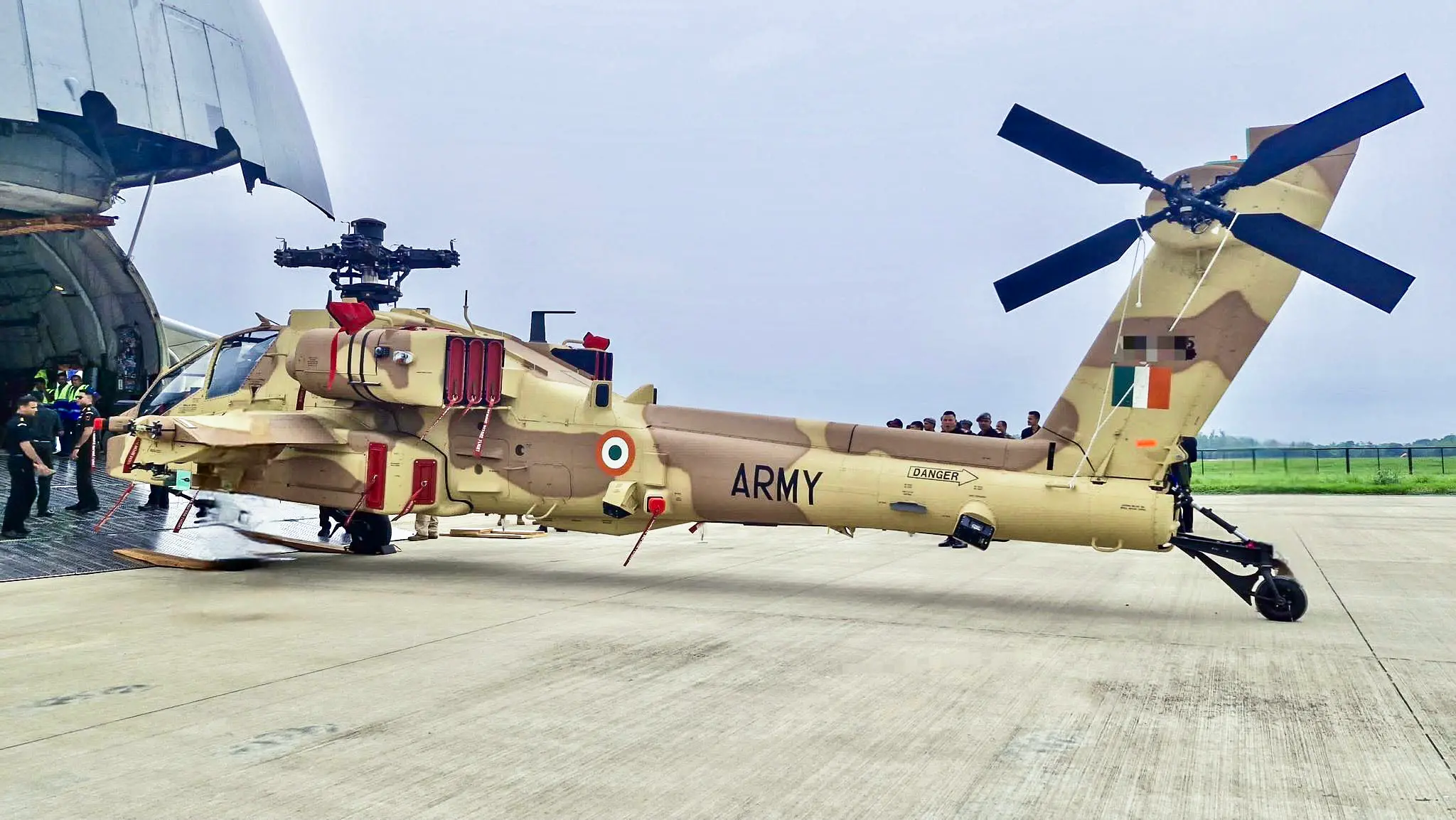
With the arrival of the final three AH-64E Apache attack helicopters on December 16, 2025, the Indian Army’s 451 Aviation Squadron in Jodhpur has reached full operational strength, marking a significant boost to India’s western defences.
While the American-made Apache often dominates headlines as the world’s most lethal “flying tank”, India also fields its own indigenous combat platform, the HAL Prachand. At first glance, operating two different attack helicopters may seem redundant, but India’s diverse geography explains why this dual capability is a carefully planned strategic advantage.
The AH-64E Apache is the heavyweight of the skies, designed for high-intensity warfare across plains and deserts. Weighing nearly 10 tonnes and protected by heavy armour, its primary role is anti-armour combat. Stationed in Jodhpur, the Apache is ideally placed to secure the vast, flat terrain along the Rajasthan border. Its defining feature is the Longbow radar, a dome-mounted sensor above the rotor that can track up to 128 targets simultaneously. Within seconds, it can prioritise the 16 most dangerous threats and engage enemy tanks using Hellfire missiles from several kilometres away, often before the adversary is aware of its presence.
However, the very features that make the Apache formidable—its weight, armour and powerful engines—limit its effectiveness in extreme high-altitude environments. This is where the HAL Prachand assumes a critical role. Classified as a Light Combat Helicopter, the Prachand weighs approximately 5.8 tonnes, almost half the weight of an Apache. In mountain warfare, weight is crucial. As altitude increases, thinning air reduces engine power and rotor lift, severely affecting heavier aircraft.
The Prachand is the only attack helicopter capable of taking off and landing at altitudes ranging between 16,000 and 20,000 feet. It is specifically designed to operate in narrow Himalayan valleys and provide close air support to troops deployed in regions such as the Siachen Glacier, where a heavily armed Apache would struggle to remain airborne with a full weapons load.
The technical contrast between the two platforms is equally significant. The Apache is powered by twin T700 engines, each producing around 2,000 horsepower, enabling it to carry up to 16 missiles and 76 rockets. The Prachand, by comparison, uses Shakti engines developed jointly by India and France, delivering about 1,400 horsepower. While lower on paper, these engines are optimised for performance in oxygen-poor, high-altitude conditions. Additionally, while the Apache functions as a network-centric platform linked to satellites and drones for large-scale desert operations, the Prachand features a slimmer, stealthier profile that reduces vulnerability to shoulder-fired missiles commonly used by infantry in mountainous terrain.
Camouflage further reflects their specialised roles. Indian Army Apaches are painted in desert and sand-toned schemes suited to the arid landscapes of the western border. This differs from the Indian Air Force’s fleet of 22 Apaches, inducted under a separate 2015 deal, which wear darker grey camouflage designed for mixed terrain and all-weather operations. These visual differences underscore how each service deploys the helicopter according to specific operational environments.
The contrast can be understood through a simple analogy. The Apache is like a powerful SUV built for speed and heavy loads on open highways, while the Prachand resembles a nimble four-wheel-drive vehicle designed for steep, narrow mountain roads. Each has a purpose, and neither can fully replace the other.
Ultimately, the Indian Army’s decision to operate both platforms reflects a doctrine of deploying the right tool for the right battlefield. The Apache serves as a heavily armed deterrent against armoured incursions across the western plains, while the Prachand provides agile, high-altitude firepower in the northern mountains. Together, they ensure comprehensive aerial strike capability. From the scorching 50°C deserts of Rajasthan to the freezing −50°C heights of Ladakh, the Indian Army now fields specialised attack helicopters for every terrain, reinforcing India’s borders across all altitudes through a blend of advanced foreign technology and indigenous innovation.