Case of Kerala: How God's own country became a living hell for captive elephants
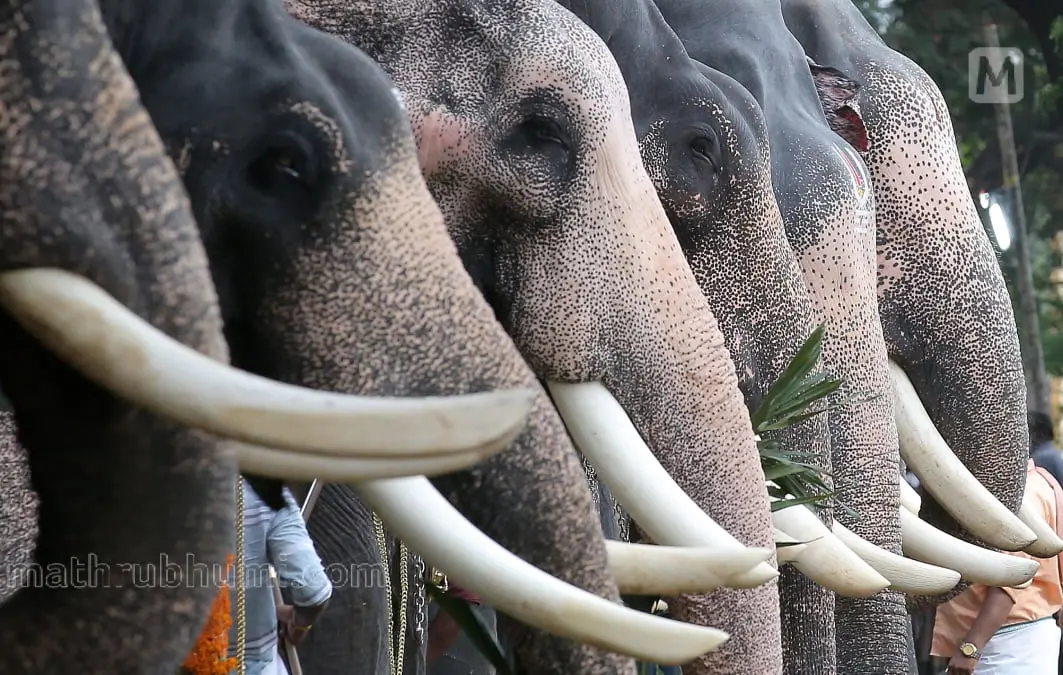
The human-animal conflict seen in Kerala has many different dimensions. Unabated encroachment of forests and their rampant destruction have resulted in animals loitering into human settlements in search of food, water and shelter. Since these animals identify human beings as interlopers and cause of their misery and agony, attacking humans is increasing day by day. Among animals, elephants and cows suffer the most in Kerala. While for tourists, Kerala may be “God’s own country”, but for animals, especially elephants and cows, it is “Hell’s own country”.
The use of elephants in temple ceremonies is a long-standing tradition in Hinduism. Buddhism has also adopted this practice. Elephants are used in temple rituals, primarily in Hindu and Buddhist traditions, because they are considered auspicious animals, symbolising good luck, prosperity, and divine power, with their majestic presence often associated with Lord Ganesha (who has an elephant head), making them a significant part of religious ceremonies and processions in South and Southeast Asia; essentially, their presence is believed to bring blessings to the temple and worshippers.
But the lives of temple elephants, in Kerala, are filled with isolation, physical pain, and psychological suffering. They are chained in one spot for extensive periods of time, often on hard surfaces. A very short chain attached to a post is used to keep the elephant in one place. Sometimes, two chains pulling in opposite directions, one on a front leg and one on hind leg, are used to secure the elephant in place. This excessive use of chains keeps the elephant facing only one direction, greatly limits its movements, and makes it impossible for it to turn around. Unable to move freely, the elephant becomes distraught, frustrated, and severely stressed. In these cases, stereotypical behavior such as rocking, swinging, and pulling against the chains will often be seen. The claim that a rocking elephant is showing happiness by dancing is a complete inversion of truth. With time, the chains will cause cuts, wounds, and dangerous infections which can be life threatening.
Parading of elephants in ceremonial attire, with the Nettipattom, which symbolises the 33 crores of Gods and Goddesses of the Hindu Pantheon, colourful ceremonial umbrellas, Aala vattom, Venchamaram, are all no doubt a grand spectacle.
But, consider the burden of the elephant. Temple festivals coincide with the hot summer months. Climatic changes have made March-April-May months unbearably hot. Imagine the plight of these elephants, who have to endure long hours in the hot sun, with their feet chained. Whether they are getting adequate food, water, or rest, all depends on the whims and fancies of the mahout. It is quite common to read about elephants attacking and even killing the mahouts, or elephants running berserk, destroying and rampaging. Crowd management, animal management, the scorching summer heat, lack of adequate drinking water, high decibel sound of temple percussion instruments, including Panchavadhyam, bursting of high intensity crackers, all make it an ordeal for animals.
Recently, in February 2025, three people were killed and 30 were injured when two elephants ran amok during a temple festival in Kerala’s Kozhikode district.
According to police, the incident started after one of the elephants, named Peethambaran, panicked as loud fireworks went off during the festival at Manakulangara temple in the Koyilandy area. That elephant attacked another one, named Gokul, which was standing nearby. In the ensuing chaos, the gathered crowd started running, leading to several people falling and some being trampled upon by others. The elephants destroyed the temple office, trapping some people under the debris.
Three people died in the incident and around 30 were injured, with at least five of them said to be in serious condition.
The Kerala High Court in November 2024 said the number of elephants that can be deployed for a festival/procession should be on the basis of the space available. In proceedings initiated suo motu on “matters pertaining to inaction of the government in protection of animal rights”, the court said the state should strictly implement the Kerala Captive Elephants (Management and Maintenance) Rules, 2012 and comply with the Supreme Court’s decision in the Wildlife Rescue and Rehabilitation Centre case.
The court had made a crucial observation at that time, “We do not believe that there is any essential religious practice of any religion that mandates the use of elephants in festivals. We do not, however, propose to say anything more at this stage since our focus now is merely to regulate the practice of parading elephants during festivals.”
Churches and mosques also have emulated the Hindu practice of using elephants in religious ceremonies. Festivals that involve the participation of many elephants are the Adupputty Palli Perunnal or Church in Kunnamkulam, Pattambi Nercha, Manathala Nercha and BP Angadi Nercha mosques. Many places of worship are adopting the practice of using elephants, including commercial establishments. The elephants have a torrid time being transported by trucks or made to walk in chains, in the miserable summer weather, from one festival site to another.
In February 2025, an elephant went on a rampage at a mosque in Kerala’s Palakkad district, killing its mahout and injuring another person. The incident unfolded after a ceremony at around 11.45 pm near a mosque in the Koottanad area. The elephant was returning from the ‘Gaja Sangam’ ceremony held to commemorate the saints laid to rest at the Koottanad Shuhada Makham (mosque). The ceremony saw participation of several elephants from 28 teams in a procession. This is the second incident of an elephant going on a rampage during a mosque ceremony in Kerala. On January 7, 2025 an elephant suddenly went wild, apparently agitated by the crowd, during a ceremony at a mosque in Malappuram.
Many right thinking organizations have stepped forward to curb this undesireable trend of parading elephants, for which there is no sanction in any religion. The Sri Krishna Temple at Kinalur, a suburb of Balussery in Kozhikode district, has started using a full-sized elephant statue, in the Temple’s religious procession. This commendable initiative needs to be followed by every religious organization, otherwise, our claim of calling ourselves, a literate society, becomes totally meaningless.
It needs to be explored if all religious festivals involving elephant parades are shifted from February-March-April-May hot summer months to more mellow months of October-November-December-January. Other tough alternatives would be to impose strict restrictions on the timings and duration of parading elephants, which should conclude before 8 AM, or begin only after sunset. Fireworks need to be banned when elephant parades are being conducted. Whenever and wherever elephant parades are being conducted, a special Animal Welfare Officer and a veterinary doctor have to be present, who will report only to the local Panchayat president, Municipal chairman, and Corporation Commissioner, about the timings, provision for food and water, and first-aid availability. The organizers should file separate written undertakings to the District Collector and Superintendent of Police, about the animal welfare facilities that have been ensured. Surprise inspections need to be carried out by State government officials.
However, the ultimate goal should be to not use elephants for long duration parades in summer months, while simultaneously bombarding them with high-decibel temple percussion instruments and fireworks of deafening noise. There is also the need to switch over to laser fireworks. State government should also take the initiative to convene a meeting of all religious organisations that conduct elephant parades, to come up with viable alternatives.
As Henry Beston puts it “The animal shall not be measured by man. In a world older and more complete than ours, they are more finished and complete, gifted with extensions of the senses we have lost or never attained, living by voices we shall never hear. They are not brethren, they are not underlings; they are other Nations, caught with ourselves in the net of life and time, fellow prisoners of the splendour and travail of the earth.”