'Dolphin Hunter' on the prowl along India's coastline
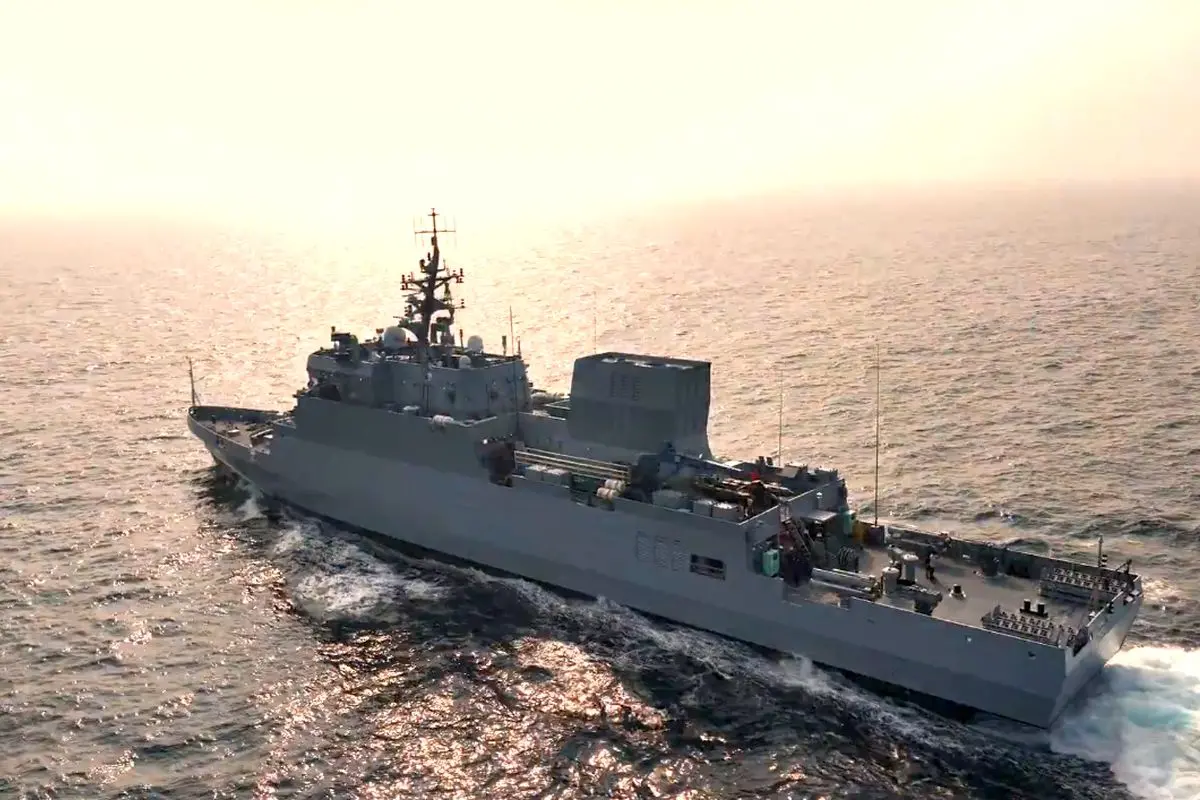
On February 27, 2026, something very important happened at Chennai Port. The Indian Navy officially welcomed a brand new warship into its family -- INS Anjadip. Admiral Dinesh K Tripathi, the Chief of the Naval Staff, formally inducted the ship into service in front of senior Navy officers and important government officials. This is not just another ship joining the Navy. This is a powerful, made-in-India weapon that will guard our seas day and night.
So what exactly does INS Anjadip do? In simple words, it is built to hunt enemy submarines hiding in our coastal waters. Think of it like a highly trained guard dog -- but for the sea. While ordinary ships may struggle to spot a hidden enemy submarine quietly sitting on a shallow seabed, INS Anjadip is specially designed to find it, track it, and destroy it. That is why it has earned the nickname -- the "Dolphin Hunter."
Now, why Dolphin Hunter? Because dolphins are known for their amazing ability to use sound waves to navigate and find prey in the sea. INS Anjadip does exactly the same thing with an advanced built-in system called the Hull Mounted Sonar Abhay. This device is fixed to the bottom of the ship and works by sending and receiving sound waves underwater.
Whenever a submarine tries to quietly hide near our coast, this sonar catches it. The ship then responds with lightweight torpedoes and anti-submarine warfare rockets to deal with the threat. Fast, smart, and deadly -- just like a dolphin chasing its prey.
Speaking of speed, this 77-metre-long ship does not move slowly. It runs on a high-speed water-jet engine system that can push it to 25 knots -- that is roughly 46 kilometres per hour on water. It can also turn quickly and move smoothly through narrow coastal areas. Imagine a dolphin gliding effortlessly through tight spaces in the ocean -- INS Anjadip moves exactly like that. This makes it very effective in chasing submarines that try to escape through shallow and crowded coastal zones.
One of the biggest challenges in coastal waters is "noise." The sea near the shore is full of background sounds -- boats, fish, waves, human activity. Large warships often get confused by all this noise and struggle to detect small, quiet submarines hiding nearby. INS Anjadip is built differently. It can filter out all that background noise and still detect very silent diesel-electric submarines and even tiny midget submarines -- which are very small, sneaky submarines used for secret short-range missions and are extremely hard to spot because of their small size and quiet movement.
Now, where did the name Anjadip come from? It is named after a small but strategically important island near Karwar in north Karnataka. This island is not just a dot on the map -- it carries deep history. During Operation Chutney in December 1961, the Indian Navy saw brave action near this island that helped in the liberation of Goa from Portuguese rule. By naming this powerful new warship after that island, the Navy is honouring that legacy of courage and bold action.
Admiral Tripathi also reminded everyone that INS Anjadip is the worthy successor of the last Petya-class corvette, which served India loyally for nearly 30 years from 1972 to 2003. That old ship did its duty. Now it is Anjadip's turn to carry the torch forward -- with more firepower, better technology, and a stronger sense of purpose.
The journey of building this ship is equally impressive. On April 29, 2019, the Ministry of Defence signed an agreement with Garden Reach Shipbuilders and Engineers (GRSE), a reputed Kolkata-based company, to build eight such warships.
The actual construction of INS Anjadip began on June 17, 2022, at the Kattupalli shipyard in Tamil Nadu, when the keel laying ceremony took place -- meaning the main base structure of the ship was physically assembled on a sloping platform near the water. From that day to today, it took about 4 years and 2 months to complete this warship. INS Anjadip is the third ship in this series of eight.
Here is something that every Indian should feel proud about. INS Anjadip carries over 80% indigenous content -- meaning more than 80% of everything inside and outside this warship, from its weapons to its sensors to its systems, has been designed and built right here in India, by Indian hands, using Indian knowledge. This is not a small achievement.
For decades, India used to depend heavily on foreign countries to buy warships, weapons, and defence equipment. Those days are changing fast. INS Anjadip is a shining, living example of the Aatmanirbhar Bharat -- Self-Reliant India -- initiative. India is not just hunting enemy submarines anymore. It is building the very tools to hunt them, entirely on its own soil. That is a different kind of strength altogether.
Apart from hunting submarines, this warship also monitors our coastal areas, handles small-scale security missions at sea, and can carry out search and rescue operations during emergencies.
As of February 2026, India operates around 145 to 150 active ships and submarines. And the best part -- the Navy is preparing to add 19 new warships in 2026 alone, which will be the highest number ever added in a single year in India's naval history.
INS Anjadip is not just a ship. It is a message to the world -- India is watching its seas, and it is doing so with home-grown pride, courage, and cutting-edge technology.