Creating cinema in sixty seconds: How new filmmakers are reshaping short film narrative
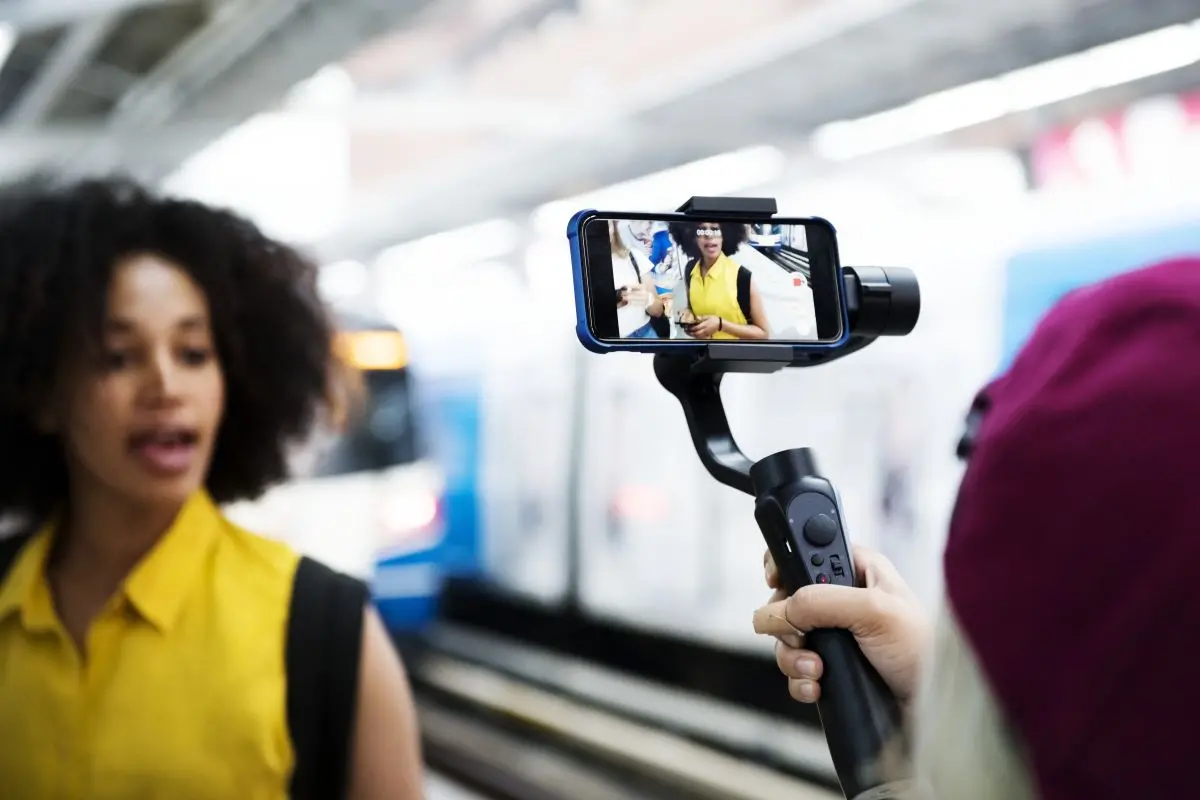
In this modern age of attention deficit disorder, the cinematic playbook is being recast -- not by studios with a million-dollar budget, but by individual filmmakers with smartphones, fearless creativity, and an urgent mission: to engage audiences within sixty seconds or be lost forever.
Those days when a director could spend twenty minutes setting up mood, character, and conflict are over. Audiences now, particularly those who scroll through the internet platforms of YouTube, Instagram, and streaming apps, expect immediate engagement. If the emotional heartbeat of a film doesn't catch their attention within the first minute, they swipe away. The challenge is not only artistic but existential -- for the film and the filmmaker.
The centre of this movement is a definite mantra: Start after the story has started. Directors are now instructed to drop viewers in the midst of an emotional turmoil. Rather than telling the audience who the character is or where he came from, the camera comes out of raw conflict -- close, visual, and visceral.
Picture this: A guy sitting in a dark room, a bloody knife on the table next to him, the phone ringing nonstop. No lights. No words. Just suspense. Or envision a woman standing at the end of a bridge, gasping for air. A kid dashing down alleyways, looking back over his shoulder. These aren't complete scenes -- they are the sparks that fuel audience interest. And that spark is everything.
There exists a hallowed formula which the filmmakers have to respect in the initial sixty seconds: a situation charged emotionally, visual tension, and an unresolved question. Something must be felt by the viewer and he/she must wonder something too. "What's going on? Why? What is going to happen next?" -- these are psychological hooks which are keeping the eyes glued on the screen.
But building this moment is more than simply writing a suspenseful scene. It's how you do it. The visual language takes center stage. The filmmaker has to be skilled at "show, don't tell."
Feelings such as fear, grief, bewilderment, and anticipation need to be expressed through gesture, body, composition, and sound design -- relegated not to exposition-laden dialogue.
From the first frame, the focus is on generating a physical and emotional motion. Shuddering hands, clacking clocks, dark lighting, deep breathing -- every detail contributes to suspense building.
Even small physical movements, such as the locking of a door or the deletion of a picture, bring vitality. Contrast -- be it visual, auditory, or emotional -- brings another level of involvement. A scene that progresses from quiet to loud, or black to light, shocks the senses to heightened awareness.
It all speaks to one fundamental principle: attention is a psychological reaction. And filmmakers are going to have to become psychologists, orchestrating attention with design.
One of the most common misconceptions among beginners is that great films require great gear. What matters is not the camera in your hand, but the eye behind it. Filmmaking is 70% mindset, 30% technical!
Several affordable kit combinations -- some costing less than Rs 5,000 -- demonstrating how a smartphone, ring light, and bit of creative editing can compete with studio-level content.
Several blockbuster viral shorts and Oscar-winning short films were made using smartphones. Why did they work? Because their narratives, imagery, and emotional pull were strong enough to get beyond their technical shortcomings.
The future directors need to understand how to develop their "director's eye." That is, watching movies without audio to pay attention to camera movements, lighting, and composition. That is, stopping scenes to examine frames, learning how colour and contrast are used, and interpreting why a shot is intimate, powerful, or suspenseful.
Directors must anchor every story to an emotional truth. Characters must be relatable within seconds. Their struggles, even if fantastical, must echo real-world fears, desires, and moral dilemmas. If your audience doesn't care about your character, nothing else matters.
Conflict should come early -- ideally in the first minute. Stakes need to be resolved. Tension needs to ratchet up with a purpose. These are not rules about cutting back on creativity but honing it in order to succeed under time limitations.
On the technical front, the visual grammar of film, the nine composition secrets that are must-haves to take a scene up a notch -- from rule of thirds and leading lines to foreground framing and colour contrast. It's not about the money shots, but evocative ones. A well-framed, well-lit shot in natural light and with clever angles can say more depth than any high-budget drone shot.
Lighting, the unsung hero of narrative image-making, has its own playbook. Three fundamental lighting formulas -- Soft Key + Negative Fill, Backlight Separation, and the Window Hack -- are unraveled. With one light source or a window filtered by a curtain, a filmmaker can achieve Netflix quality if he or she knows how light constructs mood, emotion, and space.
Colour grading also has a transformational function. Films are not coloured to be realistic -- they're graded to be emotional. Warm golden hues speak of romance and nostalgia. Teal-orange blends produce the Hollywood contrast. Desaturate colours express seriousness, mystery, or sorrow. These colours lead the subconscious response of the viewer.
And yet maybe the most underappreciated but potent tool in the filmmaker's bag of tricks is sound. Audiences are more tolerant of bad images than bad sound. Clear dialogue, depth-charged sound design, and enveloping foley effects turn even humble footage into cinematic spectacle.
Capturing exterior audio, adding ambient layers of sound, and employing music to manage pace are indispensable practices.
Filmmaking is, in the end, not an individual activity. A director also has to control performances, direct actors, and command a crew. The psychological approaches to achieving real performances -- from establishing trust with actors to employing emotional triggers rather than strict directions. It's not about controlling a set but making a place where creativity can circulate unhampered and in a secure environment.
This respect is carried through to the edit table, where raw footage is converted into a refined narrative. The five-stage editing process -- organise, rough cut, timing pass, sound layering, and colour grade -- forms a sound and artistic rhythm. Look at how editing has more to do with controlling emotion, rhythm, and revelation than cutting footage.
The editing methods themselves are intriguing. From unseeable cuts that provide invisible transitions to smash cuts that startle the viewer, from holds long enough to heighten tension to jump cuts that condense time, each edit choice determines the way the audience feels.
The utilisation of L-cuts and J-cuts -- where audio and video cut in on one another between shots -- is a subconscious flow that involves the viewer even when the image breaks.
In this whole system of contemporary cinema, there is one thought that stands paramount among the rest: restrictions can prove to be your biggest creative strength. When you can no longer bank on giant budgets or A-list stars, you are compelled to go back to the essence of storytelling-emotion, conflict, resolution.
Actually, it is precisely these same limitations that have given rise to some of the most evocative and memorable short films of the past few years. It may be a tale of an isolated old man gazing at his wife's photograph, a schoolgirl making a moral decision during a crisis, or a father attempting to communicate with his son in a succession of wordless gestures, but the greatest short films require no scale. They require a soul.
So, what does all that mean to the aspiring filmmaker today? It means your most important equipment isn't a camera. It's your curiosity. It means the idea that you're sitting on -- written in your notebook or looming in your head -- is worth more than any lens or stabiliser. It means that if you can make someone feel something emotionally in 60 seconds, you've already achieved more than a lot of big-budget features do in two hours.
In a content-overloaded world, it's no longer sufficient to have a story to tell. You have to make someone watch, feel, and remember it -- in a hurry.