Could Ganja rules be eased for medicinal use? Supreme Court's stand triggers fresh debate
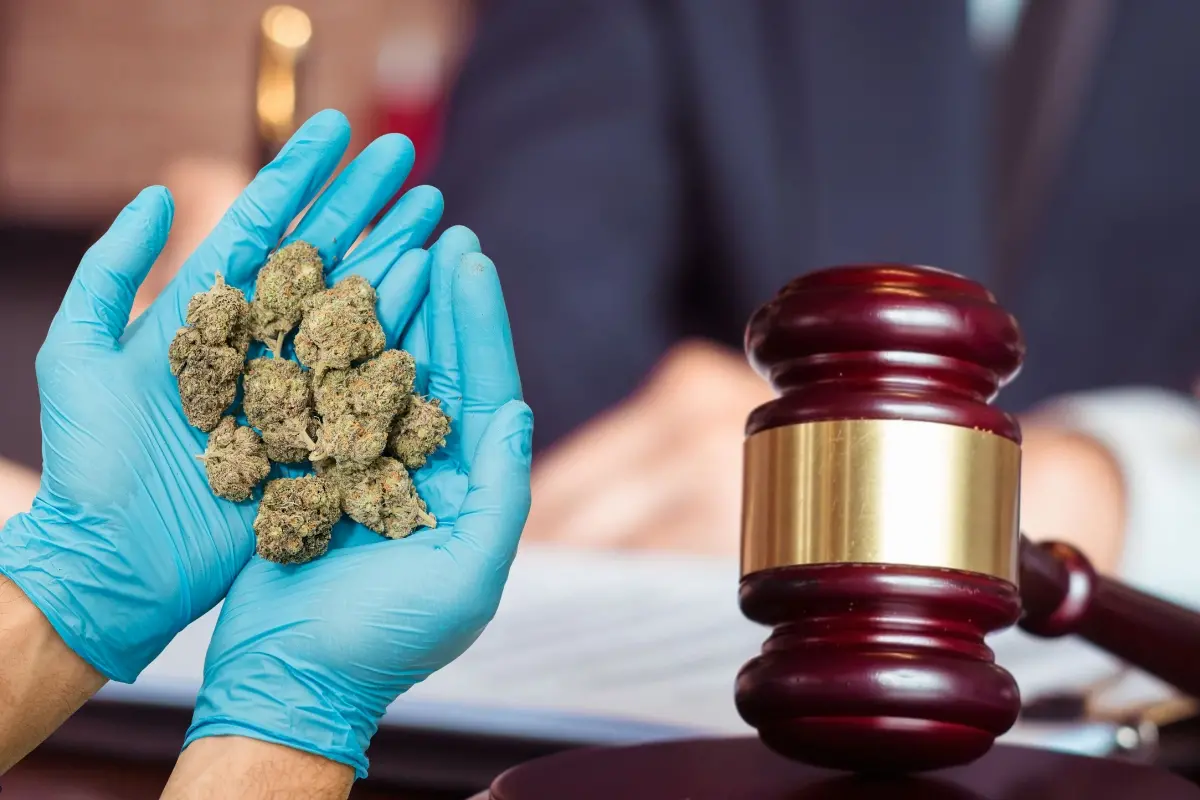
The Supreme Court, on September 16, 2026, orally observed that it takes a “very liberal” approach while considering bail pleas in cases involving Ganja under the Narcotic Drugs and Psychotropic Substances Act, 1985 (NDPS Act). Is it indicative of a new evaluation of the status of Ganja?
A Bench of Justices MM Sundresh and PB Varale made the observation while hearing an anticipatory bail plea filed by Biswanath Mandal, a West Bengal resident accused in an NDPS case concerning the alleged seizure of 252.330 kg of Ganja.
Mandal had approached the Supreme Court challenging a February 13, 2026 order of the Calcutta High Court, which had rejected his application for anticipatory bail in connection with an FIR registered at Kotwali Police Station in Cooch Behar, Bengal.
According to the prosecution case, 15 packets containing 252.330 kg of Ganja were allegedly recovered from a house at Rajpur, Bairati. Mandal was not present when the search and seizure took place. The Calcutta High Court nevertheless held that he could not completely disassociate himself from the premises, treating him as its owner, and referred to the restrictions imposed by Section 37 of the NDPS Act.
Before the Supreme Court, Mandal’s counsel disputed the prosecution’s claim that he owned the house. It was argued that there was no title deed, revenue or municipal record, utility bill, rent receipt or other independent material establishing his ownership, possession or control over the premises. The petitioner also claimed that there was no recovery from him and no independent material linking him to conscious possession or participation in the alleged narcotics offence. His plea further pointed out that his co-accused, described as his second wife, had been granted anticipatory bail by the High Court.
Ironically, despite the oral observations regarding its approach to bail in Ganja cases, the Supreme Court did not grant Mandal anticipatory bail.
To examine the observation of the Supreme Court, it becomes necessary to delve into the status of Ganja and how it is evolving. Both Ganja and Cannabis refer to the same plant, but they have very different cultural and historical meanings that affect how we see this ancient botanical. The word Ganja comes from Sanskrit, the ancient language of India. Cannabis is the scientific Latin name for the plant. It comes from the Greek word "kannabis". The Romans used the word "cannabis" in their writings about farming, and medieval European herbalists used it in their books on medicine. Cannabis is the official botanical name for the plant today, and it is still the most common name used in scientific research, medicine, and laws across Europe. Cannabis is the scientific name for the plant that fits into Western medical and botanical frameworks. This term is used in drug development, clinical research, and regulatory language in European institutions.
When doctors use the term "Cannabis," it becomes a legitimate treatment option. When cultural groups use the word "Ganja," they take back their historical identity and respect traditional ways of knowing that came before modern scientific classification.
Ayurvedic medicine in India has used Ganja for thousands of years. Ancient writings talk about different Ganja strains and how to use them for different medical purposes, such as relieving pain or meditating spiritually. Long before modern science discovered individual cannabinoids, traditional healers had a deep understanding of the different types of Ganja and how to use them. For thousands of years, this traditional knowledge system worked well before Western science started placing reliance on the plant's medicinal properties. Ayurveda describes Cannabis as a ‘Tamasic’, that which has the ability to numb a person’s senses.
Modern medical science has now started using a new term, “Medical Cannabis”, which is the use of the Cannabis plant or its chemical compounds to relieve symptoms of specific diseases and health conditions.
The key compounds found in Cannabis are THC (Tetrahydrocannabinol), which is the main psychoactive component that causes a "high" used to reduce pain and nausea and stimulate appetite. Another compound is CBD (Cannabidiol), which is a non-psychoactive compound known for anti-inflammatory and anti-anxiety properties, and is used to treat conditions like epilepsy, anxiety disorders, chronic pain, and inflammation.
Cannabis has transitioned from being stigmatized and illegal to gaining slow recognition for its medical benefits. Shifting cannabis from a prohibited substance to a recognized legitimate medicine involves deep changes in science, public opinion, and regulations.
The landscape of medical cannabis has evolved dramatically over the past few decades. Once stigmatized and illegal in most parts of the world, cannabis is now recognized for its potential therapeutic benefits, supported by an expanding body of scientific research. The legal status of medical cannabis varies across countries and regions. In some places, it is fully legal and regulated, while in others, it is restricted or not permitted at all.
In Ayurveda, cannabis is known as Vijaya (meaning "victory") or Bhanga and is classified as an Upavisha (semi-toxic herb) that requires strict purification and precise dosage to unlock its medicinal properties.
It is mentioned in the holy Atharva Veda as one of five sacred plants.
The World Health Organization, through its expert committee on drug dependence, met in late 2018 for a critical review of the evidence on Cannabis for medical applications. The current schedule of Cannabis in international law is as strict as for Heroin (Schedule 4, Narcotics Drugs Treaty of 1961). In an important move, the committee called for rescheduling Cannabis, easing control, and reversing a position held for 60 years that disallowed even its legitimate use for medical applications. In December 2020, 27/53 members (including India, the US, and most of the EU) of the UN Commission on Narcotic Drugs, in a historic vote, removed Cannabis from Schedule 4, paving the way for its use in medicinal and therapeutic research. Currently, 50 countries worldwide allow the use of medicinal Cannabis. Its recreational use has been legalized in several countries, including Canada, Uruguay, and 15 states in the United States.
Legal Status in India is a little complicated. While recreational Cannabis remains restricted under the NDPS Act, the use of cannabis leaves and their extracts is legally permitted under the Ministry of AYUSH for standardized, licensed Ayurvedic formulations.
In India, an NGO called the Great Legalization Movement filed a writ petition in the Delhi High Court in May 2020 (W.P.(C) 7608/2019, decided on 23rd January 2026) asking for decriminalization of Cannabis so that its medicinal properties could be harnessed. In the Cannabis space, now, in India, there are several start-ups that offer treatment with Cannabis guided by principles laid down in Ayurveda. The Indian Institute of Integrative Medicine (IIIM) has obtained a license from the Government of India for the development of products for epilepsy and cancer in collaboration with an Indian Cannabis manufacturer. A tripartite agreement has also been signed between the Indian Council of Medical Research (ICMR), the Council for Scientific and Industrial Research (CSIR), and the Department of Biotechnology (DBT) for the active clinical development of phyto-pharmaceuticals from Cannabis for several therapeutic areas such as chronic pain, pediatric epilepsy, and neurodegenerative disorders. This movement is in line with the interest in medical applications of Cannabis worldwide. In late September 2019, the revenue wing of the Union Finance Ministry sanctioned research and development on CBD and THC. Central Institute of Medicinal and Aromatic Plants and CSIR have announced a joint venture to collect Cannabis germplasm for preservation and farming. The Narcotic Drugs and Psychotropic Substances Act (NDPS), 1985, emphasizes research focus on Cannabis for horticultural and industrial use as a source of biomass, fibre, and Cannabis seed oil. The Delhi High Court has directed the government to take a decision within 06 months, but no decision seems to have been taken till date.
Viewed from the above context, the current State-wide enforcement under Operation Toofan in Kerala is enigmatic, though it has resulted in the seizure of over 1,571 kg of Ganja alongside thousands of arrests. Launched on June 1, 2026, by the Home Department, the anti-narcotic initiative combines intensive transport checks, raids, and rehabilitation programs.
Bail outcomes are dictated by the weight of the seized cannabis as categorized by the NDPS Act. Small Quantity (Less than 1 kg) is a bailable offence under the law. Accused individuals caught with small amounts—ranging from a few grams to under a kilo- are routinely granted station bail by the police or rapid bail by local magistrates.
Intermediate Quantity (Between 1 kg and 20 kg) is legally non-bailable, meaning bail is not an automatic right. However, the Kerala High Court routinely grants regular bail to these individuals if the police have finished recovering the contraband, the investigation is well underway, and the accused has no prior criminal record
For Commercial quantity (20 kg or more): getting bail is exceptionally difficult. Section 37 of the NDPS Act mandates that a court can only grant bail if it is reasonably satisfied that the accused is not guilty and will not commit another crime, while outside. Normally, Most individuals caught in major transit operations (such as 100+ kg smuggling rackets) remain in judicial remand until their trials conclude.
The Central Government is reviewing its cannabis policy and legal framework under a directive from the Delhi High Court to evaluate potential medical, scientific, and industrial uses. The NDPS Act does not impose a total ban; it already allows state governments to license cannabis for medical, scientific, and industrial purposes. States like Uttarakhand, Madhya Pradesh, Manipur, and Himachal Pradesh have permitted regulated cultivation for industrial and medicinal research.
Interesting developments are set to take place on the Cannabis front very soon. Perhaps the judiciary is also re-evaluating whether Ganja needs to be tightly regulated, when its healing properties have been known in India for the last several hundred centuries.
The author is former Director General of National Academy of Customs, Indirect Taxes & Narcotics