74 years on… Pan Am's 'Clipper Endeavour' wreck found beneath Atlantic
For more than seven decades, it remained one of aviation's enduring mysteries.
Somewhere beneath the vast waters of the Atlantic Ocean lay the wreckage of a Pan American Airways aircraft that disappeared after a tragic crash in 1952. Families of the victims never knew exactly where the aircraft rested, while aviation historians continued searching for clues about one of the accidents that would ultimately change the way millions of people fly today.
Now, after 74 years, explorers have finally located the aircraft nearly 2,000 feet below the Atlantic Ocean, off the northern coast of Puerto Rico. The discovery is not just the end of a decades-long search, it is also a reminder that one tragic accident transformed aviation safety forever.
A flight that never reached New York
On April 11, 1952, Pan American Airways' Clipper Endeavour, a Douglas DC-4, departed from San Juan, Puerto Rico, on a scheduled flight to New York City. The aircraft was carrying 64 passengers and five crew members. Only about 10 minutes after take-off, disaster struck.
Both engines on the aircraft's right side failed, leaving the pilots with very few options. They decided to perform an emergency water landing in the Atlantic Ocean, hoping everyone on board could be rescued. Remarkably, the aircraft landed on the water without immediately killing anyone. But what happened next turned a survivable accident into one of aviation's most heartbreaking tragedies.
Three minutes that changed aviation history
The aircraft remained afloat for less than three minutes. As seawater rushed into the cabin, panic spread among passengers. There were NO mandatory pre-flight safety demonstrations in those days. Many passengers had never worn a life jacket before. Some could not find their life vests. Others did not know how to escape from the sinking aircraft. Language barriers added to the confusion, making communication even more difficult.
Crew members struggled to release emergency life rafts while passengers desperately tried to escape. Within minutes, the aircraft disappeared beneath the ocean. Only 12 passengers and all five crew members survived.
A total of 52 people lost their lives, not because of the crash itself, but because they could not safely evacuate the aircraft after the emergency landing.
The accident that made flying safer
Although deeply tragic, the Clipper Endeavour disaster became one of the most important turning points in aviation safety. The investigation concluded that passengers had not received any instructions on what to do during an emergency.
Following the accident, the Civil Aeronautics Board (CAB), the US aviation authority before the creation of today's Federal Aviation Administration (FAA) introduced mandatory pre-flight safety briefings and emergency demonstrations.
The familiar safety instructions that flight attendants now give before every flight, including how to fasten seat belts, locate emergency exits and use life jackets can be traced directly back to lessons learned from the Clipper Endeavour tragedy. Today, those briefings are considered one of the most basic yet essential parts of every commercial flight.
A search that lasted decades
The search for the missing aircraft officially gained momentum in 2019, when Russ Matthews, President of the Air/Sea Heritage Foundation (ASHF), began studying scattered accident reports while researching the crash. One unusual clue inspired him to investigate further, a luggage tag believed to have belonged to the Clipper Endeavour had reportedly washed ashore in Florida years after the accident.
Matthews and his team conducted multiple underwater surveys off the coast of San Juan, Puerto Rico, but finding the aircraft proved extremely difficult.
The search later received support from Discovery Channel's "Expedition Unknown", hosted by explorer Josh Gates, and underwater exploration company Deep Sea Vision. During the investigation, the team uncovered valuable historical evidence, including a chart map prepared by US Air Force pilots who had witnessed the aircraft crash into the sea.
Technology solves the mystery
Earlier this year, researchers launched another search mission using advanced underwater technology. Deep Sea Vision deployed an autonomous underwater vehicle (AUV) equipped with high-resolution sonar, capable of operating at depths of up to 20,000 feet while remaining underwater for several days. The search team had only two days to examine the designated area.
Remarkably, they found the aircraft on their very first search attempt.
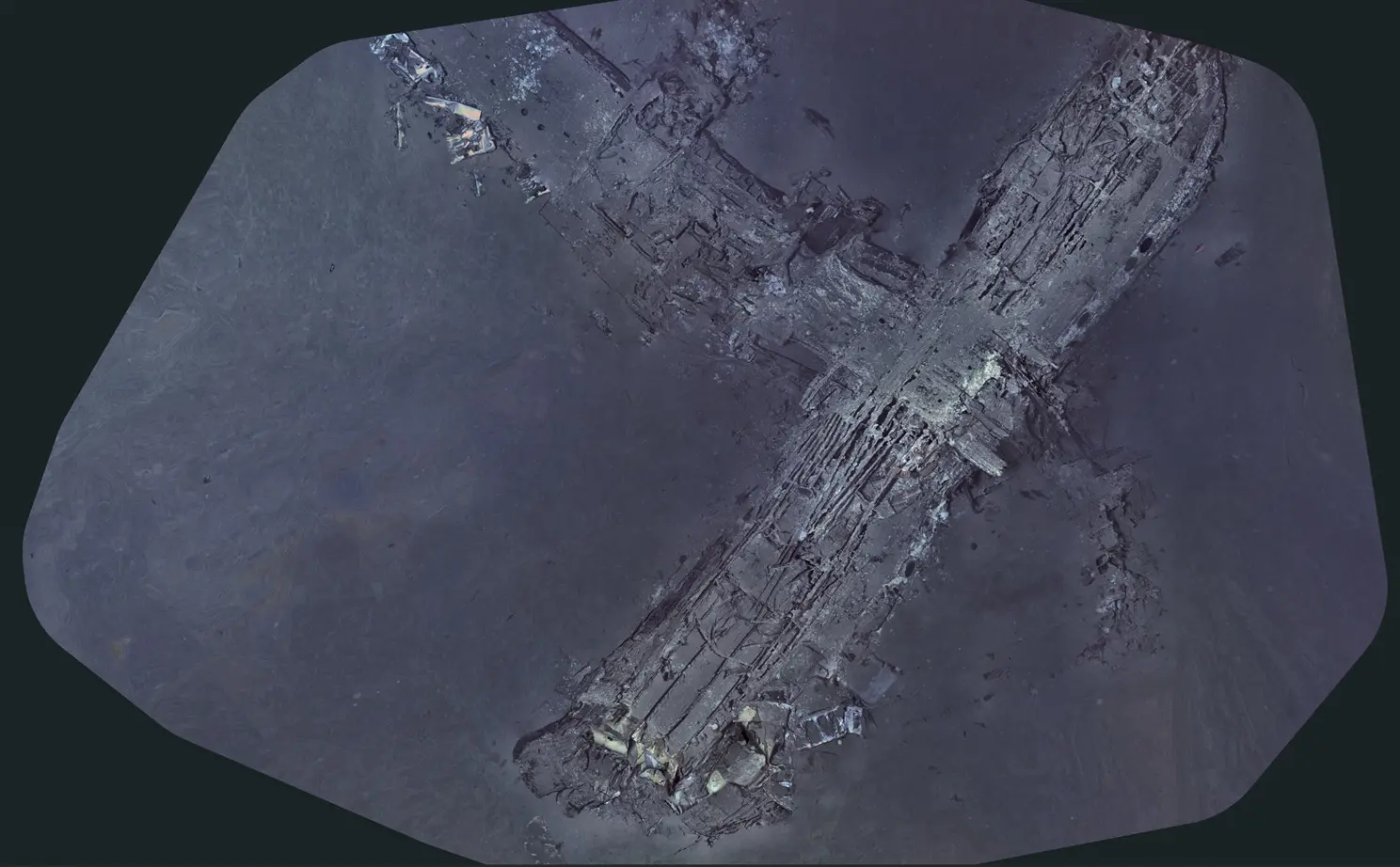
On June 2, the underwater drone located the wreckage resting nearly 2,000 feet beneath the Atlantic Ocean. Images revealed the aircraft had broken into two large sections, but much of the fuselage remained remarkably well preserved. Even after more than seven decades underwater, the aircraft's iconic Pan American winged logo and the name "Clipper Endeavour" were still clearly visible.
An emotional discovery
For the search team, the discovery was about much more than locating an aircraft. It was about giving closure to families whose loved ones had disappeared into the sea more than seventy years ago.
"We are all stunned and elated by this discovery, yet also humbled to remember what happened in that place so long ago," said Russ Matthews, President of the Air/Sea Heritage Foundation.
Explorer Josh Gates, who participated in the search through Discovery Channel's Expedition Unknown, described the moment as deeply emotional. "Seeing the bright aluminium fuselage shining back at us from the ocean floor was a hugely emotional moment," he said.
Reflecting on the accident's lasting impact on aviation safety, Gates added: "Every time you step onboard an airplane today, you are safer because of what happened to Clipper Endeavour and her passengers three quarters of a century ago."
He also expressed hope that the discovery would bring peace to the victims' families. "This aircraft vanished beneath the waves, and the legacy of those aboard was at risk of being lost with it. I hope this historic discovery brings some peace to the families of those aboard and serves to remind the flying public today of the debt of remembrance we owe to this fateful flight."
A lesson
The discovery of the Clipper Endeavour is not simply an archaeological achievement. It is a powerful reminder of how aviation has evolved through painful lessons.
Today, passengers often pay little attention when flight attendants demonstrate how to fasten seat belts, locate emergency exits or wear life jackets. Many frequent flyers even tune out these announcements. Yet these routine demonstrations exist because of accidents like the Clipper Endeavour.
Every safety briefing, every emergency instruction and every evacuation procedure followed today has been shaped by tragedies that taught the aviation industry valuable lessons.
More than a wreck
The Clipper Endeavour rested silently beneath the Atlantic for 74 years, hidden from the world but never forgotten. Its discovery closes one chapter in aviation history while reopening another, one that reminds us how every advancement in air travel has often come at a heavy human cost.
For the families who waited decades for answers, the finding offers long-awaited closure. For the aviation community, it stands as a lasting symbol of why safety can never be taken for granted.
And for every passenger who boards an aircraft today, the story of the Clipper Endeavour is a quiet reminder that even the simplest safety demonstration before take-off could one day save a life.