Can we survive a nuclear attack?
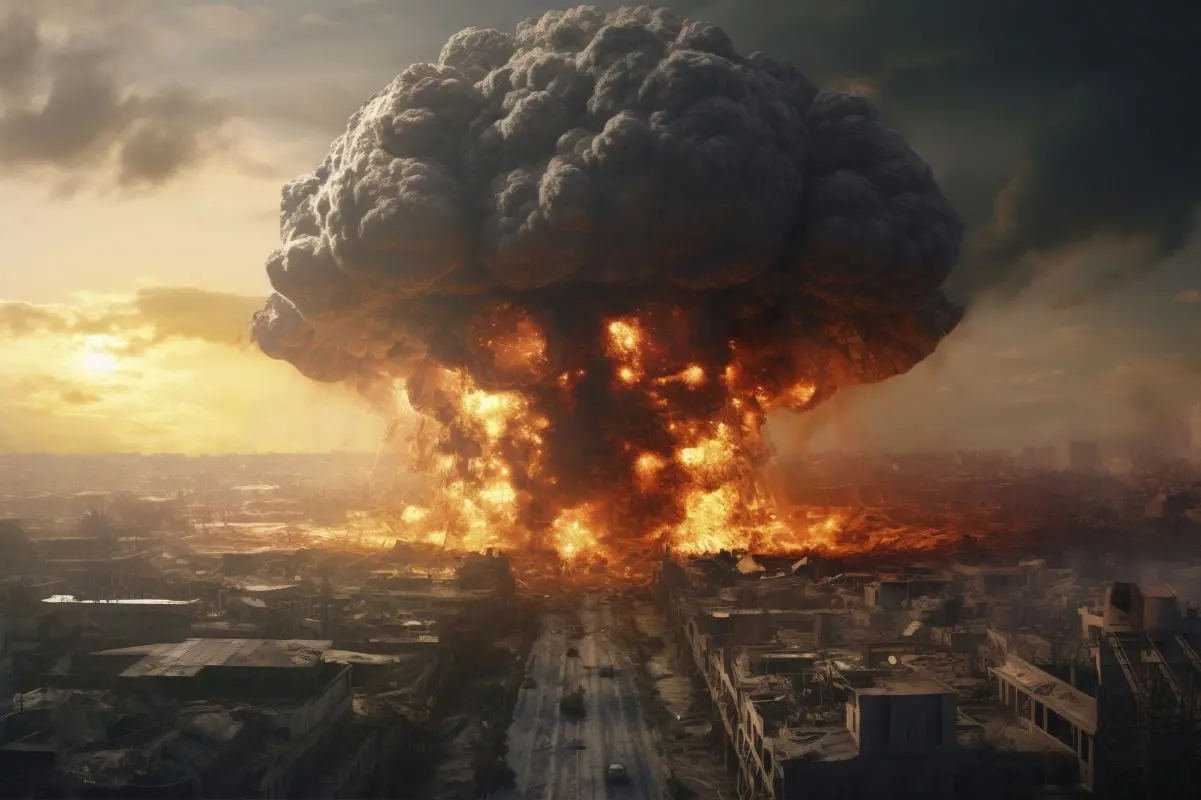
Imagine a flash so bright it looks brighter than the sun, followed by a loud noise that shakes the ground. In just seconds, whole cities can disappear, leaving behind only destruction and pain. A nuclear bomb is not just a weapon -- it's a disaster that changes everything around it.
With global tensions rising in 2025, the fear of a nuclear war feels more real than ever. But what really happens when such a bomb explodes? Can we truly understand how terrible it is?
The moment a nuclear bomb explodes, it creates chaos. A huge fireball forms, hotter than even the core of the sun. The temperature can reach tens of millions of degrees Celsius. Everything nearby -- people, buildings, trees -- gets turned to vapor instantly.
In Hiroshima, most of the injured people had terrible burns, caused by the heat from the explosion. Soon after, a powerful blast wave follows, moving faster than sound. It crushes homes and factories like a giant hand wiping everything away. Winds blowing over 1,000 km per hour tear through the area, leaving nothing standing.
The strength of a nuclear bomb is measured in how many tons of TNT it equals. Even one ton of TNT can do serious damage. The Hiroshima bomb was about 15 kilotons (15,000 tons of TNT) and destroyed everything in a 2-km area, killing around 80,000 people instantly. The Nagasaki bomb was 21 kilotons and killed 40,000. Just 1 kiloton can flatten wooden houses within 400 meters and cause burns even 500 meters away.
Today's nuclear bombs are much stronger. A 100-kiloton bomb can destroy everything in a 1.9-km radius and start fires as far as 10 km away. A 1-megaton bomb (1 million tons of TNT) can destroy strong concrete buildings even 4.4 km away. These modern bombs are far more deadly than those dropped on Hiroshima and Nagasaki.
The Hiroshima bomb caused firestorms and injured 70,000 people, but today's bombs can wipe out entire cities, making those past horrors look small in comparison.
But it's not just the explosion that kills. The bomb also throws radioactive dust into the air, known as fallout. This dust can travel far, poisoning air, water, and land. People exposed to it can suffer from radiation sickness -- vomiting, hair loss, bleedin -- and some may get cancer years later.
Children are the most affected. In Hiroshima, many children got leukemia within two years. Fallout is most dangerous in the first few hours after the blast but can stay harmful for decades, making cities unsafe to live in.
Nature suffers too. After the blast, a huge firestorm can start, fed by strong winds. It can burn for hours, using up all the oxygen and suffocating people who survived the blast. In Hiroshima, this firestorm killed thousands more.
If many bombs are dropped, black soot can fill the sky and block sunlight. This may cause a 'nuclear winter', where the Earth's temperature drops by around 8°C. This can ruin crops, leading to food shortages and famine that could affect billions of people—even those far from the blast.
Even machines and electronics are affected. A nuclear explosion creates something called an electromagnetic pulse (EMP), which can destroy electronic devices. Phones, radios, power stations—everything could stop working. If the bomb explodes high in the sky, the EMP can affect a huge area, leaving entire regions without electricity. No communication, no emergency services. Even military systems can fail. The ground can shake like an earthquake because of the pressure wave from the explosion, damaging buildings far away from where the bomb hit.
Is there any way to stay safe? Survival depends on acting fast. Run to the nearest basement or underground place like a metro station. Close windows and stay inside for at least three days. Radiation is most dangerous in the first 24–48 hours but drops sharply after that. Remove your clothes to avoid radiation, wash yourself properly, and wear a mask to avoid breathing in the dust. Potassium iodide tablets can help protect your thyroid from radiation, but severe cases will need hospital treatment. After a bomb blast, hospitals may be overcrowded and unable to help everyone. A bomb hitting a big city like Delhi could kill lakhs of people, and there may be only one doctor for every 600 people.
Even long after the explosion, the effects remain. People who survived the Hiroshima and Nagasaki bombs suffered from cancer and were treated badly by others. The damage lasted for decades. Babies who were still in their mother’s womb at the time of the blast often had mental problems or didn’t grow properly. The bombs dropped in 1945 were small compared to today’s weapons. Now, nuclear bombs are hundreds of times more powerful and can destroy entire states or countries, leaving behind a planet that may never heal fully.
Today, many countries are showing off their nuclear power, increasing the chances of a mistake that could start a war. Just thinking about a fireball with a temperature of millions of degrees Celsius should scare us enough to act. It’s not just about saving lives now, but about making sure such a terrible disaster never happens.
The author is an award-winning science communicator and a defence, aerospace & geopolitical analyst