Can VD Satheesan change Kerala’s political culture?
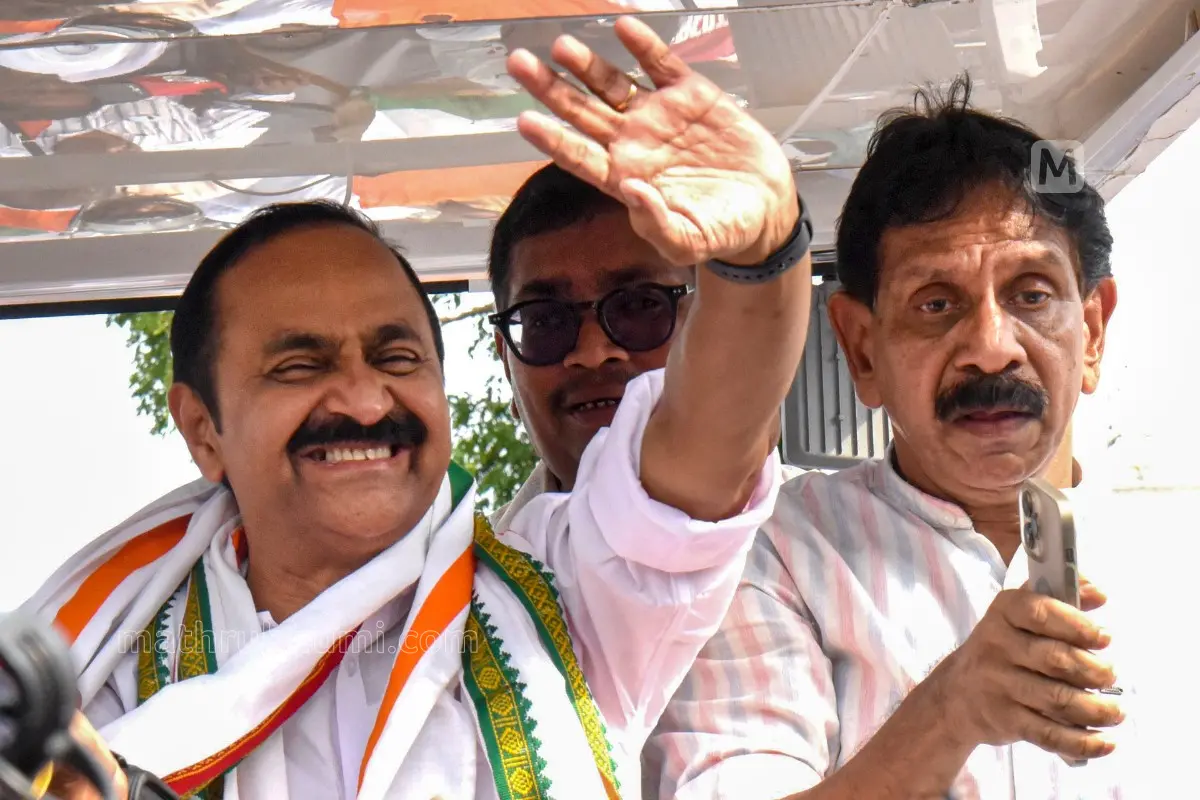
What swept the Congress-led alliance to power was not merely an electoral shift. It was the accumulated anger of ordinary people against a decade of arrogance, unilateralism and the suffocating culture of power that had come to define the Left government. Even many among the Left’s own intellectual sympathisers now admit this uncomfortable truth.
V.D. Satheesan understood that public mood better than anyone else in this election. His campaign did not merely attack a government. It articulated a growing exhaustion within society. Kerala responded to him because he spoke to a deeper democratic instinct: the yearning to be heard, respected and treated as citizens rather than subjects.
When a government becomes too insulated to feel public pain, defeat becomes inevitable. Satheesan’s rise is therefore not just the victory of a politician. It is the victory of political sensitivity over institutional arrogance.
For many of us, that itself qualified him for the office of Chief Minister.
A ruler who understands the vulgarity of feudal power culture cannot easily become robotic or authoritarian. That is the hope many place in Satheesan: not merely administrative competence, but democratic wisdom and emotional intelligence. A state’s progress is measured not only by roads, bridges and investment figures, but also by the moral and intellectual maturity of those who govern it.
What makes his ascent politically significant is that Satheesan reached this position while resisting pressures from multiple directions. He fought not only the ruling Left, but also entrenched power centres within his own party. He overcame ideological confusion, community lobbies and soft-Hindutva tendencies masquerading as moderation. At a time when many in Indian politics drift comfortably toward majoritarian nationalism, Satheesan still carries traces of an older Nehruvian secular democratic culture that has become increasingly rare.
Perhaps for the first time in Kerala’s Congress politics, a leader has risen to the Chief Minister’s office without first seeking blessings from caste organisations or religious power brokers. That alone marks a profound shift. Predictably, sections of the old community establishment reacted with visible discomfort the moment he was chosen. Their disappointment was, in many ways, his first public honour.
Kerala has seen enough governments that treated caste patriarchs and communal middlemen as unofficial centres of authority. Even the Left, despite its rhetoric, often accommodated these forces when convenient. Against that backdrop, Satheesan’s public positions appear refreshingly modern and politically courageous.
This transition also carries national significance. At a time when the Indian National Congress struggles for ideological clarity across the country, the elevation of a secular democratic leader with progressive instincts may offer the party a chance at moral renewal. Whether that hope survives the temptations of power is another matter. Power corrupts many, though perhaps not all.
No government arrives to “create a new Kerala.” Such grand claims are usually political theatre. Societies evolve through continuity, correction and reform. The task before the new Chief Minister is far simpler and far more difficult: protect what remains of Kerala’s social dignity, ecological wealth and democratic culture from further destruction.
Development cannot become a licence to loot nature and dispossess people.
Equally important is the treatment of dissent. A democracy cannot survive if the opposition is treated as an enemy force. One of the most disturbing features of recent years was the normalisation of intolerance toward criticism. Protesters were vilified. Welfare workers were branded extremists. Police intimidation entered private spaces. Governments increasingly behaved as though public disagreement itself were an act of disloyalty.
Kerala cannot imitate the authoritarian instincts it claims to oppose at the national level.
If Satheesan restores democratic civility and respect for opposition voices, that alone would become one of the finest political corrections Kerala has witnessed in years.
The challenge, however, is immense. The saffronisation of institutions, especially sections of the police and bureaucracy, did not happen overnight. It deepened steadily over the years, often with political complicity across party lines. Any Chief Minister serious about democracy must confront this reality. Otherwise, custodial violence, police excess and ideological infiltration will continue regardless of who occupies office.
Another lesson from this election is equally important: prolonged uninterrupted rule weakens democracy itself. Alternation of power is healthy not because one front is inherently virtuous and the other inherently evil, but because no political formation should become permanent and unquestionable. Bengal already demonstrated the dangers of political permanence. Kerala’s voters perhaps sensed the same risk.
I do not share the cynical view that this election changes nothing except the colour of power. Political transitions matter. This verdict has national implications because it strengthens the broader democratic opposition needed to challenge majoritarian authoritarianism in India.
Kerala does not need to compete with Narendra Modi in spectacles of development. Its historic responsibility is greater: to remain a democratic, secular and intellectually open society capable of resisting communal fascism.
Many Malayalis seem to believe that V.D. Satheesan possesses the political maturity, democratic instinct and human sensitivity required for that responsibility. I find myself among them.
He may not become an ascetic barefoot leader. Nor should anyone expect sainthood from politicians. But there is still value in a leader who recognises the obscenity of personality cults, who reads deeply, listens carefully and retains ordinary human relationships despite power.
In an age intoxicated by authority, even that feels rare enough to inspire hope.