From 'LCA' to 'Tejas': How Vajpayee taught India's defense to fly
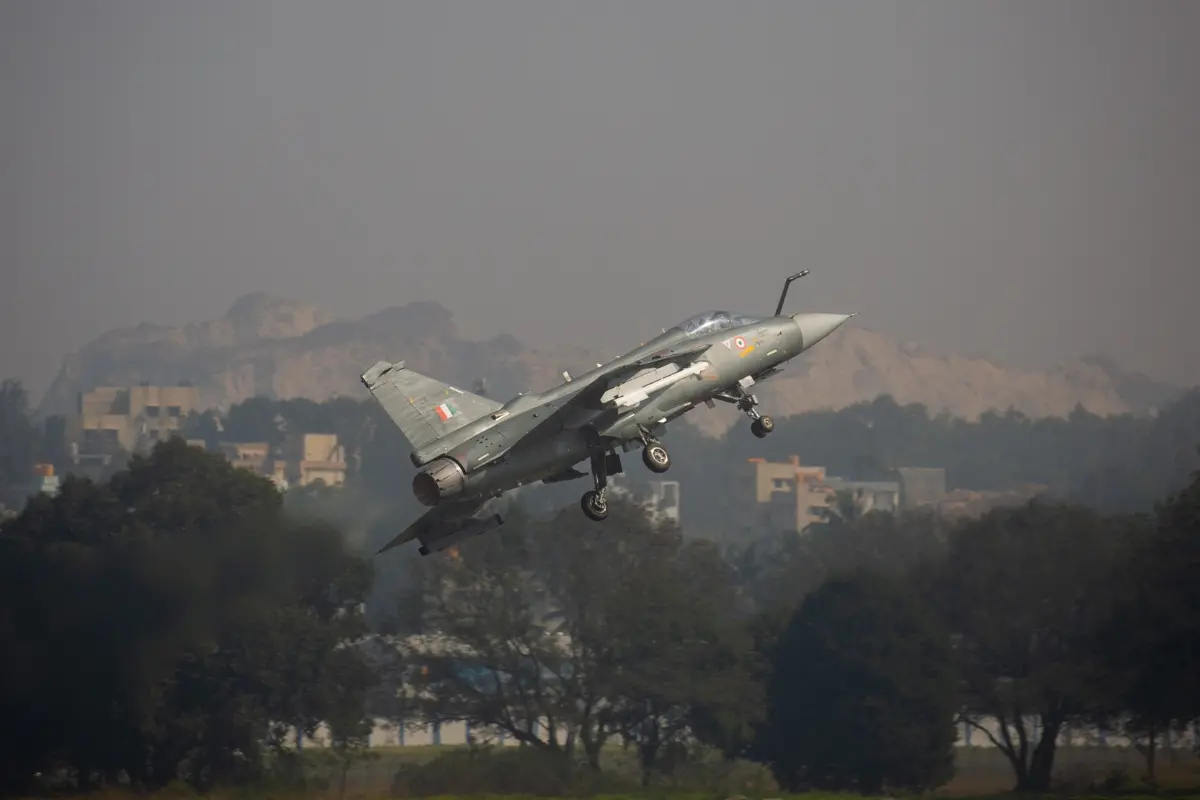
Today, on 25th December, Atal Bihari Vajpayee's birth anniversary, we remember how this visionary leader gave India its own fighter aircraft – the Tejas. Born in 1924 in Gwalior, Vajpayee's contributions to India's defence remain unmatched. This is a story of determination, self-belief, and refusing to give up even when the world said it was impossible.
The Crisis India Faced
In the early 1980s, India's Air Force was in trouble. Our MiG-21 fighter jets, which had protected our skies since the 1970s, were becoming old and unsafe. Government reports warned that by 1995, India would be short of nearly half the fighter aircraft needed to defend the country. We had two choices: keep buying expensive jets from other countries or take the difficult path of building our own. India chose to build, and years later, under Vajpayee's leadership, this choice proved to be the right one.
Starting from Zero
Building a modern fighter jet is incredibly difficult. Only a handful of countries in the world can do it. India had not built a fighter aircraft since 1961, and that old production line had been shut down decades ago. All the engineers who knew how to build fighters had retired. We literally had to start from scratch.
The challenge was enormous. A modern fighter needs extremely complex systems. There's the 'Fly-by-Wire' technology, where computers help the pilot control the aircraft instead of just mechanical cables. There's advanced radar to spot enemy planes from far away. There are weapons systems, navigation computers, and hundreds of other sophisticated parts. India had to learn to make all of this.
When Sanctions Tried to Stop India's Dream
In 1998, something happened that could have killed the entire programme. Prime Minister Vajpayee took the bold decision to conduct nuclear tests at Pokhran. This made Western countries, especially America, very angry. They punished India by refusing to sell us technology and equipment. This is called imposing sanctions.
For the Light Combat Aircraft programme, this was a disaster. Critical components like engines, flight control systems, and radar parts that India was planning to buy from abroad were suddenly unavailable. In December 2000, a major American magazine published an article saying India's fighter aircraft programme was finished. They claimed the technology was too complex and that without Western help, India would never succeed.
But Vajpayee refused to give up. He told our scientists and engineers a simple message: if the world won't sell us the technology, we will create it ourselves. He gave them complete political support, defended them from criticism, and ensured they had the resources to continue. This backing was crucial. It gave our scientists the confidence to attempt what seemed impossible.
The Day India Proved Everyone Wrong
On 4th January 2001, just one month after that discouraging American article, something remarkable happened. India's Light Combat Aircraft successfully flew for the first time. The test flight from Bangalore was perfect. The aircraft climbed into the sky, performed beautifully, and landed safely. India had done what the critics said was impossible.
Prime Minister Vajpayee personally attended the event. After witnessing the successful flight, he was asked to give the aircraft an official name. Twenty Sanskrit names were suggested. From this list, Vajpayee chose 'Tejas', which means 'radiance' or 'light'. The name was perfect. Just as radiance cuts through darkness, India's achievement had cut through the gloom of sanctions and criticism.
Turning Problems into Strengths
Interestingly, the American sanctions actually helped India in the long run. When foreign countries refused to sell us technology, Indian engineers were forced to develop it themselves. The aircraft's radar system, flight computers, avionics, and many other sophisticated components were built in India. What seemed like a setback became an opportunity to build real knowledge and capability that India owns completely.
Tejas Today: India's Pride in the Sky
Today, Tejas is not just a dream but a reality defending Indian skies. The aircraft serves in the Indian Air Force's 'Flying Daggers' squadron. The government has ordered over 180 Tejas fighters. The latest version, called Tejas Mk-1A, is a truly modern fighter. It has advanced radar that can track many targets at once, electronic systems to jam enemy missiles, the ability to refuel while flying, and modern weapons.
More importantly, over 50 per cent of the Tejas is made in India, and this percentage keeps growing. Thousands of Indian engineers, technicians, and workers have jobs because of this programme. Young people have gained experience in cutting-edge aerospace technology. Indian companies have learned to manufacture sophisticated aircraft parts. This knowledge will serve India for generations.
The Real Gift
Vajpayee understood something profound: a country cannot be truly independent if it depends on others for weapons to defend itself. By supporting Tejas through difficult times, by refusing to accept failure, and by believing in Indian capability, he taught an entire nation an important lesson – with determination and self-belief, we can achieve anything.
Every time a Tejas takes off, it carries Vajpayee's vision with it. He gave India more than just a fighter aircraft. He gave us confidence in our own abilities and showed us that we don't need to depend on anyone else to protect ourselves.
(Girish Linganna is an award-winning science communicator and a Defence, Aerospace & Geopolitical Analyst. He is the Managing Director of ADD Engineering Components India Pvt. Ltd., a subsidiary of ADD Engineering GmbH, Germany.)