Justice for Joy: Where does the guilt lie for Amayizhanjan tragedy?
Kerala and its capital city, Thiruvananthapuram, recently celebrated a significant milestone with the completion of the first phase of the Vizhinjam international sea port. The arrival of its first mother ship drew worldwide attention and admiration, marking a moment of pride for the state and underscoring its infrastructural progress and future development.
However, this triumph was overshadowed just a week later by a troubling issue: poor waste management. The tragic accidental death of Joy, a daily wage worker, highlighted the hazardous conditions faced by the city's cleaning workers and underscored the urgent need for improved safety and waste management practices in the region.
This stark contrast in news reflects the ongoing challenges Kerala and Thiruvananthapuram face despite their achievements.
The Amayizhanjan Tragedy
Joy, a temporary sanitation worker, lost his life while attempting to clear waste in a section of the canal managed by the Indian Railways. Employed by a private contractor assigned by the Railways' Southern Region Office at Thampanoor in Thiruvananthapuram, Joy was tasked with cleaning a 117-meter stretch of the 6.7-kilometer canal, with the remainder managed by the Thiruvananthapuram Corporation.
Joy's death while cleaning a section of the Amayizhanjan canal has sparked significant outcry in Thiruvananthapuram and across Kerala. This incident raises critical questions regarding legal obligations , tortious liability, civic responsibility, and public cleanliness.
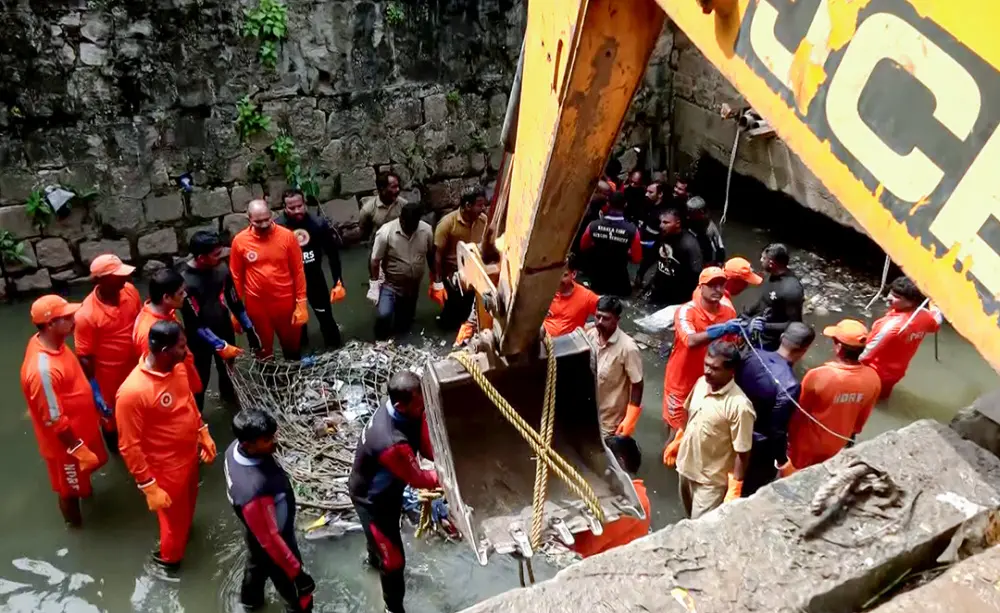
The fact that during the search for Joy’s body, 40 tonnes of waste and debris were cleared from the initial search point, with a similar amount of waste found at the location where his body was eventually discovered, highlights severe neglect and mismanagement of waste in the canal.
This omission or negligence calls for a comprehensive examination of the roles of the Thiruvananthapuram Corporation, the Indian Railways, and the general public in contributing to these hazardous conditions.
Tortious Liability
The general rule of Tort Liability in law is that the person who causes damage must pay compensation. In certain cases, however, liability can also arise for third parties, referred to as Vicarious Liability.
Indian Railways (Southern Railway)
Indian Railways authorities contends that maintaining the canal is the Corporation’s responsibility and denies depositing waste in the tunnel area, stating that waste generated during passenger handling is properly cleared from the station itself.
The Southern Railway, which manages the railway network in Kerala, attributes the root cause of the incident to the piling up of garbage in the Amayizhanjan canal and not because of their acts or omissions. They claim that the filth and garbage beneath the rail yard were due to indiscriminate disposal in the canal's other areas controlled or managed by Thiruvananthapuram Corporation.
They acknowledged taking up the canal's cleaning work following a request from the Corporation Secretary on June 19, engaging an experienced contractor from the Irrigation Department for this purpose. According to them, the tragic death occurred while Joy and two other workers were assessing the feasibility of cleaning activities.
A sudden increase in water flow (undercurrent) due to rains caused him to slip and drown.
There are two-fold obligations on the part of Railways, which are:
a) Not to dump any debris or wastage into the canal and maintaining and cleaning the area owned by them on a regular basis
b) While assigning the cleaning job, ensuring that adequate safety measures are taken for the workers' safety.
On both grounds, the Indian Railways can be primarily liable for negligence as they failed to take reasonable care on their property. The contractor for the cleaning work was engaged by Southern Railway HQ, and the deceased, Joy, was a daily wage worker hired by the contractor along with two others to carry out the job without any safety measures.
Dumping waste into their section not only contributed to hazardous conditions but also created a public nuisance, potentially leading to the incident. Failing to maintain their section or allowing waste accumulation directly caused the unsafe conditions leading to Joy’s death. If they were aware of hazardous conditions in the Railway-owned section and failed to ensure worker safety or coordinate cleaning efforts, they could be held liable for negligence.
Thiruvananthapuram Corporation
The Corporation claims that it regularly clears debris and repeatedly requested Indian Railways to maintain their section, which was allegedly neglected and used for waste dumping. Despite installing grills and shutters to prevent debris from entering the tunnel, the canal remains in a deplorable state.
The Corporation may hold some responsibility for overall canal management and the waste deposits in other areas than in the property belonging to Indian Railways.
The Corporation has a duty to ensure public areas are safe. There are allegations that the Waste Collectors engaged by the Corporation themselves are dumping wastes into the canal after collecting from the various collection points. There are no mechanism to make sure that the collected wastes are properly disposed as per the rules and regulations.
Lack of coordination with Indian Railways might constitute a breach of their oversight responsibilities.
Residents of Thiruvananthapuram
Residents and business owners significantly contribute to improper waste disposal in the canal. Despite some adhering to waste management regulations, the accumulation of waste throughout the canal indicates widespread non-compliance.
Waste Management Practices: The public plays a significant role in maintaining cleanliness. The waste found during the search underscores improper disposal practices.
Community Awareness and Participation: Residents have a civic duty to engage in proper waste management and participate in community clean-up initiatives. Public awareness campaigns and educational programs are essential.
Justice for Joy: The Legal Perspective
The Prohibition of Employment as Manual Scavengers and their Rehabilitation Act, 2013 (PEMSRA) is a significant piece of legislation in India aimed at eradicating manual scavenging and ensuring the rehabilitation of individuals engaged in such work.
The Act criminalizes the practice of manual scavenging and mandates the provision of alternative employment and rehabilitation for those affected.
The Thiruvananthapuram canal tragedy highlights the dangerous conditions and the continued prevalence of manual scavenging practices despite the legal prohibitions. In the current case, even though it was not a direct case of scavenging, the nature of the assignment for which Joy along with other two persons were engaged can come under the definition of hazardous cleaning as defined under the act.
Section 7 of PEMSRA is crucial in emphasizing the prohibition of hazardous cleaning. The section, which prohibits hazardous cleaning of sewers and septic tanks, reads:
"No person, local authority or any agency shall, from such date as the central government may, by notification, specify, engage or employ, either directly or indirectly, any person for hazardous cleaning of a sewer or a septic tank."
The prohibition covers both direct and indirect employment, ensuring that even subcontractors or intermediaries cannot employ individuals for hazardous cleaning. Violating this prohibition can result in legal consequences for individuals, local authorities, or agencies involved in such practices.
The section promotes the use of safe and mechanized cleaning methods, and aims to protect the dignity and rights of sanitation workers, ensuring they are not subjected to inhumane and dangerous working conditions.
Section 7 of PEMSRA thus plays a vital role in the eradication of unsafe manual scavenging practices, ensuring the health, safety, and dignity of sanitation workers.
Definition of 'Sewer' under PESMRA: Under the Act, 'Sewer' is defined as "an underground conduit or pipe for carrying off drainage water and waste matter, including human excreta." This definition encompasses all forms of underground systems designed to carry away waste and sewage, emphasizing the hazardous nature of work associated with these structures.
Definition of 'hazardous cleaning' under the Act: As per PEMSRA, 'hazardous cleaning' means cleaning by an employee, in such manner as may be prescribed, of a sewer or a septic tank or a railway track or any other such space or premises, by manual means, without the use of protective gear and other cleaning devices.
Manual cleaning: The act of cleaning sewers, septic tanks, railway tracks, or similar spaces by hand, rather than using mechanical or automated methods.
Lack of protective gear: Performing cleaning tasks without the appropriate protective equipment, which exposes the worker to serious health risks.
Specific environments: The environments specified (sewers, septic tanks, railway tracks) are particularly noted for their hazardous conditions, often containing toxic gases, harmful pathogens, and other dangerous substances.
Employers are required to ensure that cleaning of such environments is carried out using mechanized systems and that workers are provided with adequate protective gear if manual intervention is unavoidable.
Engaging workers in hazardous cleaning without compliance with safety regulations can result in penalties, including fines and imprisonment, for those responsible.
Applicability of PESMR ACT 2013 to Amayizhanjan Case
* Violation of Prohibition: If individuals were engaged in manual cleaning of the canal, this constitutes a direct violation of the PEMSR Act. Those responsible for employing these workers can be held accountable under the law.
* Negligence and Liability: The authorities or contractors involved in assigning manual scavenging tasks may be subject to legal action for negligence and violation of the Act.
* Rehabilitation Efforts: There should be an immediate assessment of the affected individuals and their families to provide necessary rehabilitation as mandated by the Act, including compensation and alternative employment.
* Awareness and Implementation: The tragedy underscores the need for better awareness and stringent implementation of the PEMSR Act in Thiruvananthapuram and other regions to prevent such incidents.
Investigation and Accountability
There is a call for a thorough investigation to identify and hold accountable those who violated the law by employing individuals for manual cleaning. The Kerala High Court has appointed an Amicus Curiae (a friend of the court) to conduct a detailed inquiry into both the causes of the accident and the condition of the canal. This indicates judicial care and the seriousness of the issue. The high court's involvement and the appointment of an Amicus Curiae demonstrate the judiciary's active role in ensuring justice and adherence to laws protecting manual workers. Also such probes can lead to the identification of systemic issues and the implementation of preventive measures to avoid future incidents.
Compensation For Joy’s Family; What Supreme Court Ruling Says
The Kerala government has already declared a compensation of Rs 10 lakh, and the Thiruvananthapuram Corporation has announced that they will build a house for Joy's family. Meanwhile, Indian Railways has remained silent on the matter.
It may be noted that the Supreme Court recently enhanced the compensation payable to families of manual scavengers who die while cleaning sewers or septic tanks. In a landmark decision, the Court increased the compensation from Rs 10 lakh to Rs 30 lakh. Additionally, for those who suffer permanent disabilities due to such hazardous work, the minimum compensation has been set at Rs 20 lakh, and for other injuries, up to Rs 10 lakh.
The Apex court's decision was delivered in the case of Dr Balram Singh vs Union of India, which highlighted the persistent and inhumane conditions faced by manual scavengers despite existing legal prohibitions. The bench, comprising Justices S Ravindra Bhat and Aravind Kumar, issued 14 directives to ensure the effective implementation of the Prohibition of Employment as Manual Scavengers and their Rehabilitation Act, 2013.
The decision underscores the Court's commitment to upholding the dignity and rights of manual scavengers, emphasizing the constitutional guarantees of equality and non-discrimination under Articles 15, 17, 23, and 24
The Way Forward
* Strengthening policies and enforcement mechanisms related to waste management is crucial.
* Encouraging public participation in maintaining cleanliness can significantly improve the situation.
* Establish clear communication channels and coordination mechanisms between the entities.
* Launch comprehensive campaigns to educate residents about proper waste disposal practices.
* Organize clean-up programs and encourage resident participation.
* Invest in better waste management infrastructure to reduce improper disposal.
The Thiruvananthapuram Canal tragedy serves as a grim reminder of the urgent need to enforce the provisions of the PEMSR Act and to safeguard the lives and dignity of individuals who are still subjected to such hazardous and dehumanizing work.
The city corporation spans 214.86 km², divided into 100 wards, each represented by elected councillors, serving a population of 957,730. It encompasses the legislative assembly constituencies of Thiruvananthapuram, Vattiyoorkavu, Nemom, Kazhakkoottam, and five wards of the Kovalam constituency. This structure includes five MLAs and 100 councillors representing nearly 1 million residents.
Thiruvananthapuram, as the capital city of Kerala, houses the top echelons of the state government, including ministers and bureaucrats. The Southern Railway headquarters is also located in Thiruvananthapuram, with many high-ranking officials residing in the city.
Joy's death and the discovery of massive waste accumulation in the Amayizhanjan canal highlight serious lapses in waste management and civic responsibility in Thiruvananthapuram. The rescue workers, including 50 personnel from the Kerala Fire Force, Kerala Police, and scuba divers, who plunged into the dangerous mud water to carry out the search, deserve a big salute and should be properly rewarded. They also need to be given necessary medical attention, as they spent almost 46 hours in the canal searching for the body.
Addressing these issues requires a multifaceted approach involving the state government, district administration, Corporation, Indian Railways, and the general public. By fostering a culture of cleanliness, accountability, and collaboration, a safer and more sustainable environment can be created for all residents.
The author is a senior lawyer, and founder and chairman of Musthafa & Almana, a legal consulting firm headquartered in the UAE.