Ali Larijani dead: Why Iran’s best chance for peace vanished
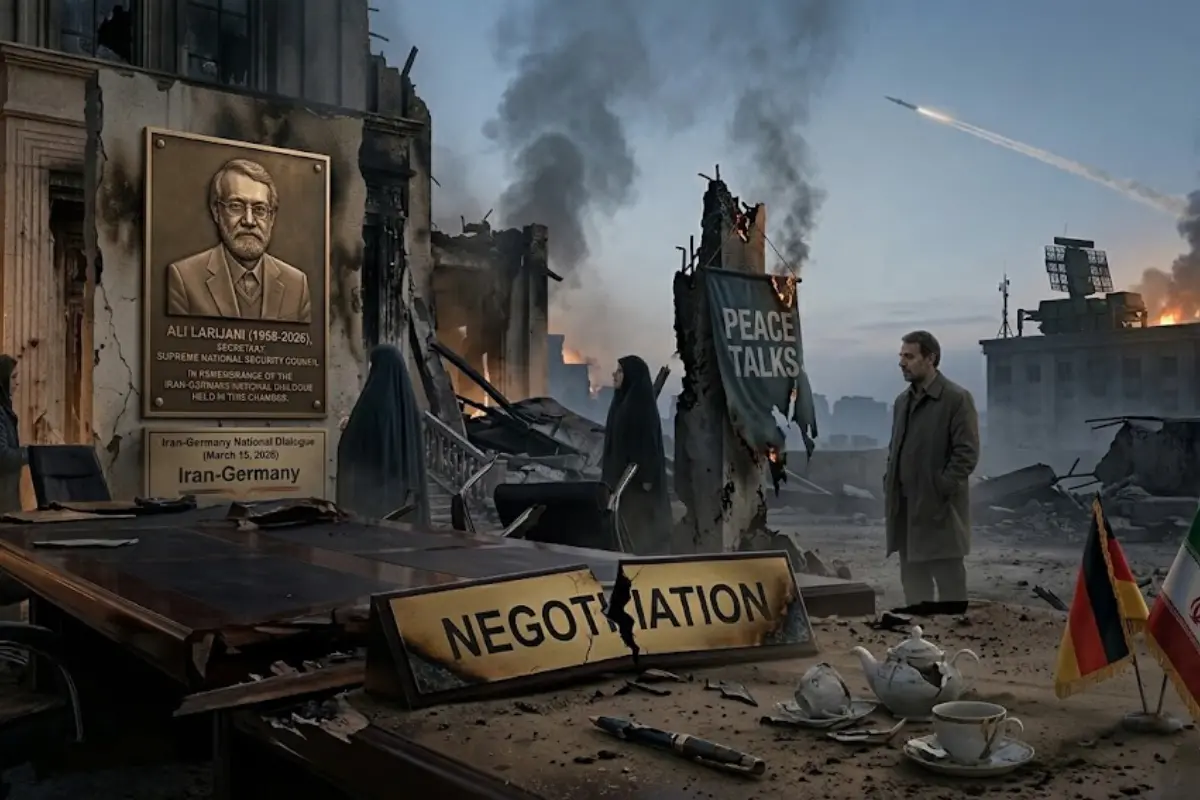
For the past 18 days, the world has been watching a terrible war unfold in West Asia. America and Israel have been continuously bombing Iran. And now, in one of their latest strikes, Iran's most powerful security official, Ali Larijani, has been killed. His son and several of his guards were killed alongside him. Big news. But the real question every common person is asking is — will this death help end the war faster? Or will it make things even worse?
Let us understand this in simple words.
What did Trump say about this?
Right after the killing was announced, US President Donald Trump did not hold back. Speaking to reporters, he called Iran's top leadership an "evil group" and confirmed that their leaders were being taken out one by one. Trump told reporters that their leaders are gone, and that one of the people killed was responsible for the deaths of thousands of people over the past two weeks.
But Trump's goal is not just killing people. He has a bigger plan in mind, and he calls it the "Venezuela solution." Let us explain what that means, because it is very important to understand.
Earlier this year, Trump had Venezuela's president, Nicolas Maduro, arrested and brought to America. After Maduro was removed, the remaining Venezuelan leaders quietly cooperated with the US. They opened up their oil, accepted American terms, and the country came under effective American influence without a full-blown occupation. Trump has suggested he wants a similar outcome in Iran, replacing the top leader with subordinate leaders who will preserve the existing power structure but offer broad cooperation with the United States. In simple words, don't destroy Iran completely, just change who runs it, and make the new leaders work for American interests.
That was the plan. But it is not going according to script.
Who was Larijani and why does his death matter?
Think of Larijani like the "crisis manager" of Iran. When there was a big problem — whether it was nuclear talks, war strategy, or dealing with foreign countries — Larijani was the man called in. He had real connections — with Gulf Arab nations, with Russia's Putin, with European leaders. He was respected even by people who were his enemies.
After Iran's Supreme Leader Khamenei was killed at the very start of this war on February 28, Larijani quietly became the most important civilian leader running Iran's day-to-day decisions. Israel itself called him the "de facto leader" of Iran — meaning, the real man actually in charge. He was last seen in public just this Friday at a large rally in Tehran. And now he is gone.
Was he a hardliner or a peacemaker?
This is the most important part to understand. Larijani was what experts call a "moderate", someone who believed in talking and negotiating, not just fighting. He was connected to the time of former President Hassan Rouhani, when Iran actually signed the 2015 nuclear deal with America. He believed diplomacy could protect Iran's interests without total destruction.
He was not someone who would wave a flag and say, "we will fight forever." He was someone who would sit across a table and say, "Let us find a solution." That made him different from the hardliners, the ultra-conservative military-minded leaders who believe in maximum force and zero compromise.
So will his death help end the war?
Honestly — no. And here is why.
Trump's "Venezuela solution" for Iran is already falling apart. No cooperative leader is waiting in the wings for Trump to appoint, unlike in Venezuela, where a replacement was ready. Instead, Iranian hardliners have filled the vacuum, with Khamenei's own son, Mojtaba, emerging as the new Supreme Leader, the very man Trump publicly said he did not want.
Experts say Israel may actually be trying to destroy Trump's own off-ramps — his exit routes from this war. Larijani was not only a key figure within the regime, but also someone who favoured talks with the US and could build internal consensus for an eventual ceasefire. With Larijani gone, that last bridge of moderate thinking inside Iran has been knocked down.
Who takes over now? Most likely Mohammad-Bagher Qalibaf, a former commander in Iran's feared Revolutionary Guard, known for cracking down hard on protesters. He is not known as a peacemaker. The hardliners are now fully in control.
What happens next?
The war has already spread dangerously. Iranian missiles set a UAE gas field on fire. The Strait of Hormuz — the narrow sea passage through which a huge amount of the world's oil travels- is nearly blocked. Oil prices are shooting up. Every country's economy is feeling the pressure.
Trump is frustrated that his allies are not doing enough. His own National Counterterrorism Director just resigned, saying Iran posed no imminent threat and that this war was not justified. Trump called him "weak on security" and pushed him out.
As one expert, Ali Vaez, put it very powerfully, with Larijani gone, Iran has lost one of the very few people who could connect military decisions with political thinking. The result? Iran's leadership will not become weaker. It will become more rigid, more unpredictable, and possibly more dangerous.
What should the common person take away?
Trump went into this war hoping for a quick "Maduro moment" — remove the top man, install cooperative leaders, declare victory, go home. But Iran is not Venezuela. It is bigger, angrier, and now led entirely by hardliners who want revenge, not negotiation.
Larijani was not a saint. But in a room full of people ready to fight forever, he was one of the very few who might have helped open a door to peace. That door has now been shut — and possibly locked from the inside.
The war is in its third week. There is no end in sight. And the world should be very worried.
The author is a Defence, Aerospace & Geopolitical Analyst