Akashteer: Invisible brain behind India's visible shield during Operation Sindoor
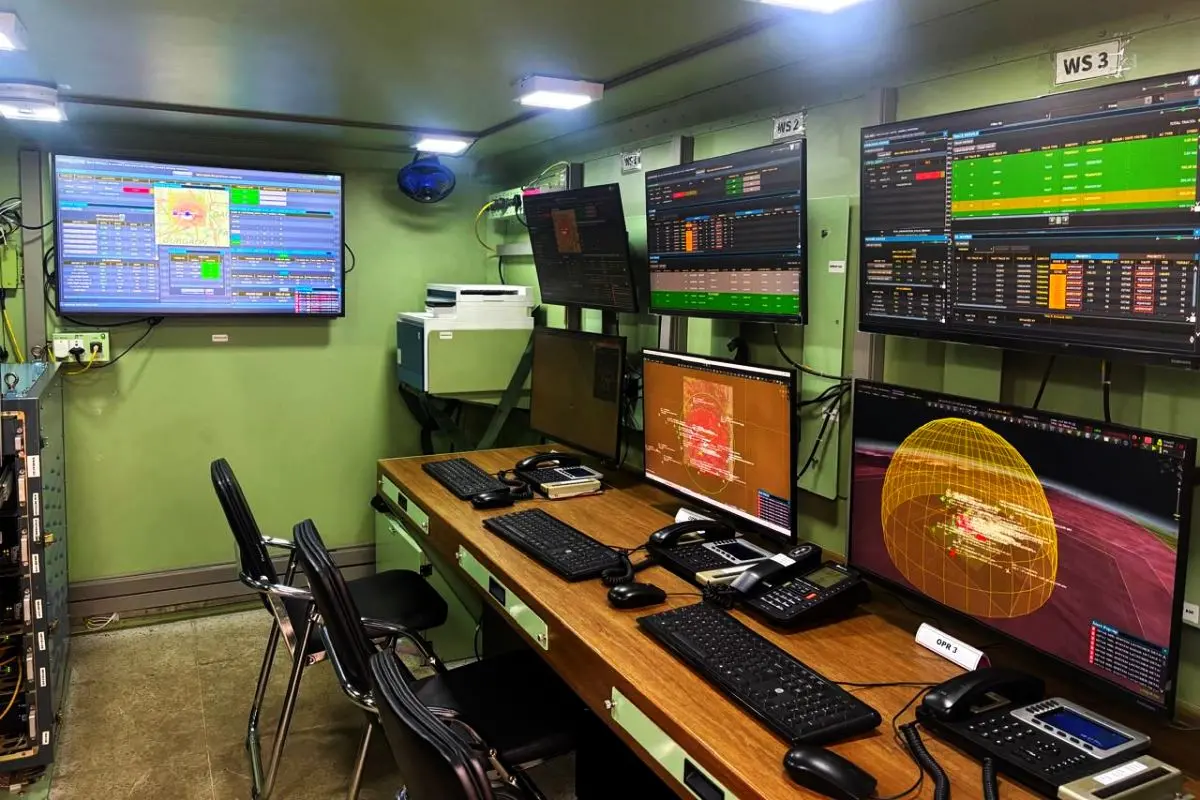
On the night of May 8–9, 2025, Pakistan launched a large-scale drone and missile attack across India's western border, striking at cities like Srinagar, Jammu, Amritsar, Bathinda, and Chandigarh. This came in response to India’s Operation Sindoor, which targeted terrorist camps inside Pakistan and PoK.
Pakistan expected to catch India off-guard. Instead, it ran into a wall of Indian readiness -- powered by Akashteer, our very own 'Iron Dome'-like air defense system.
What is Akashteer?
Let's be clear: Akashteer does not fire missiles or bullets. It is not a weapon, but a smart digital system that controls and manages the real weapons -- like surface-to-air missiles (such as Akash) and anti-aircraft guns (like L-70 or Schilka) -- that shoot down enemy targets.
Think of Akashteer like an air traffic controller for war zones. It watches the sky using a network of radars and sensors and creates a live map showing where every object is -- whether friendly or hostile. It tells the Indian Army and Air Force exactly what the threat is, where it is coming from, and which weapon should fire to stop it.
How Akashteer works
* It does not shoot, but tells who should shoot, at what, and when.
* It gathers radar data from many sources like 3D tactical radars, low-level radars, and even airborne systems like AWACS and AEW&C planes.
* It gives everyone involved – ground troops, commanders, air defense units – a common, real-time air picture.
* It helps frontline soldiers take quick decisions and fire without delay, but in a controlled way to avoid friendly fire.
* It is fully automated – no manual data entry, no wasted seconds. That's important because a supersonic jet can fly 18 km in one minute.
Akashteer in action
On the night of May 8–9, danger dotted India's skies -- hundreds of drones and missiles came flying in. But Akashteer was ready. Once the threat was detected:
* It tracked every drone and missile in real-time,
* It passed the target data to Indian air defence weapons
* It helped neutralise every incoming threat before it could harm civilians or defence assets.
Thanks to Akashteer, Indian cities and military bases remained safe.
What makes Akashteer even more valuable?
Akashteer was developed by Bharat Electronics Limited (BEL) under the Atmanirbhar Bharat (Self-Reliant India) mission. The Defence Ministry signed a deal worth Rs 1,982 crore in March 2023 to build 455 Akashteer units. As of November 2024, 107 systems have already been delivered, and the rest will be in place by March 2027.
It works even in tough weather or during enemy jamming, thanks to its communication redundancy. It is scalable and upgradeable, meaning it can evolve with new threats and technologies. It connects all layers of air defence – from high command to troops on the ground.
Akashteer doesn't fire weapons -- it makes sure that India's weapons fire at the right time, at the right target, with deadly accuracy. It is the invisible brain behind India's visible shield.
As warfare becomes faster and more technology-driven, Akashteer gives India the power to act in seconds, not minutes. It is a quiet force behind India’s bold defence, protecting our skies with intelligence, speed, and precision.
With Akashteer, India has shown it is not just strong -- it is smart.
Girish Linganna is an award-winning defence, aerospace & geopolitical analyst based in Bengaluru