Academic freedom under siege: How a global anti-caste, anti-racism meet at IIT Delhi became a target
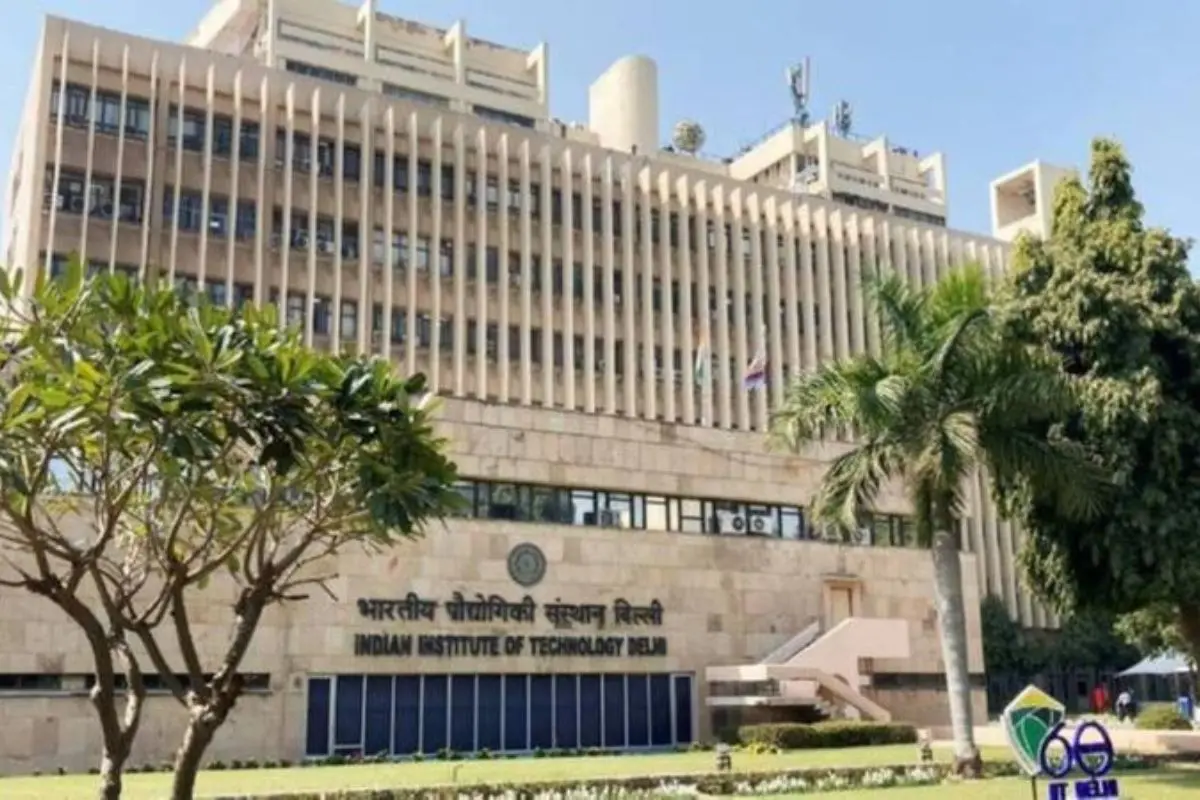
An important academic event called Celebrating 25 Years of Durban: Indian Contributions to Combating Caste and Racism was held at the Indian Institute of Technology, Delhi from 16 to 18 January 2026, in which I myself was a speaker. The conference was the continuation of the research paradigm, Critical Philosophy of Caste and Race (CPCR). This interdisciplinary research area was inaugurated through a rare special double issue edited by Prof Divya Dwivedi, in the acclaimed and tier 1 academic journal Critical Philosophy of Race led by Professor Robert Bernasconi, who is a specialist of history of philosophy, phenomenology, and deconstruction. These are serious academic matters of research and philosophy, which are left out in the troll-induced disorientation of IIT Delhi administration and the media, and my goal as an educator in this article is to inform the public.
It was revealed on January 26 2026 through a casual X handle string of IIT Delhi that it “sought an explanation from the concerned faculty” (Prof Divya Dwivedi), “a fact-finding committee with independent members” was constituted and they will “investigate concerns raised about the conference” (by social media trolls). The incongruity of the whole process of trolls of insufficient education casting aspersions on a serious conference and the administrative reflex action addressing their concerns was noted in an amusing article on Divya and the conference in The Times of India, “A scholarly claim moves into the public arena, is interpreted less as analysis and more as stance, and then returns to campus as an institutional problem”.
"Critical Philosophy of Caste and Race" conference (Jan 16-18):
Serious concerns have been raised over the choice of speakers and content of the conference.
The Institute has sought an explanation from the concerned faculty, and a fact-finding committee with independent…— IIT Delhi (@iitdelhi) January 25, 2026
Divya Dwivedi, Professor of Philosophy and Literature, Department of Humanities and Social Sciences was the chief organiser from IIT Delhi of this globally crucial conference, now being hounded, that brought together socially and politically aware and enlightened academic and advocacy-oriented intellectuals from all over the world.
They include the historian Prof. Shailaja Paik (winner of the MacArthur prize, author of The Vulgarity of Caste), anthropologist and historian Prof. Gajendran Ayyathurai, and the economist Prof. Sukhdeo Thorat (ex-Chairman of the UGC). There were the veterans of the Durban campaign and renowned social advocates Dr. Paul Divakar (GFoD) and Dr. Ruth Manorama (National Federation of Dalit Women), Dr. Gogu Shyamala, Dr. Dag Erik Berg, Dr. Douglas Ober, Prof. Y. S. Alone (JNU), Prof. Raj Kumar (DU), Thenmozhi Sundararajan and (author of The Trauma of Caste). Several young academics and scholars including Dr Sowjanya Tamalapakula and Dr Aarushi Punia (ex-IIT Delhi, ex-Cambridge, independent scholar), and many others including me online, working on caste and gender intersectionality and Buddhist studies from Kerala.
What the conference is about
I was part of the panel on the latest book of Dr Gajendran Ayyathurai titled Tamil Buddhism and Brahmanism in Modern India: Deep Resistance against Caste. It is an illuminating work on Ayyothee Thassar/ Iyothi Thass’ intellectual movement and the continuing legacy of Tamil modern Buddhism. As a critical scholar and author of books on Buddhism and Kerala in English and Malayalam I was privileged to be part of the panel with Douglas Ober, Gitanjali Surendran and Gajendran, chaired by Divya. Such crucial academic debates and curated sessions were held on the unrepresented egalitarian Indian knowledge systems and philosophies in the CPCR conference 2026.
The whole conference was devoted to “Indian contributions” to address social injustice, and they are the Indian knowledge systems to be celebrated. When the Indian elite academic institutions are doing the Panchagayva conferences or cow urine research for NEP driven “Indian Knowledge System,” CPCR is a great exception and cause for hope towards future social transformation and liberation towards more egalitarian and democratic outcomes.
The CPCR3 was framed as the 25th anniversary edition of the 2001 World Conference against Racism, Racial Discrimination, Xenophobia and Related Intolerance in Durban that discussed caste and race in various parts of the world as descent-based discrimination, injustice, and crimes against humanity and the world at large, including from the Apartheid contexts of South Africa. In the Durban 2001 conference, many communities undergoing descent-based discrimination from Japan, Nepal, Sri Lanka, the Roma people and others, had presented their case to be brought under the international norms against racism for the reason that all such descent-based systems cause similar harms to their victims, their life and dignity.
The theoretical articulation of Durban 2001 as an event unfolding even today was already expressed in an article by Divya Dwivedi titled “Remnants of Durban: Towards a Critical Philosophy of Caste and Race”, published on 20 March 2025 in a highly regarded series Oxford Intersections: Racism by Context by Oxford University. The concept note for the conference is based on this insight that Durban 2001 continues as a vision and project. In other words, the very conceptual program for the conference was available to the trolls and the media to study and go towards a more nuanced understanding.
The CPCR3 conference had the overwhelming presence of the socially conscious students, researchers and youngsters who fight caste and race all over the world as an everyday reality, and also reflect academically on these forms of discrimination. With high quality papers and serious Q&A, academic and literary book launches, and film screening of Somnath Waghmare’s Gail and Bharat, the conference became a grand success, and hence it is being perceived as a threat to the monopoly forces of oligarchy controlling the “elite” institutions like IIT Delhi.
Caste discrimination on campus, student suicides, and anti-caste discourse
The crime committed is the challenge to caste and Brahmanical patriarchy that has unsettled the scared oligarchy monopolizing and policing the “national” and “integrational” goals. This is such a reprehensible suppression of knowledge practices, academic freedom and social activism of the democratic sort which has chilling effects. It must be condemned, protested and checked at the outset itself by all people believing in human and Constitutional values of freedom of thought, expression and right to life and human dignity.
IITs alone has had more than 115 student suicides in the last 10 years, and the majority are from lower caste backgrounds. When students and researchers of central universities and IITs, and IIMs are committing suicide due to caste and gender discriminations, insults and social injustices on a daily basis it should be considered a national emergency.
In this background, the IIT Delhi Dalit-Bahujan-Adivasi (DBA) students and minority researchers are united and empowered to discuss caste and anti-caste politics/academics as a counter-hegemonic move and it is made possible by the knowledge praxes of ethical academics like Divya Dwivedi. This is threatening the status quo of the Savarna oligarchy and monopoly groups over education and technical industries. The claim that IITs must focus only on technocratic issues and AI is both ignorant and absurd, given the current complex world of intersectional and multidisciplinary knowledge systems and practices. This was already accepted in the 1960s when IITs were founded with Humanities departments as an integral part of them throughout India.
The philosophy of anti-hierarchy and global equality
This is not the first time that Divya is being harassed or threatened by social media trolls of the Savarna ecosystem. Often these attacks question her patriotism from the point of view of Savarna nationalism. Divya acquired all her academic qualifications from India, while it would have been easier her to migrate to the western academia and world the way most BJP politicians children do, and she explained in 2019, “It was important to show ourselves that it is possible to do philosophy from out of the subcontinent”. Given the strong control obscenely exercised on India by the Trump administration, Divya’s remarks should be heard again, “When the white nationalists come, I will be right here, waiting, with all the arms that I can gather to give their final farewell. Know this, the white nationalist moth is now whirling faster as it is approaching the flame”.
The works of Divya Dwivedi and Shaj Mohan are serious ontological and epistemological interventions and critique of the caste commonsense and Brahmanical established epistemology, in the same way that these two philosophers have challenged core frameworks of so-called “Western Philosophy”. Often, their dismantling of the very roots of ‘European philosophy’ and its history are ignored deliberately, whereas internationally they lead a research program toward this goal initiated by them with the late Jean-Luc Nancy and Bernard Stiegler. Their critique of Indian Philosophy and Gandhi’s theology by addressing the crucial issue of caste and casteist patriarchy in India has destabilised the Indian elites and oligarchy, and cannot be separated from the critique of Eurocentrism. The two projects constitute something far more radical than any decolonial theory.
The voicing of the Dalit condition and crises in India under Hindu nationalism and the comparison with the Palestinian experience under Zionism in some sessions by some speakers are very much normal and natural and part of addressing such intersectional crises and issues in the real world and an inevitable part of humanities and social sciences everywhere, and essential create universal empathy.
It is human and ethical to see the suffering of others and the outcastes all over the world and provide apt comparisons and ethical imperatives or analogies. The academic seminars should raise such questions and social issues across cultures and political boundaries and cannot be interpreted as against the “national goals” and integrity and so on, at any level. Such narrow parochial nationalisms are destined to see the fate of Zionism and fascism, sooner or later!
This jingoistic rhetoric will turn back against them in due course and the works of Divya, Shaj Mohan, J Reghu, Ayyathurai and Aarushi Punia and others are going to be read and discussed more all over India and the world. Let the IIT authorities make a public apology for this ominous suppression of academic freedom and acknowledge the epistemological and social worth and value of a critical thinker and academic like Divya and her colleagues who made possible such a timely and truthful ethical epistemological intervention as CPCR 3.
Let us wait for the next edition of CPCR and more newer debates from India meantime.
(The author is Associate Professor of English and Founder Coordinator of Centre for Buddhist Studies, SSUS Kalady, Kerala. He can be reached at ajaysekher@ssus.ac.in)