25 Years of Kargil Win: The fighter aircraft that stung Pakistan
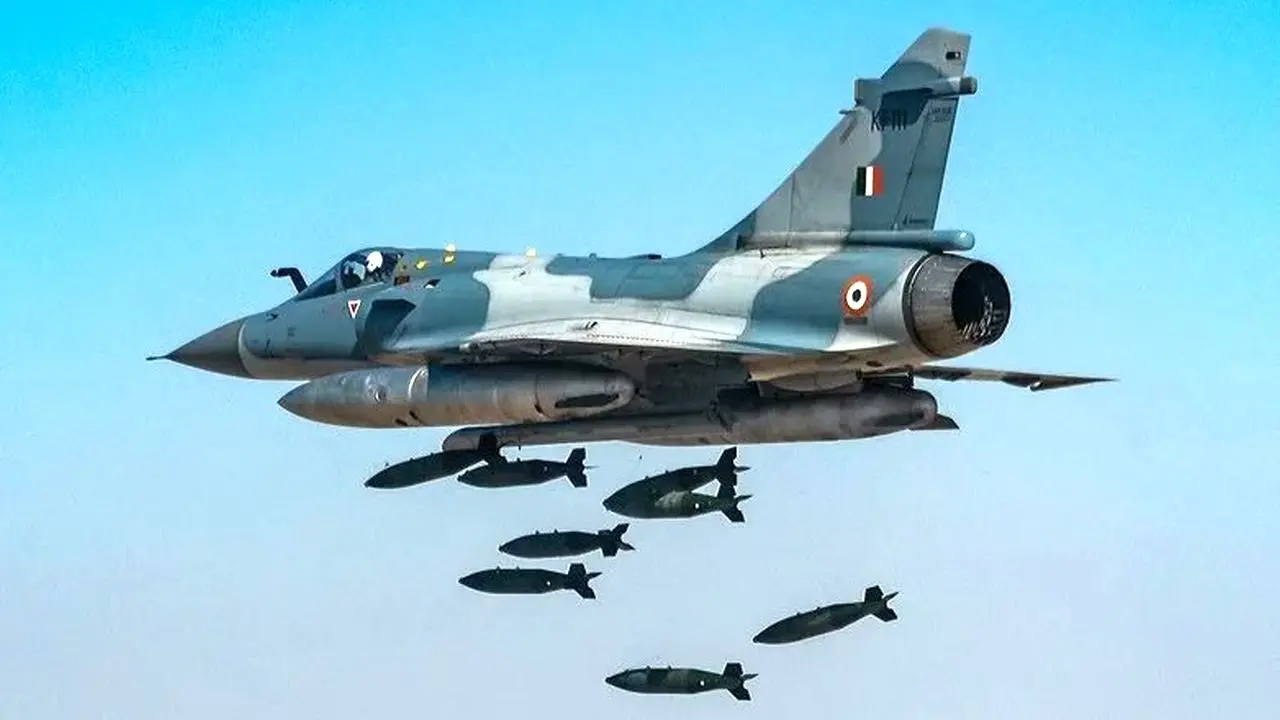
Many believe that deploying the Mirage-2000 fighter aircraft was a gamechanger for India in the Kargil heights, tipping the war in the country’s favour. The Mirage-2000 jets were essential in the battles on Kargil’s icy heights during the nearly three-month conflict. They successfully targeted enemy bunkers on Tiger Hill and achieved significant success at Muntho Dhalo in June 1999.
Tiger Hill, a 16,600-foot-high peak near Drass, in J&K, was targeted, hitting Pakistani Army positions that had been attacking the national highway. A senior IAF officer who led the ‘Battle Axes’ squadron to attack Tiger Hill said the strikes on the supply base at Muntho Dhalo on June 17 and on Tiger Hill on June 24 of 1999 changed the course of the battle.
While India’s technology was 'superior', the adversary’s F-16s at the time were 'ill-equipped'. Pakistan was using Stinger missiles, a type of man-portable (MANPADS), infrared-guided surface-to-air missile (SAM).
The IAF officer explained that using Mirage-2000 jets with laser-guided bombs (LGB) moved India’s operations beyond the range of the Stinger missiles, forcing the enemy to change tactics. That proved to be a gamechanger.
The Mirage-2000 fighter jets were relocated to Ambala and Adampur to conduct the first laser-guided precision strikes. Within 12 days, existing 1,000-pound ‘dumb bombs’ were modified with a ‘kit’ and turned into precision bombs.
Retired Air Chief Marshal BS Dhanoa said it was a turning point that helped the advance of India’s ground forces. India had purchased ‘Paveway’ bombs from the United States, with the first batch arriving in 1997. However, sanctions imposed after the May 1998 nuclear tests prevented full integration. The Mirage software was outdated, and dated back to 1985. He mentioned that the Israelis had come to India’s aid at that time.
The IAF lost two fighter jets on May 27, 1999, and a helicopter the following day. During the Kargil conflict, the IAF conducted a total of 578 strikes, 462 combat air patrols and 149 reconnaissance missions.
Twenty years later, following the Pulwama terror attack on February 14, the same Mirage-2000 jets were deployed for combat air patrols. This time, they used advanced weapons. The Spice-2000 long-range stand-off weapon was used to strike the Jaish-e-Mohammed terror camp in Balakot.
On February 26, a strike team was informed that they might receive the “go-ahead” for the mission, which they eventually did. Regarding Balakot, the then Air Chief Marshal stated that Pakistan neither achieved its military objective, nor could breach Indian airspace.
The Versatile Mirage-2000
The Mirage-2000 is a versatile, single-engine fighter jet from France, capable of deploying various bombs and missiles, including laser-guided bombs. Between 1982 and 1985, India purchased 51 Mirage-2000 aircraft from the French company, Dassault Aviation, delivered in fly-away condition.
Unlike Soviet-origin aircraft, the Mirage was never produced in India under a licensed manufacturing agreement.
After the Kargil War in 1999, India tried to buy more Mirage aircraft from France. However, Dassault Aviation, the manufacturer, stopped production to focus on developing and producing the Rafale aircraft, so the purchase did not go through.
The author of this article is a Defence, Aerospace & Political Analyst based in Bengaluru.