Who is remembered, who is forgotten: Maranavamsham and the politics of death at MBIFL 2026
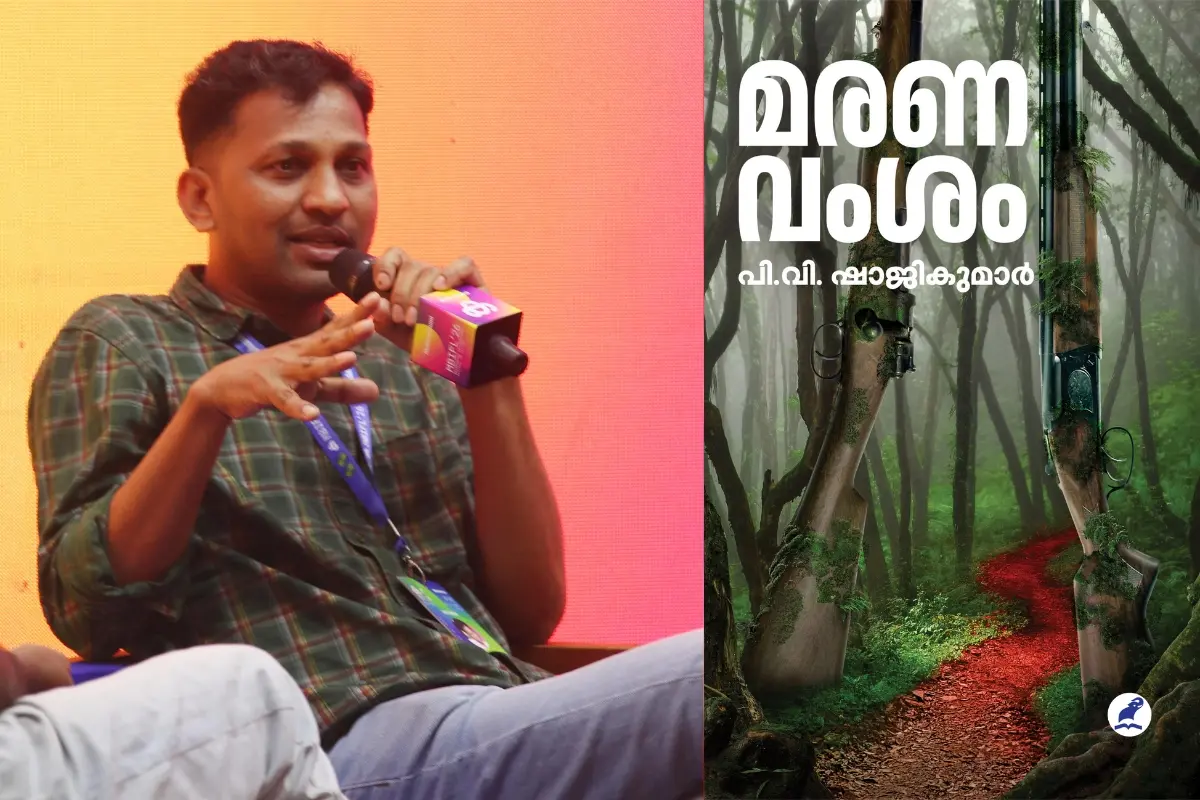
At the seventh edition of the Mathrubhumi International Festival of Letters (MBIFL), the session ‘Maranavamsham’ moved away from celebratory literary discussion to confront an unsettling question; who gets remembered after death, and who disappears from history. Speaking at the venue House of Books, Malayalam writer and screenwriter P. V. Shajikumar described death not as a neutral biological end, but as a deeply political and social event shaped by caste and power.
Revisiting his novel ‘Maranavamsham’, now in its 28th edition with over 33,000 copies in circulation, Shajikumar said its continued relevance lay in its refusal to treat death as equal for all. Instead, the novel examines how certain lives are publicly mourned while others are quietly erased from collective memory.
“I am uncomfortable speaking at length about my own book,” Shajikumar said, reframing the session as a discussion about the conditions that made the novel necessary rather than a reflection on its success.
He revealed that Maranavamsham did not begin as it eventually took shape. His original intention was to write a biographical novel on Kallaran Vaidyar, a Dalit leader from Kasaragod who contested the first Kerala Assembly election alongside E. M. S. Namboodiripad. However, while researching the project, Shajikumar was confronted by a troubling question: why had someone who played a role in Kerala’s political history vanished so completely from public memory?
“The answer,” he said quietly, “was caste.”
That realisation redirected the novel’s focus. Maranavamsham evolved from a single biography into a broader meditation on death as a social event, exposing how structures of power decide whose deaths are acknowledged, whose are ritualised, and whose pass without record. Shajikumar explained that the novel draws from lived histories, oral testimonies and a haunting real-life encounter with a man who survived a brutal attack. The image of the survivor’s trembling index finger, refusing to fall still, became the emotional centre of the book.
“Life itself is a battlefield,” Shajikumar reflected. “Death is only its final point.”
Throughout the session, the novel was framed less as a story about mortality and more as an exploration of structural grief, the inherited sorrow carried by communities pushed to the margins. Shajikumar placed Maranavamsham within a long literary tradition shaped by loss, referencing works such as Poonthanam’s Jnanappana, the Mahabharata and the Ramayana, and global literature born from collective suffering.
Crucially, the discussion resisted romanticising pain. Grief, Shajikumar argued, is not meaningful by default. It acquires ethical value only when it challenges erasure and refuses silence. In that sense, Maranavamsham functions less as an elegy and more as an act of narrative defiance, insisting that forgotten lives continue to speak through literature.
The session concluded with questions from readers who approached the novel as both a literary work and a social document. At MBIFL, Maranavamsham was read not merely as a meditation on death, but as an ethical inquiry into caste, memory and the unfinished work of history.