MBIFL 2026: Malkhan Singh Rajpoot to recount the Chambal bandit era
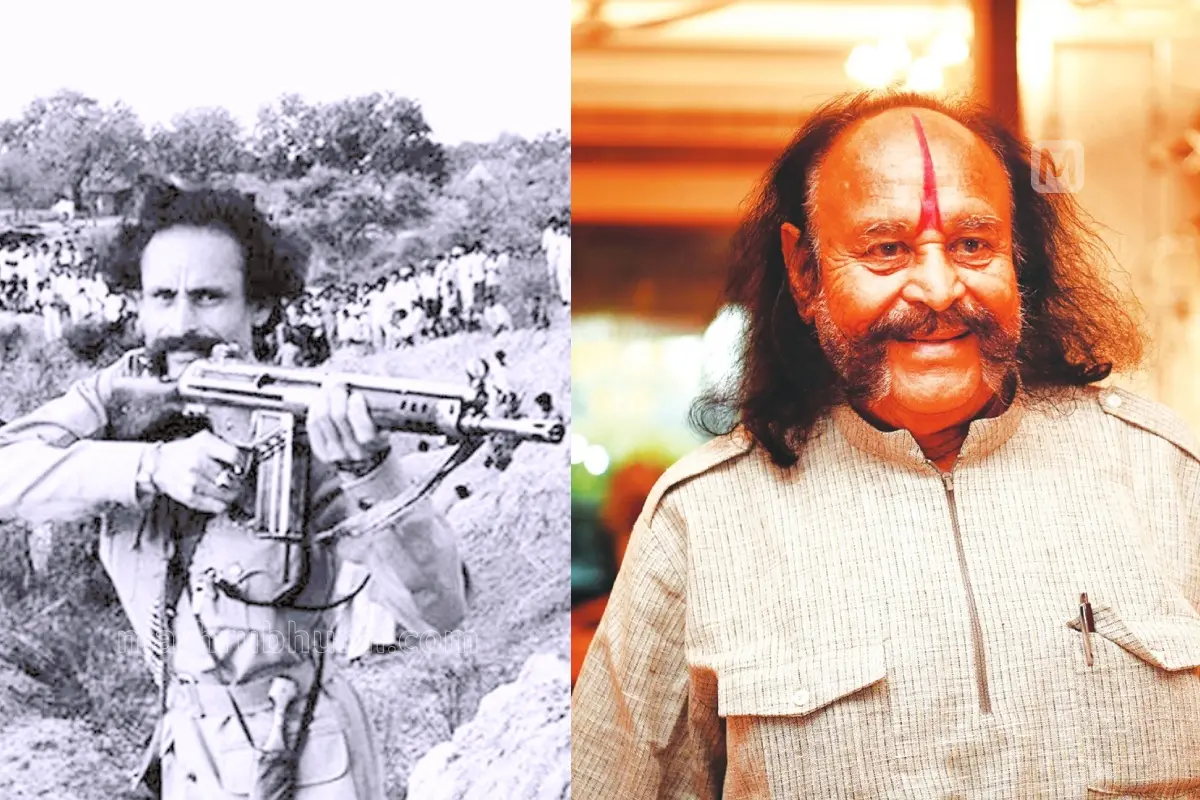
Kozhikode: Any discussion on Chambal forest or the era of the Chambal bandits is incomplete without mentioning Malkhan Singh Rajpoot, one of the most influential figures to emerge from the ravines of central India. A contemporary of legendary names such as Man Singh, Mohar Singh, Phoolan Devi, Paan Singh Tomar, Balwant Singh Tomar, Nirbhay Singh Gujjar, Munna Singh, Seema Parihar and Renu Yadav, Malkhan Singh once led one of the most feared dacoit gangs in the Chambal region.
Now, decades after laying down arms, Malkhan Singh is set to share his life story and memories of the Chambal era at the Mathrubhumi International Festival of Letters 2026. He will appear on stage alongside renowned archaeologist K K Muhammed, who played a key role in discovering and restoring ancient temples hidden in the Chambal ravines.
When this archaeologist met Malkhan Singh in Gwalior last year, he was 84. He firmly rejected the label of “robber” or “dacoit”, insisting instead that he was a “Bhaagi”, a rebel shaped by circumstance. Speaking at length about his past, he traced the origins of his violent journey to injustice and caste oppression.
“There was a large temple in my village. Kailash Narayan, the village headman and an upper-caste man, occupied it. I was only 17 when I questioned him,” he recalled. “He framed me in a false case and harassed the women in my family. Even today, if I see women being mistreated, my blood boils. That anger led me to form a gang. We gathered weapons, and the group grew. Chambal became our forest and our home.”
The Chambal ravines, a vast stretch of nearly 5,400 square miles across Madhya Pradesh, Uttar Pradesh and Rajasthan, were notorious for lawlessness, lying beyond the crocodile-infested Chambal river. During the height of Malkhan Singh’s reign, trains passing through the region reportedly shut their windows day and night in fear of attacks. His gang was known to force open doors of moving trains, loot passengers and evade police by crossing state borders with ease.
The exploits of Chambal bandits left a deep imprint on popular culture as well. Scriptwriters Salim Khan and Javed Akhtar drew inspiration from figures like Malkhan Singh while creating the iconic character Gabbar Singh in the Hindi film 'Sholay'.
Book your tickets for MBIFL 2026 | https://store.mathrubhumi.com/mbifl/index.html
For years, Malkhan Singh’s parallel rule in Chambal troubled successive governments. However, the arrival of roads, electricity and greater state presence in villages gradually weakened the dacoit stronghold. In 1982, Malkhan Singh and his gang surrendered to then Madhya Pradesh Chief Minister Arjun Singh in Bhind.
An English magazine described the moment dramatically: “He came like a hero who had conquered everything. Dressed in a stolen police uniform, tall and lean… more than 30,000 people gathered to witness the surrender. It was like a Roman triumph.” According to the account, Malkhan Singh climbed the dais, touched Arjun Singh’s feet, fired his American self-loading rifle into the air, and bowed before a photograph of Goddess Durga with his weapons.
After spending a long time in prison, Malkhan Singh entered active politics, aligning at different times with the Congress, the BJP, the Rashtriya Lok Dal and Shivpal Yadav’s Samajwadi Party (Lohia). Asked about his current political affiliation, he replied wryly, “None. Now I am my own party.”
When questioned about how many people he had killed during his years in the ravines, his eyes sparkled with mischief. “Have you counted how many chapatis you have eaten all these years?” he countered. “Circumstances and surroundings decide everything. I do not know what is right or wrong.”
Even today, Malkhan Singh reportedly moves with a gun for protection. He does not drink tea or coffee, avoids alcohol and tobacco, and keeps away from all intoxicants. Calm in demeanour yet marked by a turbulent past, Malkhan Singh remains a living reminder of one of the most violent and complex chapters in modern Indian history, an era when the ravines of Chambal shaped legends, rebels and enduring debates on justice and rebellion.