‘The future of India lies in its intellectual power’: Makarand Paranjpe at MBIFL 2026
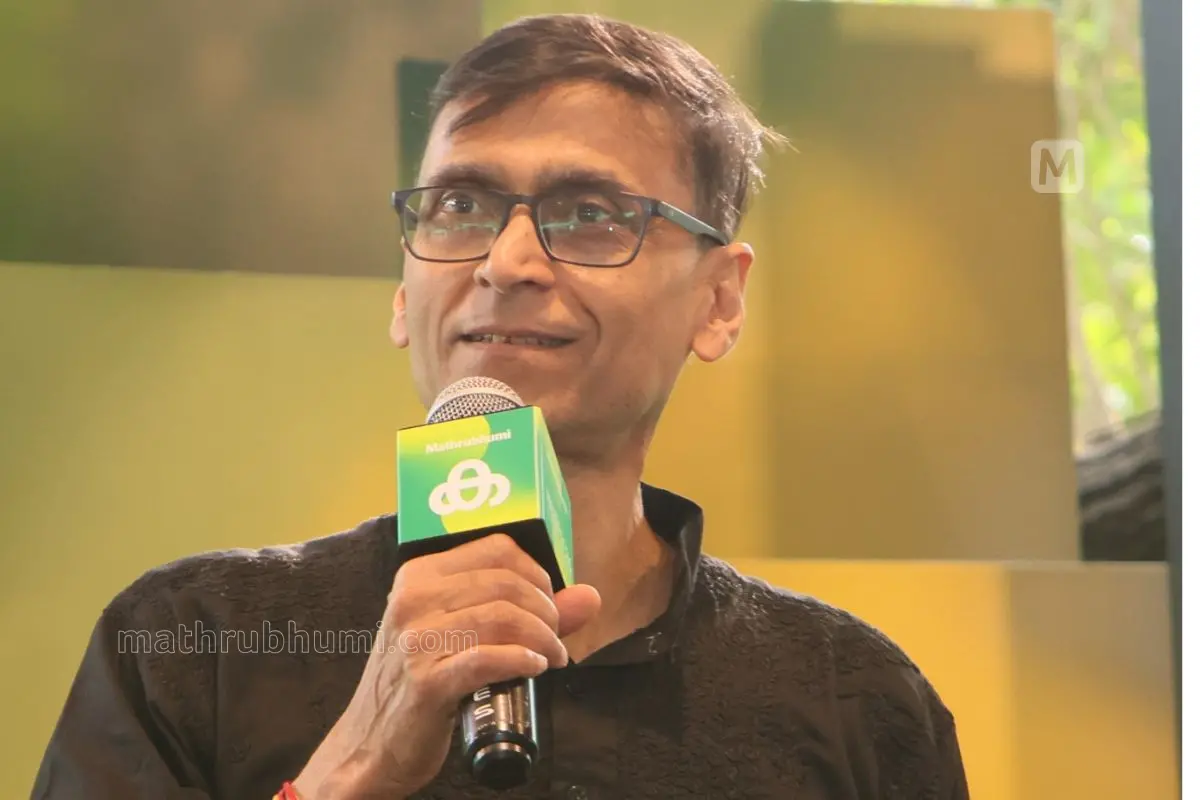
Thiruvananthapuram: Poet, professor and public intellectual Makarand Paranjpe examined the uneasy relationship between Indianness and Western modernity during a session titled “Reimagining India: The Many Facets of Indian Intellect; How Essential Indianness Meets Western Modernity”, arguing that India’s deepest crisis today is not economic or spiritual, but intellectual.
Drawing extensively on the ideas of Sri Aurobindo, Paranjpe opened his address by quoting from a letter written by the philosopher-poet, which he said remains strikingly relevant.
"My idea is that the chief cause of the weakness of India is not subjection nor poverty, nor the lack of spirituality or dharma but the decline of thought-power, the growth of ignorance in the motherland of Knowledge. Everywhere I see inability or unwillingness to think—thought-incapacity or thought-phobia.",”Aurobindo wrote.
Paranjpe said the tension between tradition and modernity has long shaped Indian intellectual debates. While some argue that India’s cultural past holds enduring value, others believe progress demands a complete break from tradition. “We carry the enormous weight of history,” he said, adding that modernity itself exists in multiple forms and cannot be treated as a singular Western import.
According to Paranjpe, contemporary India is witnessing renewed efforts to glorify the past, but he warned against uncritical revivalism. “Revivalism is not the way forward,” he said, noting that several intellectual traditions — including Marxist, Nehruvian and modern economic schools of thought — had earlier rejected the relevance of the past altogether. Revisiting history, he argued, must also confront the trauma, destruction and violence embedded within it.
He pointed out that many ancient Indian texts were not merely religious or ritualistic, but attempts to preserve complex systems of knowledge, rooted in what Aurobindo described as ‘species wisdom’. These ideas, Paranjpe said, differed fundamentally from Western epistemologies, particularly during the period of imperial arrogance under the East India Company, when Indian knowledge systems were systematically marginalised.
Turning to education, Paranjpe criticised India’s increasing focus on STEM disciplines, arguing that the emphasis has come at the cost of critical thinking and the humanities. “Education today is largely about employability, not the development of intellect,” he said, adding that debates on how far India should embrace modernity — and how deeply it should engage with its past — remain unresolved.
Paranjpe also reflected on the impact of capitalism and fear-driven politics, which he said now operate from households to institutions. “We talk politics everywhere, but we rarely discuss ideas or books,” he observed. Declining attention spans, he said, have further weakened public discourse.
The digital world, including the rise of artificial intelligence, has intensified what he described as an “intellectual incapacity”. “There is pressure to make everything simple, crisp and consumable,” Paranjpe said, noting that even authors increasingly offer shortened or audio versions of complex works.
He expressed concern over the decline in state funding for public institutions, coupled with growing political interference. The rise of open-letter culture, particularly during moments of conflict, was cited as another symptom of weakened intellectual engagement.
Paranjpe argued that systemic issues such as caste-based quotas, limited recognition of intellectual labour and a persistent colonial hangover continue to shape Indian society. “Learning has become transactional,” he said. “People study to get jobs, not to think.”
Concluding his talk, Paranjpe said reimagining India requires neither blind reverence for the past nor total surrender to Western modernity, but a renewed commitment to thinking deeply, critically and independently— a capacity he said the country risks losing if it continues to neglect its intellectual foundations.